Admin

Michael J. Anderson is a U.S.-based fire safety enthusiast and writer who focuses on making fire protection knowledge simple and accessible. With a strong background in researching fire codes, emergency response planning, and safety equipment, he creates content that bridges the gap between technical standards and everyday understanding.

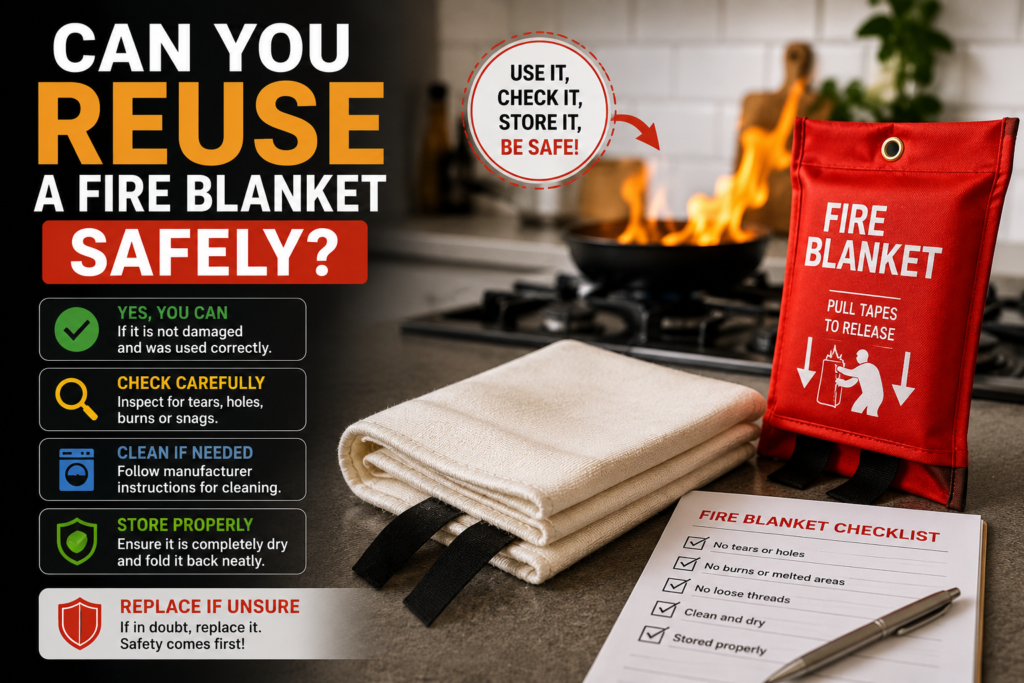
Can you reuse a fire blanket?

7 Essential Facts: Can You Reuse a Fire Blanket Safely?

Can You Reuse a Fire Blanket Safely? One of the most frequently asked questions following use of a fire blanket to extinguish a small fire is this one. Many homeowners and workplace managers ask whether they can lay the blanket down in the future if they do not use it all right away. Many fire blankets are intended to suffocate fire and keep oxygen away from fire, so the question is whether or not the blanket can be refolded and used again in the future. This will depend on how the blanket was used, its manufacturer guidelines and any damage the blanket might have incurred during the incident. It is important to understand what can be done with a fire blanket and when it should be replaced to ensure that the safety of any fire is maintained. Why Fire Blankets Are Important? The fire blanket is a fire resistant material safety device for quick and efficient fire extinguishing of the small fire. Fire blankets are often used for: Fire blankets do not leave residue and can be used rapidly in emergencies unlike fire extinguishers. Discuss the myth and reality of reusing fire blankets. Myth: All Fire Blankets are NOT 1-use blankets It is thought that once a fire blanket is removed from its container, it is disposed of. Reality Some fire blankets can be reused when the manufacturer states that re-use is allowed and there is no damage to the blanket. But a lot of safety practitioners suggest that caution should be exercised when thinking about using the product in the future. It is the condition of the blanket that is crucial. When a fire blanket is used, what happens to it? A fire blanket covering a fire is subjected to: Although no visible damage may be noticed, the fire-resistant material may have been compromised. That’s why post-use inspection is so important. Conditions for the reuse of a fire blanket In some cases, it is possible to reuse The Blanket is in good condition.There is no evidence of any damage to the Blanket. If there are no burns, tears, holes or melted areas then the blanket may still work. Exposure Was Minimal A small fire that is quickly put out can result in little or no damage. Use manufacturer instructions to allow reuse Before making a decision, check the product documentation. Do not make assumptions – follow manufacturer’s recommendations. Situations Where a Fire Blanket Should Be Replaced There are many times that it is the safest choice to replace. Burn Marks are Present If any burning is visible, it could indicate that protection is compromised. Tears or Holes Exist A damaged blanket could not be effective in suppressing future fires. Excessive Heat Exposure Conditions were recorded Even when it is not immediately seen damage, high temperatures can cause a loss of fire resistance in the fibers. The Blanket Is Contaminated Effectiveness may be reduced in the presence of heavy soot, grease, chemicals or other contaminants. Inspection Cannot Confirm Safety The risk of injury or disability cannot be ruled out during inspection. Why Safety Experts Often Recommend Replacement? Safety experts frequently suggest replacing the diesel engine.The diesel engine replacement is often recommended by safety professionals. Fire emergencies happen unexpectedly. In an emergency it is imperative to have equipment that functions exactly as it should. A fire blanket that has been used to a significant extent will be replaced so that it can be ensured: Equipment replacement costs are typically low relative to the risk and potential loss if equipment fails. How to Inspect a Fire Blanket After Use? If you are thinking of reusing, do an in-depth inspection. Check for: Physical Damage Check for holes, cuts, burns and worn spots. Heat Damage Check for discoloration, fragility or material distortion. Contamination Take the blanket off of storage and examine it for grease, chemicals or excess soot. Packaging Condition The storage pouch should also be undamaged and usable. If there are any signs of damage, they must be taken seriously. Fire Blanket Maintenance Tips Proper maintenance helps maximize fire blanket performance. Store the blanket: It should be placed in an easily reachable spot: Frequent inspections can detect problems before they become a problem. Common Fire Blanket Errors Fire blankets are often not as effective as they could be. Ignoring Inspection Requirements Equipment for safety should be inspected periodically. Folded Damaged Blanket Back into Storage It is never okay to overlook visible damage. Failing to use the correct type of Fire Blanket Various environments may have their own unique fire safety equipment needs. Reuse Is Always Safe is an assumption All fire blankets are not effective after use. How many years do fire blankets last? Many modern fire blankets can last a long period, if stored properly. Some manufacturers recommend replacing after a few years even if the blanket has not been used. Some factors that influence lifespan are: Throughout the product life, regular inspections are still vital. Fire Blanket vs Fire Extinguisher: Who wins? Both tools are vital to fire safety. Fire blankets are sometimes appropriate for: For these situations, fire extinguishers might be preferable: Numerous safety gurus say that it is best to have both available. Final Thoughts So, is it possible to re-use a fire blanket? In some instances, the answer may be yes but only when the blanket is totally undamaged and the manufacturer states that it can be reused. But when the blanket is worn, damaged by heat, soiled or weak, replacement is generally the best option. In the case of fire safety, ticking the right box is important. The main purpose of a fire blanket is to save life and property during emergencies and therefore it is always important to ensure it is in good condition. FAQs

7 Essential Facts: Can You Reuse a Fire Blanket Safely? Read More »
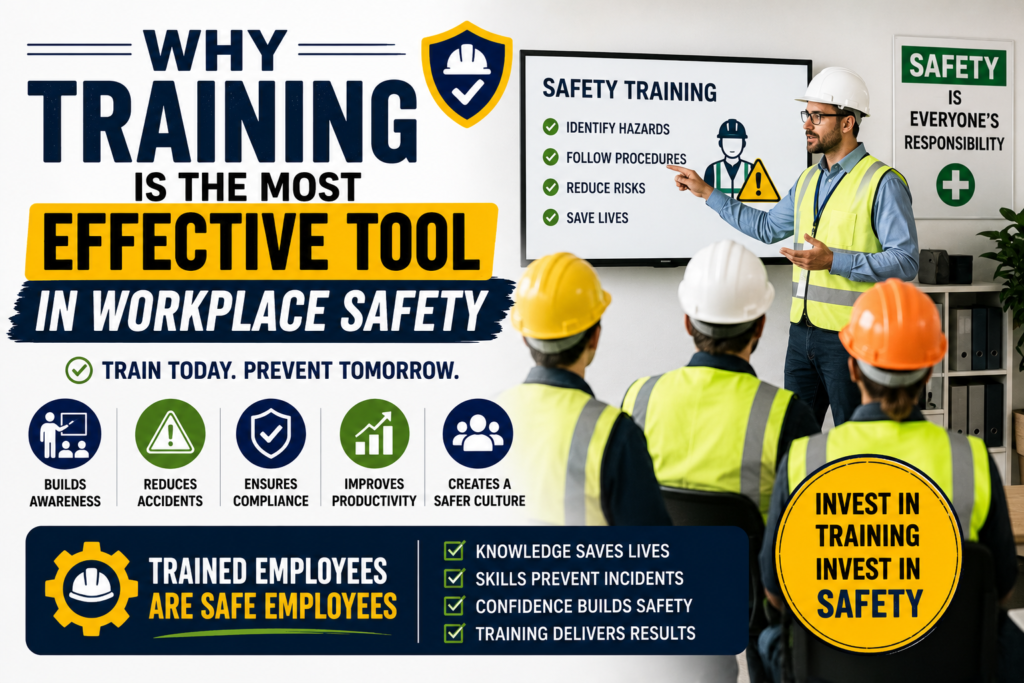
Why Training Is the Most Effective Tool in Workplace Safety

9 Critical Reasons Why Training Is the Most Effective Tool in Workplace Safety

In the context of workplace safety, many will respond with hard hats, fire extinguishers, safety signs or personal protective equipment (PPE). Although these can be important tools they are not the best tool for workplace safety, per se. Therefore, What’s the Most Effective Tool in Workplace Safety? The answer is you might be stunned by it: good safety training and employee awareness. The best safety equipment can’t stop the accident from happening if workers don’t know how to look for hazards, how to follow them, and how to react during an emergency. Employees gain knowledge and confidence as a result of training, thus allowing them to make safe decisions on a daily basis. We will examine why safety training is still very much the backbone of workplace safety and how organisations can use it to minimise accidents, injuries and expensive incidents. The Common Misconception About Workplace Safety While many companies are spending large amounts of money on safety programs and equipment, they have forgotten one important factor—human behavior. Consider these examples: In each scenario the safety tool exists, but there is a risk as it is not trained. Why Training Is the Most Effective Tool in Workplace Safety Safety training can impact all facets of work safety. Training is a tool that can be used to help workers: Training makes safety rules become a habit. Reason 1: Train to prevent accidents before they occur The ideal accident is the one that doesn’t happen. Employees who are aware of hazards in the workplace are more likely to be able to recognise hazards and act to prevent an incident from happening. It’s always better to prevent an injury than to respond to it after it occurs. Hazard Recognition is a component of the training. Reason 2: Hazard Recognition is part of employee training Workers often fail to see hazards in the workplace, which leads to many workplace accidents. By training, employees are able to recognize: The sooner the hazard is identified, the better it can be managed. Reason 3: Use of equipment improves safety Safety equipment can only be effective if it is used appropriately. Workers will be trained and will know: Building knowledge is a huge enabler of safety tools. Reason 4: Emergency Preparedness Saves Lives People tend to come up with a plan B only when they need it most. Well trained staff can respond during: Prompt and sound actions can minimise injuries and damage. Reason 5: Training establishes a Safety Culture When employees regularly focus on safe behaviors, a strong safety culture is created. Training encourages: Organisations that have a good safety culture, tend to have fewer incidents. Reason 6: Reduces Human Error One of the biggest causes of work accidents is “human error. Effective training can minimize errors by educating employees on: As the employees get more information, the fewer mistakes that cost money are made. Reason 7: Improves Compliance With Regulations There are regulations governing workplace safety which must be adhered to in many industries. Safety training helps organizations stay compliant to the legal requirements and also keeps the employees safe from harm. Compliance benefits include: Meeting compliance also enhances a company’s reputation. Reason 8 – Builds employee confidence Employees are more productive when they are confident and ready. During training, employees will learn: Self-confidence can mean higher work productivity and safer work environments. Reason 9: Makes long-term safety improvements Knowledge is something which can keep benefiting employees throughout their careers, as equipment might wear out over time. Continuous training works to achieve sustainable improvements through: Long-term safety will be achieved by ongoing learning. Myth vs Reality The myth: PPE is the best safety tool PPE is essential but employees need to be trained in use. Myth: If there is a safety sign then an accident will not happen Staff need training to interpret and act upon information in the form of signs. Myth: Workplace Safety is the responsibility of management only Safety is a shared responsibility of managers, supervisors and employees. Myth: One Training Session Is Enough Safety training should be continuous and continually updated, to take into account new risks and procedures. Other Important Workplace Safety Tools While training can be viewed as the best tool, training combined with other safety measures is most effective. Use the following resources to help keep your workplace safe: Personal Protective Equipment (PPE) is the equipment that individuals wear to protect their bodies. Helmets, gloves, safety glasses, protective clothing. Fire Protection Equipment Fire extinguishers, fire alarms and sprinkler systems. Safety Signage Warning signs, hazard labels and emergency instructions. Safety Inspections Inspection is regular and hazard identification and rectification achieved. Reporting Systems Any unsafe conditions should be easily reported by employees. All these tools work well together to create a total safety program. What are ways that employers can improve work safety? To improve safety performance, organisations can: Strive to keep everyone at work safe. Final Thoughts When it comes to the best tool in workplace safety, it’s safety training and employee awareness. Equipment, policies, and procedures are a must, but they only work when employees know how to use them effectively. An informed workforce can detect hazards, prevent incidents, act during emergencies, and help to foster a positive safety culture. Continuing education and awareness can be a major investment that will greatly alleviate workplace risks and help protect the most valuable asset – an organization’s people.

9 Critical Reasons Why Training Is the Most Effective Tool in Workplace Safety Read More »

How to Put Out an Electrical Fire Safely

9 Critical Steps: How to Put Out an Electrical Fire Safely

Electrical fires can be one of the most hazardous types of fires because they include live electrical currents that can easily start fires to surrounding materials. These fires usually result from electrical components or equipment failure, from overloaded circuits, from faulty wiring, or damaged appliances, and should be treated differently than other types of fires. Many people make the error of trying to extinguish an electrical fire as if it were any other fire. The wrong method for extinguishing fires can, however, create further danger, electrocute the person using the extinguisher or cause the fire to spread. Knowing exactly what to do to extinguish an electrical fire properly can save lives, property and valuable equipment. The following guide outlines how to safely deal with an electrical fire, what equipment you should use to help with the fire and what you should not do during an emergency. What is an Electrical Fire? An electrical fire is a fire that is started by heat from electricity, causing a fire to start in materials that are near the electrical source. These fires may begin in residential, office, factory, warehouse and commercial buildings. Common causes include: Electrical fires can burn rapidly as electricity can be installed behind walls, ceilings and floors where flames can be concealed in the initial phase of the fire. Why Electrical Fires Are Especially Dangerous? Electric fires carry dangers which aren’t shared by common fires. Some of the main dangers include: Risk of Electrocution Water, metal, and other conductive materials can conduct live electrical currents. Hidden Fire Spread Electrical fires can burn behind walls, and remain hidden. Equipment Damage Damage can occur to computers, machinery and electrical systems even after the fire is out. Toxic Smoke Insulation, wiring and plastics combust and may release toxic smoke and fumes. The risks associated with such fires necessitate a unique approach for electrical fires. Step 1: Remain calm and evaluate the situation The first thing to do is to stay cool. When panicking, decisions might be made without thinking, and risks may be taken that are not needed. Quickly determine: If fire is spreading quickly or is producing a lot of smoke, leave right away and dial 999 for an ambulance. Step 2: Disconnect the Power Source The best method of extinguishing an electrical fire is to cut off the power. If possible: Do not put yourself at risk when disconnecting power. If a fire makes it unsafe to reach electrical controls, evacuate to a safe distance and call fire authorities! Step 3: Use the Correct Fire Extinguisher The selection of the right fire extinguisher is very important. Use: electrical fire extinguishers: Class C Fire Extinguishers Class C extinguishers are for use on energized electrical equipment. CO₂ Fire Extinguishers Carbon dioxide extinguishers are especially popular when used around electrical equipment because they leave no residue and do not conduct electricity. Dry Chemical Fire Extinguishers Multipurpose dry chemical extinguishers will also work on electrical fires. Use the extinguisher according to the instructions printed on the extinguisher. Step 4: Remember the PASS Method If you have to use a fire extinguisher, remember PASS: Pull Draw the safety pin out. Aim Target the fire’s base. Squeeze Squeeze the handle. Sweep Move the nozzle back and forth. This technique allows the use of the extinguishing agent effectively. Must read this detailed Blog: 7 Essential Facts About What RACE Stands for in Fire Safety Step 5: Don’t Extinguish an Electrical Fire with Water Probably the most critical electrical fire safety rule is to never use water on energized electrical equipment. Water is an electric conductor and can: Don’t use water until electrical power has been shut off and officials say it’s safe. Step 6: Stay Back: Maintain a safe distance Even slight electrical fires can get out of hand. Maintain a safe distance while: Be sure to have an unobstructed way of escape behind you. If the fire starts to spread, evacuate right away. Step 7: When the fire cannot be controlled evacuate? Not all fires are worth fighting. Evacuate immediately if: Always property protection comes second to personal safety. Step 8: Call Emergency Services If the fire looks out of control, even if it seems to be out, emergency services should be called for as needed. Electrical fires can reignite due to: Professional inspection will help to make sure the area is safe before it is used again. Step 9: Check and repair the cause Once the emergency is over, determine the cause of the fire. Typical projects following a fire are: If the problem is ignored it could result in further incidents. Common Electrical Fire Hazards and Mistakes Made During Electrical Fires They make mistakes in their reaction and this is the cause of many injuries. Avoid these mistakes: Using Water Water and electricity don’t mix. Touching Damaged Equipment Smoke may burn and continue to be hot for an extended time, even after the flames have gone out. Delaying Evacuation Delaying evacuation may expose individuals to more smoke and fire. Waste of time using the wrong extinguisher Not every type of extinguisher will work for electrical fires. Ignoring Warning Signs Any burning smell, sparks, flickering lights or overheating devices are not to be ignored. Learn how to prevent electrical fires Prevention is the best fire safety management strategy. Inspect Wiring Regularly Old or damaged wiring should be repaired in a timely fashion. Avoid Overloading Outlets Excessive numbers of devices on a circuit can create excessive heat. Replace Damaged Cords It is never safe to use frayed cords. Use Certified Equipment Good quality electrical products can offer greater safety. Schedule Professional Inspections Regular inspections can detect risks before they arise and turn into emergencies. Essential Fire Safety Equipment The proper fire safety equipment should be kept in all buildings. Important items include: The availability of appropriate equipment can make a big difference in emergency responses. Electrical Fire Safety in Workplaces Clear fire safety procedures should be set up in business. These should include: A trained staff

9 Critical Steps: How to Put Out an Electrical Fire Safely Read More »

What RACE Stands for in Fire Safety

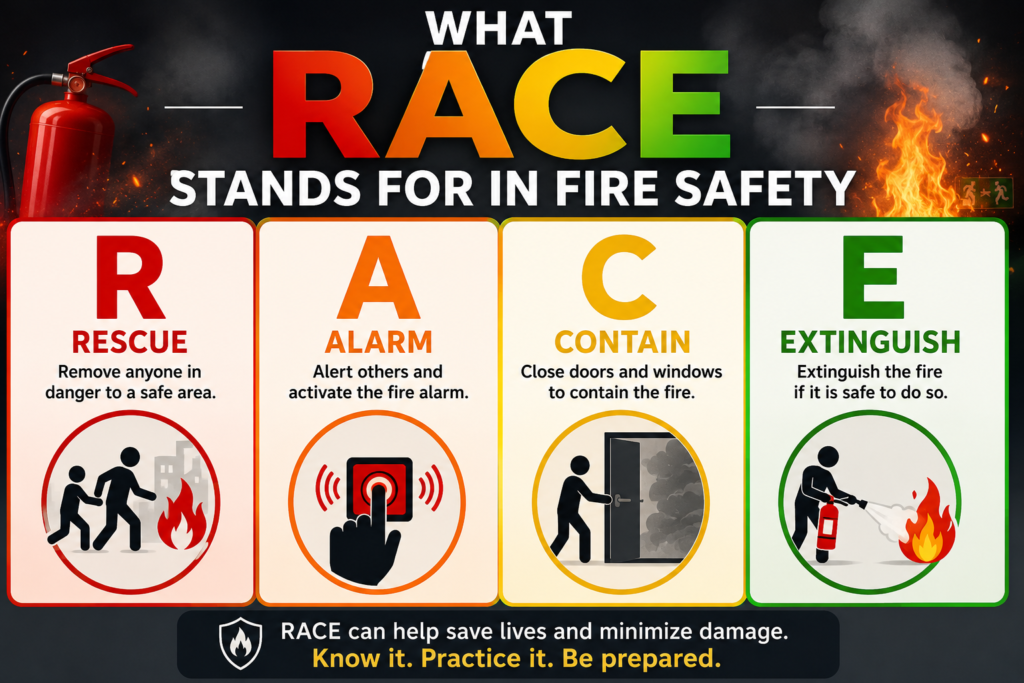
7 Essential Facts About What RACE Stands for in Fire Safety

Fires may arise at any time and it is important to take prompt and effective action to prevent loss of life and property. Many organizations utilize the RACE fire safety procedure to assist people in responding in an appropriate manner when a fire occurs. In a fire safety emergency, it may be beneficial for employees, building occupants, healthcare professionals and safety personnel to know what race stands for in fire safety. The RACE acronym offers a straightforward procedure and helps individuals through the most critical steps during a fire incident. Commonly used in hospital, school, office, factory, hotel, and other places where fire safety is required. You will be reading about RACE, what it means, and why it is vital in emergency response planning in this guide. What is the meaning of RACE in Fire Safety? RACE stands for: These are the four steps you can take to respond to a fire emergency in a structured manner and to minimize panic and confusion. Every step is crucial to the safety of people and to minimising fire damage. Fact 1: R Means Rescue Rescue is the first step in the RACE procedure. Remove person(s) from danger from fire/smoke/affected area, if safe to do so. During rescue efforts: Rescue work must always be carried out in a manner that puts personal safety first. Fact 2: A Means Alarm The next is Alarm. When people are safe or rescue attempts have started, sound the fire alarm system right away. This action helps: Emergency contact also needs to be made to as quickly as possible in many facilities. Fact 3: C Means Contain Contain is the third step. Controlled fire can help slow down the spread of fire and limit property damage. These are typical containment measures: Controlling the spread of a fire helps maintain evacuation routes and gives extra time for firefighters to arrive. Fact 4: E Means Extinguish or Evacuate The last phase is to Extinguish or Evacuate. If a fire is small, contained, and the person is trained, he or she can try to extinguish the fire with a fire extinguisher. But evacuation always trumps if: Do not try to extinguish a fire when there is danger to life. Fact 5: RACE Helps Reduce Panic The wide-spread use of the RACE response procedure is partly due to its simplicity and easy to remember plan of action. In an emergency, stress can impact on judgments and choices. The RACE acronym assists people to know the proper sequence of actions. A clear plan can help to quicken response time, and facilitate a safe response. FACT 6: RACE is EVERYWHERE in Healthcare Facilities! In hospitals and medical settings, the RACE procedure is often used due to the possibility of emergencies occurring when patients need help. Healthcare workers typically are trained in: RACE is a method that assists in the effective response of healthcare teams in safeguarding vulnerable patients. Fact 7: RACE Works Best with Fire Safety Training The RACE acronym is simple but training is still a necessity. By providing fire safety training, people can be helped to: Regular fire drills can result in quicker and more coordinated action during an emergency. The work of RACE and PASS Most fire safety courses cover RACE along with PASS. PASS stands for: PASS is used to demonstrate how to make use of an extinguisher, and RACE is used to describe the emergency response process. They are complementary and work well together to form a more comprehensive fire plan. Why Fire Safety Procedures Matter? Fire safety procedures assist organisations: Sometimes, a well-trained personnel is one of the best shield against fire emergency. Must read this BLog: 7 Essential Steps: What Should You Do If Someone Is on Fire? Conclusion Knowing the meaning of RACE in fire safety is a key component of emergency preparedness. The acronym represents Rescue, Alarm, Contain and Extinguish/ Evacuate. These four steps offer an easy-to-follow plan for how to safely and effectively handle fire emergencies. The RACE procedure is utilized to guide critical decisions during emergencies, whether it is in a hospital, office, school or industrial facility. In addition to regular training, fire planning can be part of a plan to achieve safer workplaces and better emergency response results.

7 Essential Facts About What RACE Stands for in Fire Safety Read More »

What Should You Do If Someone Is on Fire?

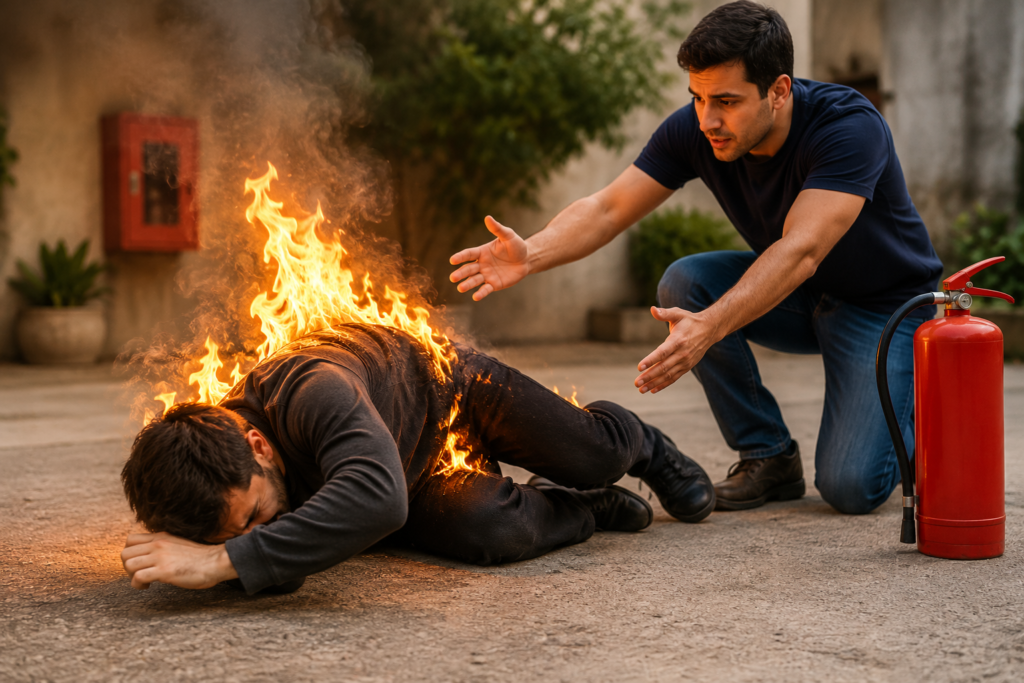
7 Essential Steps: What Should You Do If Someone Is on Fire?

Fires can occur anywhere, at any time. A very serious one is if someone catches fire in his or her clothing. You may be able to save lives and prevent serious injuries by knowing what to do if someone is on fire. People often panic in a fire emergency, and as a result make risky choices. Quick thinking and timely action is essential as a burn may become worse in seconds. Be prepared for the event, so you can remain calm and act appropriately. The importance of taking immediate action Flames spread quickly on the body if clothing catches fire. As the fire continues, the risks of serious burns, shock and other life threatening issues increase. Taking immediate action can: The first few moments of the day can be the most critical. Step 1: Keep calm and call for assistance The first step is to stay cool. Panic can lead to misjudging decisions and exacerbate the situation. Immediately: There may be benefits in having extra people on hand to assist in the emergency. Step 2: Stop the Person from Running It is common for people to run when they are on fire. Unfortunately, running brings more air and oxygen to the fire. Tell the person to STOP moving! If needed, divert them from other potential sources of fire. The quickest way to prevent the fire spreading is to stop the movement. Step 3: Stop, Drop and Roll Stop, Drop and Roll is the most commonly recommended method for clothing fires. Stop Stop moving immediately. Drop If possible, drop to the ground and use hands to cover face. Roll Roll back and forth until fire is put out. The method used is to deprive the fire of oxygen to keep it burning. Step 4: Smother the Flames If a fire blanket, heavy coat or thick blanket is available, use it to smother the fire. Wrap the material around the victim, being careful to avoid covering the face, if possible. Extinguishing the fire rapidly by smothering, reduces the amount of oxygen and stops the fire. Step 5: Cool the Burns Once the fire has been extinguished, run cool water over the burned area. If possible, continue cooling for at least 20 minutes. The burn will cool down a little if this is done: Do not use ice as it will cause further damage to the tissue. Step 6: Get rid of loose garments and accessories Before swelling occurs, take off jewelry, belts, watches or loose clothing around burned area. Do not remove clothing that is adhered to the skin, however. It can result in additional damage. Remove only those objects that can be removed easily and safely. Step 7: Call for medical help Although burns may seem minor, medical assessment may be required. If:If the following occurs: Complications can be avoided and recovery facilitated by professional treatment. Common Pitfalls, What Not to Do? Many people unintentionally make burn injuries worse. Avoid: Proper First Aid and the application of it will minimise the further possibility of damage. Fire Prevention is Always Best It’s crucial to be able to react when a healthcare emergency occurs, but it’s far better to be proactive and prepared to handle it. Fire safety precautions consist of: Many fire-related injuries might be prevented with preparedness. Must Read this Blog: 7 Essential Facts About Do Fire Extinguishers Expire? Conclusion One of the key fire safety skills is understanding what to do if someone is on fire. The right answer is to not run, to use the Stop, Drop, and Roll technique, to smother the flames, to cool burns with water and to seek medical assistance when necessary. Quick response can greatly minimize injuries and maximize outcomes. These basic fire emergency procedures should be practiced by everyone in all homes, workplaces and public facilities.

7 Essential Steps: What Should You Do If Someone Is on Fire? Read More »

7 Essential Facts About Do Fire Extinguishers Expire?

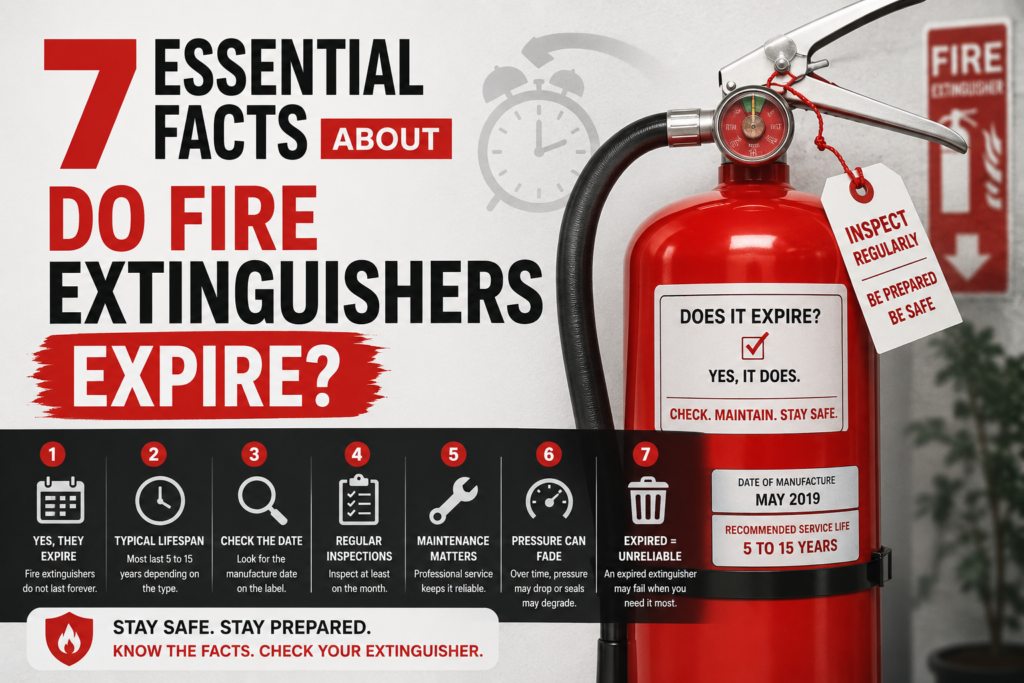
7 Essential Facts About Do Fire Extinguishers Expire?

Fire extinguishers are one of the most significant pieces of fire safety equipment in homes, schools, commercial buildings, warehouses and offices. They are used to give an early warning response, in the early stages of a fire, to help prevent injuries, property damage and possible life-threatening situations. But many people think that a fire extinguisher should never be taken down or removed. This is a misconception that is common. One of the common queries asked is; do fire extinguishers expire? Yes, it is true. Fire extinguishers don’t necessarily expire on a given date but have a certain lifespan. As time goes on, internal parts may deteriorate, pressure may drop, and damage may occur affecting performance. Knowing the life of fire extinguishers and when they should be inspected, serviced or replaced is an essential component of any fire safety plan. What Does It Mean for a Fire Extinguisher to Expire? Fire Extinguishers don’t suddenly expire on a certain date as food products do. Rather, they slowly become less reliable the older they get. A fire extinguisher that is no longer good for use can have: These problems may make the extinguisher ineffective in the event of a fire. How long do fire extinguishers last? The life of a fire extinguisher varies by type, manufacturer, usage and maintenance program. Most of today’s fire extinguishers generally have a service life of: But the answer to whether or not an extinguisher should stay in service cannot be based on its lifespan. It is also important to have regular checks and maintenance. The signs that a fire extinguisher might need to be replaced There are a number of indicators that can show a fire extinguisher isn’t functioning properly. Rust or corrosion that can be seen with the eye Corrosion can cause corrosion of the cylinder and internal parts of the extinguisher. Any rust, no matter how small, can signal more serious issues. Physical Damage The extinguisher can be affected by dents, cracks, busted handles, or broken nozzles, which can impact how it works and how safe it is to use. Pressure Gauge Problems Many extinguishers will have a pressure gauge. When the needle is not within the green zone, servicing or replacement might be needed. Remove Safety Pin or Seal If the safety pin or the tamper seal is missing the extinguisher may be used or tampered. Leaking Extinguishing Agent If the leakage can be seen, it should be considered a serious problem as it will inhibit effectiveness during an emergency situation. Why Regular Fire Extinguisher Inspections are important? Any problems that occur can be found with regular inspections. For each existing facility, visual checks should be made monthly for the following: Regular checks keep extinguishers in good working order when necessary. Annual Maintenance Requirements Fire Extinguishers should be professionally maintained in accordance with applicable fire safety regulations and manufacturer guidelines, in addition to monthly inspections. Maintenance services every year confirm: Professional servicing can find problems that may not be detected in normal maintenance visits. Are Fire Extinguishers Rechargeable? Fire extinguishers come in two types, some are disposable and others are rechargeable. If they are in good condition, rechargeable models may be serviced and recharged. If the extinguisher shows signs of severe corrosion, structural damage or is past its safe service life, however, the unit is usually recommended to be replaced. Most extinguishers have no means of being recharged and are considered to be “dead” once they have been used up. Are There Different Types of Fire Extinguishers that Expire at Different Times? Yes. The life of the cylinder may be influenced by the type of extinguishing agent and the type of cylinder. There are various types of extinguishers, such as: There are specific inspection and maintenance requirements for each type. Always refer to the manufacturer’s directions. What Happens If You Use an Expired Fire Extinguisher? A worn or outdated extinguisher could be useless when it’s required. Potential problems include: These failures can compound fire damage and put occupants at a higher risk. How to make a fire extinguisher last longer? By practicing appropriate maintenance, fire extinguishers can be used for the longest time possible. Best practices include: Reliability and overall fire safety are enhanced by good maintenance Proper Storage Is Important Extinguisher life can be influenced by the environment. Extinguishers should NOT be stored in areas where there is: Avoid premature wear and damage by good storage. Must read this Blog: 6 Reasons Why Fire Safety Blankets Are Made Out of Wool? Fire Safety Is More Than Equipment A fire extinguisher is just a component of a good fire safety plan. Businesses & homeowners should also: Putting prevention, preparedness and equipment maintenance together makes it a safer environment. Conclusion So, can you use a fire extinguisher after it has expired? Fire extinguishers do have a limited service life, and should not be relied upon to be used forever. Many units will serve you for 10-15 years, but the condition, maintenance and inspection history are more important than the age of the unit. Fire extinguishers are properly maintained by regular inspections, professional servicing and timely replacement when needed. Taking the time to invest in proper maintenance can be a big benefit during a fire emergency.

7 Essential Facts About Do Fire Extinguishers Expire? Read More »

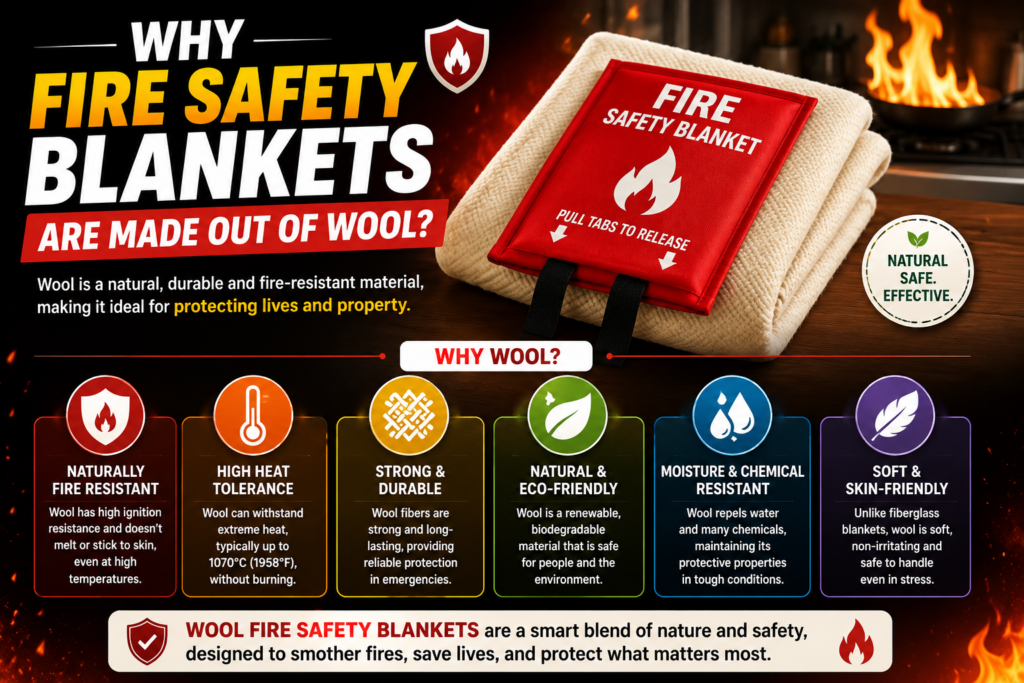
Why Fire Safety Blankets Are Made Out of Wool

6 Reasons Why Fire Safety Blankets Are Made Out of Wool?

Fire safety blankets are easy-to-use, highly effective fire extinguishers for small fires. They act by sealing off oxygen, thus preventing the spread of fire. Of the various materials which are used for fire blankets, wool is one of the oldest and most dependable. Even today, many people ask an important question: why would fire safety blankets be made out of wool when modern materials exist? The key is the intrinsic fire resistance of wool, its safe performance in a fire and its special role in safeguarding people and property in emergencies. Let’s delve into this further. What Is a Fire Safety Blanket? Fire Safety Blanket is a fire extinguishing device that is used to extinguish small fires. Typically composed of materials that resist fire and used in emergency situations. It does so by taking away one of the components of fire, oxygen. Fire will not burn without oxygen. Fire blankets are commonly used in: Prior to the availability of modern fiberglass blankets, wool was one of the first types of materials used. Why Would Fire Safety Blankets Be Made Out of Wool? Fire safety blankets contain wool, which is a natural fire retardant that won’t burn when it gets hot. Wool is unlike synthetic materials which will melt or drip. Rather, it chars slowly and aids in the prevention of fires. Because of this it is a good choice to use on small fires and to protect people in emergency situations. The main reasons are: Wool is a natural fire resistant material One of the most important reasons wool is used is its natural resistance to fire. The protein-based fibre wool consists of keratin, which is like human hair. This is the reason that wool is different from cotton or synthetic fibers. Not easily ignitable and slows the rate of burning. When exposed to flame: This innate durability makes wool a safer fabric than many others. High Ignition Temperature of Wool Wool is relatively high in its ignition temperature as compared to many common items. It needs a temperature of about 570–600°C to ignite. This means: Even few seconds count in fire emergencies. Wool adds the added security. Wool Does Not Melt or Stick to Skin Melting fabric is one of the greatest hazards of fire. Numerous synthetic materials have a melting point that is low and adhere to skin, leading to serious injuries. Wool is more safe: This is particularly beneficial in protective fire blankets where human life is at stake. Wool Contains Natural Moisture Wool fibers have a small amount of moisture content. This is an important factor in fire resistance. If exposed to heat: This natural dampness makes wool less prone to catching fire than do other synthetic fibers. Wool Helps Smother Fire Effectively Fire safety blankets are used to smother fire. The dense fiber structure makes wool a good material. If applied to a flame: This suffocation process helps to quickly and safely prevent small fires. Wool does not give off toxic fumes readily Another great benefit of wool is that it does not release as many toxic fumes as many other synthetic products. In fire situations: This makes it more appropriate for settings such as homes and classrooms. Historical Use of Wool in Fire Safety Wool was much used as the material for protection against fire and heat before the modern development of fire resistant materials. It was used in: The material selected was wool, as it was readily available, long lasting and safer than cotton or synthetic fabrics of the era. Wool vs Modern Fire Safety Blanket Materials Today, most fire safety blankets are made from fiberglass or advanced heat-resistant fibers. These materials have more extreme performance. Wool Advantages: Wool Limitations: So, wool is still useful, but for only low to moderate risk environments. Does wool still exist? Of course, but not as frequently as formerly. Fiberglass blankets are the recommended choice for modern fire safety systems due to their ability to withstand high temperatures. However, wool is still used in: Despite its natural qualities it remains useful in certain circumstances. Why Wool was a smart early solution? Wool was one of the earliest fire resistant materials that was used because it was widely available and it was naturally safer than other fibres. It offered: This was a convenient option before the advent of modern engineering materials. A scientific explanation of why wool is fire resistant? In the structure of wool, there is N2 and moisture. These are components that help to retard combustion. In the event of a fire: This self-protective reaction is what differentiates wool from other natural fibres. Final Thoughts Wool is naturally fire resistant, non-melting and will smother fires if used properly, which is why there are fire safety blankets made from wool. It is a safe, natural and non-toxic means to put out small fires. Today, materials such as fiberglass are used more, but in some safety uses, wool is still an important material for its historical significance. Knowing the rationale behind the use of wool gives us an appreciation of the development of fire safety technology and the importance of natural materials in saving human life. National Fire Protection Association

6 Reasons Why Fire Safety Blankets Are Made Out of Wool? Read More »