Fire Safety

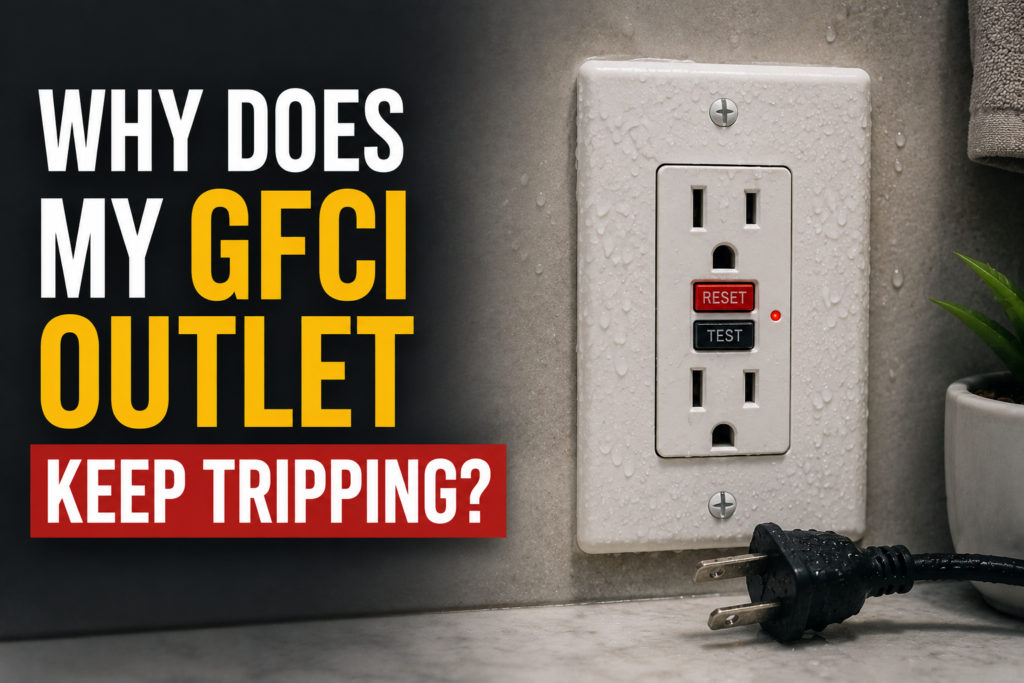
Why Does My GFCI Outlet Keep Tripping?

8 Common Reasons: Why Does My GFCI Outlet Keep Tripping?

Why is my GFCI circuit breaker going bad? You’re not the only one who has had to reset the same outlet repeatedly. A Ground Fault Circuit Interrupter (GFCI) outlet safeguards you from electric shock. If it trips, it’s most likely asking you that it is not safe. An occasional trip is not necessarily a problem; however, if he is tripping regularly there is a problem that should be addressed. Rather than continually pushing the reset button, it’s essential to learn what could be causing the outlet to be turned off. What Is a GFCI Outlet? A GFCI outlet is a special type of electrical outlet that is designed to monitor the flow of electricity. When it senses an electric current where it shouldn’t, like when water or people touch it, it opens the circuit and stops the current from flowing. These outlets are typically located where water can be found such as: They are primarily used to help prevent electric shock. 1. Moisture Has Reached the Outlet One of the most frequent causes of a GFCI outlet tripping is due to water. Rain, leaks, condensation or splashes can cause a ground fault, which turns off the outlet as a safety precaution. Don’t reset the outlet if it is wet until it has been inspected and the cause of the wetness has been solved. 2. Faulty Appliance Is Connected Not all leaks are caused by the outlet. If the GFCI is tripped on every power-up, the wiring or internal electrical component of the appliance may be damaged. Unplug all items and reset outlet. Reconnect each one of the appliances, one at a time. If only one device trips an outlet, it’s possible that the device has a problem. 3. The Circuit is Overloaded While GFCI outlets provide protection from ground faults, but not overloads, multiple high demanding appliances on one circuit can still cause electrical problems. As far as practicable, do not use the same circuit for several heavy-duty appliances. 4. The Outlet Has Worn Out But, just like other electrical equipment, GFCI outlets are not indestructible. The internal components can wear out over time, causing annoying trips and/or a malfunction of the reset button. If the outlet is an old outlet and it trips for no apparent reason, it may need to be replaced. 5. Wiring Problems Repeated tripping can occur due to loose connections, broken wires or poor wiring. Electrical wiring issues must never be overlooked as they could be a potential hazard for electric shocks or electrical fires. If you think the wiring is damaged, do not make repairs, but call an electrician. 6. Another Outlet on the Same Circuit Has a Problem Most people are not aware that a single GFCI outlet can provide protection for multiple regular outlets downstream. A GFCI can trip even when the outlet is in good condition if an outlet that is connected to it has a fault. Inspect the area around the outlets for areas of damage or moisture. 7. Outdoor Weather Conditions GFCI outlets in the outdoors are subject to changing weather conditions. When there is heavy rain, humidity, snow or condensation, moisture can get to the outlet box and will result in repeated trips. This can be minimized with weatherproof covers and by sealing the outlet properly. 8. The GFCI is doing what it’s supposed to do Sometimes there is no problem with the outlet. The GFCI is just detecting this unsafe condition and turning off the power before it can cause injury. That’s what it was meant for. Tripping should not be an inconvenience and should signal repeated occurrences. What Should You Do If It Keeps Tripping? In the first place: When the outlet keeps tripping the breaker then without cause, have the electrical system checked by a licensed electrician. Tips to Prevent GFCI Problems A few simple practices can help minimize nuisance trips. Electrical system maintenance is a key way to ensure safety and reliability. Final Thoughts So, why is my GFCI Outlet tripping? In most cases, it’s because the outlet has detected a potential electrical hazard. Some of the most common causes include moisture, faulty appliances, damaged wiring, overloaded circuits, or an outlet that is worn. Don’t ignore the issue or keep resetting the outlet, spare a few moments to find out what is going on. One of the most important and useful safety devices in your home is a properly functioning GFCI outlet and listening to its warnings can prevent electric shock and other electrical hazards. FAQS

8 Common Reasons: Why Does My GFCI Outlet Keep Tripping? Read More »
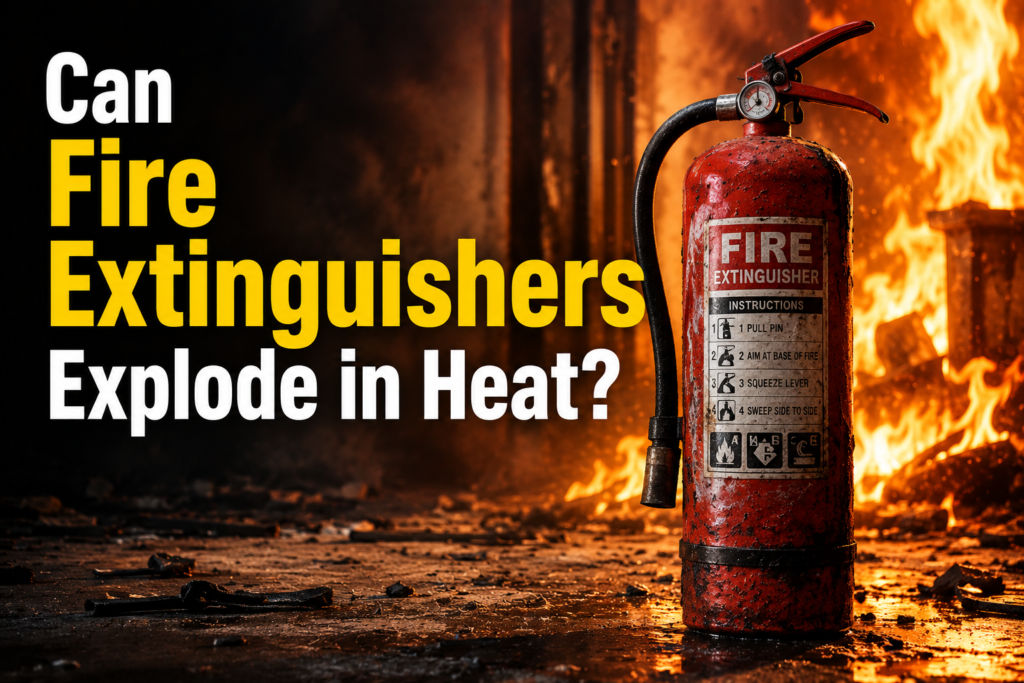
Can Fire Extinguishers Explode in Heat?

7 Important Facts: Can Fire Extinguishers Explode in Heat?

Will fire extinguishers explode when exposed to heat? Yes, they can; but not very often if kept properly. The fire extinguishers can withstand normal temperature changes, however, extreme heat can cause the pressure of the cylinder to be elevated. When the pressure gets too high or when the extinguisher is damaged, it may become dangerous. Fortunately, this hazard is simple to minimize with proper fire extinguisher storage and maintenance. Why Heat Affects Fire Extinguishers? The majority of fire extinguishers are filled with compressed gas. The pressure in the cylinder increases with an increase in the temperature of the surroundings. Extinguishers are made to endure normal use, but long periods of exposure to excessive heat will put undue strain on the cylinder. This is why proper storage is an important component to fire safety. How Hot Is Too Hot? Portable fire extinguishers have a maximum and minimum temperature range that the extinguisher should be used in. The following can cause problems with the extinguishers: If you’re not certain of the safe temperature range for your extinguisher, always refer to the manufacturer’s instructions on the label. Can a Fire Extinguisher Actually Explode? In rare cases, yes. The pressure inside the cylinder may become very high, or the cylinder may be weakened by corrosion, damage or mismaintenance, which may cause the cylinder to burst open. If a cylinder becomes ruptured, it can release its contents with great force and may result in serious injury or damage to property. Fortunately, the quality fire extinguishers have safety features and are tested to adhere to strict safety standards. Signs Your Fire Extinguisher May Not Be Safe Inspect your extinguisher regularly. Replace or have inspected if you notice: Do not overlook the following problems if you notice them: Get it inspected or changed as soon as possible! Where to Keep a Fire Extinguisher? With proper storage, you can prolong the life of your extinguisher and keep it ready to use in case of an emergency. Choose a location that is: Never store fire extinguishers in places where they are likely to be exposed to extreme temperatures unless such extinguishers are rated for such use. How to Keep Your Fire Extinguisher Safe? Some simple practices will avoid most issues. If you have an extinguisher, regular maintenance will ensure it is working properly if you do need it. Common Myths on Fire Extinguishers: “They explode easily.” No, fire extinguishers are built to last and be strong. Normally do not explode under normal conditions. “It’s OK to leave one in the car, forever,” Extreme temperatures can occur in the interior of a vehicle. These conditions are not recommended for long term storage unless the extinguisher is specifically designed for long-term storage in these conditions. “If the extinguisher looks fine, it doesn’t need inspection.” What looks good on the outside may not be good on the inside. Even if the extinguisher looks like it is in good condition, routine inspections are still critical. Final Thoughts So, Do fire extinguishers explode in heat? Yes, but it is uncommon if they are stored, inspected and maintained properly. When the cylinder is not properly stored or is damaged, extreme heat can cause pressure to build inside the cylinder. The best way to assure safety is to store your fire extinguisher in a cool, convenient place, maintain it regularly and replace it when it is damaged or needs to be replaced. A fire extinguisher will be effective only if you take care of it so as to minimize risk during a fire emergency.

7 Important Facts: Can Fire Extinguishers Explode in Heat? Read More »

Can a welding blanket be used as a fire blanket?

7 Essential Facts: Can a Welding Blanket Be Used as a Fire Blanket?

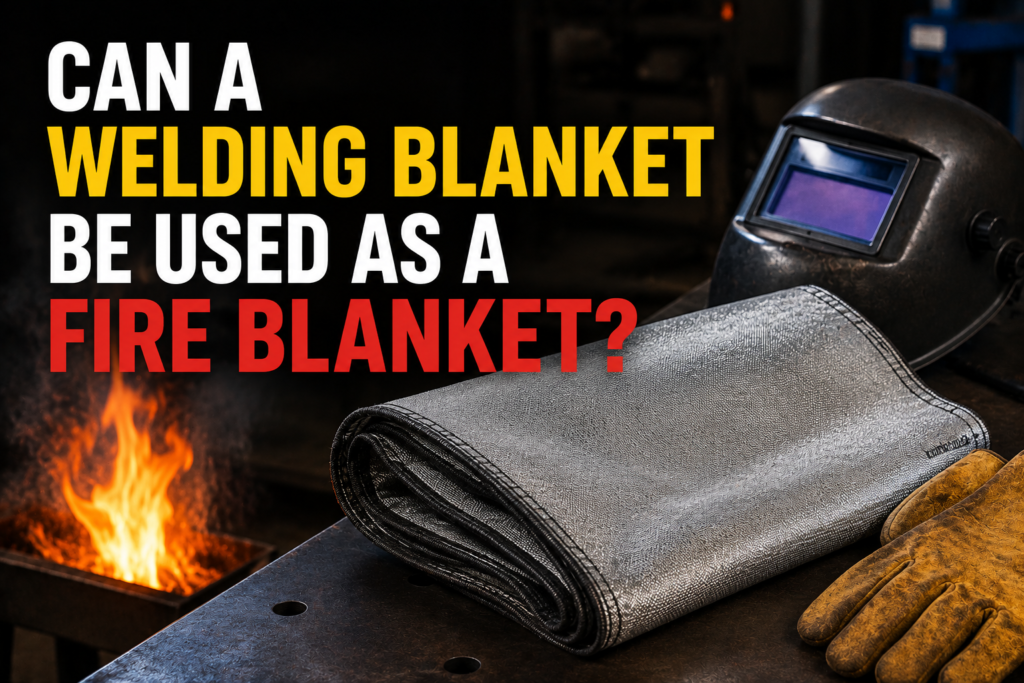
Is it possible to use a welding blanket as a fire blanket? Don’t mistake a welding blanket for a fire blanket and understand the differences in their uses and the importance of using the right safety gear. Is it possible to use a Welding Blanket as a Fire Blanket? Can a welding blanket be used as a fire blanket? Among the many questions asked, particularly among DIY enthusiasts, welders, and workshop owners is this. Many people think that both blankets can be used in the same way, because both are constructed of heat-resistant material. However, that’s not always the case. They look alike but are for different tasks. Understanding the difference can assist with selecting the proper equipment and safely handling fire emergencies. What is a Welding Blanket? A welding blanket is a protective cover that is constructed of high-temperature fabrics or fiberglass. It primarily prevents heat, molten metal, and sparks from reaching nearby surfaces and equipment during welding, cutting or grinding. These are the areas where welding blankets are widely used: They help prevent accidental fires by preventing hot sparks getting in contact with flammable materials. What is a Fire Blanket? A fire blanket is emergency fire safety equipment that is used to extinguish small fires. It does so by smothering the fire and removing oxygen from it. Fire blankets are often found in: They are particularly helpful for small fires and for clothing fires and can be used as a first attack before the fire spreads. Are They the Same? The answer is a simple no. Both products are heat resistant, but for different applications. A welding blanket is a specially crafted item that is meant to protect the work area from sparks and hot metal when welding. Fire blanket is used only for small fires and is a special type of blanket. Do not use one in place of the other unless rated so by the manufacturer. Is it okay to use a Welding Blanket in a fire? In some cases, a welding blanket will be able to help limit the spread of heat and will also cover some small fires which are caused by the metal and also heat. It is not to be used as a substitute for an adequate fire blanket, however. Fire blankets are made and tested to extinguish fires in emergencies. They are also made to be easy to use in case of an emergency. If a fire blanket is needed at your place of work or at home, a certified fire blanket is safer than using a welding blanket. Why Using the Right Blanket Matters? In the event of a fire, time is of the essence. Out-of-the-box equipment may not be effective in emergencies and can make it harder to manage a fire. The right blanket aids in immediate and effective response. It also helps to keep everyone’s heads clear in an emergency, as everyone knows what to use. When can you use a Welding Blanket? The best time to use a welding blanket is when you need to: It is not an emergency firefighting device, but a preventative safety device. When to use a Fire Blanket? A fire blanket is for emergencies for small fires. It can be used to: When the fire is growing, or has become too large, get out and call the fire department right away. Tips for Better Fire Safety Fire safety requires the proper equipment to be used. You should also: Sometimes, the best way to avoid a small incident from becoming a serious emergency is to prepare for it. Final Thoughts So, can a welding blanket be used as a fire blanket? Unfortunately not in most cases. Both are heat resistant but for different applications. A welding blanket will prevent sparks and hot metal from falling on the work area, and a fire blanket is a specially designed fire extinguisher designed to help extinguish small fires in case of emergency. Always use equipment for its intended use for the greatest safety. Having a welding blanket and fire blanket in the correct surroundings can help enhance fire protection and be able to better respond to a fire emergency.

7 Essential Facts: Can a Welding Blanket Be Used as a Fire Blanket? Read More »

What RACE Stands for in Fire Safety

7 Essential Facts About What RACE Stands for in Fire Safety

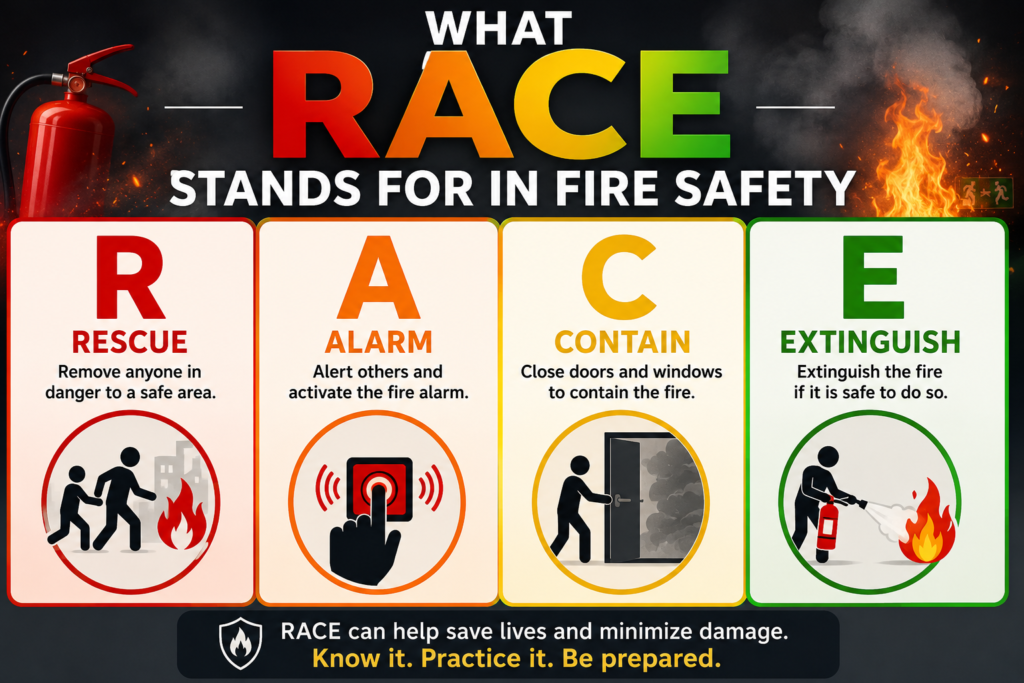
Fires may arise at any time and it is important to take prompt and effective action to prevent loss of life and property. Many organizations utilize the RACE fire safety procedure to assist people in responding in an appropriate manner when a fire occurs. In a fire safety emergency, it may be beneficial for employees, building occupants, healthcare professionals and safety personnel to know what race stands for in fire safety. The RACE acronym offers a straightforward procedure and helps individuals through the most critical steps during a fire incident. Commonly used in hospital, school, office, factory, hotel, and other places where fire safety is required. You will be reading about RACE, what it means, and why it is vital in emergency response planning in this guide. What is the meaning of RACE in Fire Safety? RACE stands for: These are the four steps you can take to respond to a fire emergency in a structured manner and to minimize panic and confusion. Every step is crucial to the safety of people and to minimising fire damage. Fact 1: R Means Rescue Rescue is the first step in the RACE procedure. Remove person(s) from danger from fire/smoke/affected area, if safe to do so. During rescue efforts: Rescue work must always be carried out in a manner that puts personal safety first. Fact 2: A Means Alarm The next is Alarm. When people are safe or rescue attempts have started, sound the fire alarm system right away. This action helps: Emergency contact also needs to be made to as quickly as possible in many facilities. Fact 3: C Means Contain Contain is the third step. Controlled fire can help slow down the spread of fire and limit property damage. These are typical containment measures: Controlling the spread of a fire helps maintain evacuation routes and gives extra time for firefighters to arrive. Fact 4: E Means Extinguish or Evacuate The last phase is to Extinguish or Evacuate. If a fire is small, contained, and the person is trained, he or she can try to extinguish the fire with a fire extinguisher. But evacuation always trumps if: Do not try to extinguish a fire when there is danger to life. Fact 5: RACE Helps Reduce Panic The wide-spread use of the RACE response procedure is partly due to its simplicity and easy to remember plan of action. In an emergency, stress can impact on judgments and choices. The RACE acronym assists people to know the proper sequence of actions. A clear plan can help to quicken response time, and facilitate a safe response. FACT 6: RACE is EVERYWHERE in Healthcare Facilities! In hospitals and medical settings, the RACE procedure is often used due to the possibility of emergencies occurring when patients need help. Healthcare workers typically are trained in: RACE is a method that assists in the effective response of healthcare teams in safeguarding vulnerable patients. Fact 7: RACE Works Best with Fire Safety Training The RACE acronym is simple but training is still a necessity. By providing fire safety training, people can be helped to: Regular fire drills can result in quicker and more coordinated action during an emergency. The work of RACE and PASS Most fire safety courses cover RACE along with PASS. PASS stands for: PASS is used to demonstrate how to make use of an extinguisher, and RACE is used to describe the emergency response process. They are complementary and work well together to form a more comprehensive fire plan. Why Fire Safety Procedures Matter? Fire safety procedures assist organisations: Sometimes, a well-trained personnel is one of the best shield against fire emergency. Must read this BLog: 7 Essential Steps: What Should You Do If Someone Is on Fire? Conclusion Knowing the meaning of RACE in fire safety is a key component of emergency preparedness. The acronym represents Rescue, Alarm, Contain and Extinguish/ Evacuate. These four steps offer an easy-to-follow plan for how to safely and effectively handle fire emergencies. The RACE procedure is utilized to guide critical decisions during emergencies, whether it is in a hospital, office, school or industrial facility. In addition to regular training, fire planning can be part of a plan to achieve safer workplaces and better emergency response results.

7 Essential Facts About What RACE Stands for in Fire Safety Read More »

What Should You Do If Someone Is on Fire?

7 Essential Steps: What Should You Do If Someone Is on Fire?

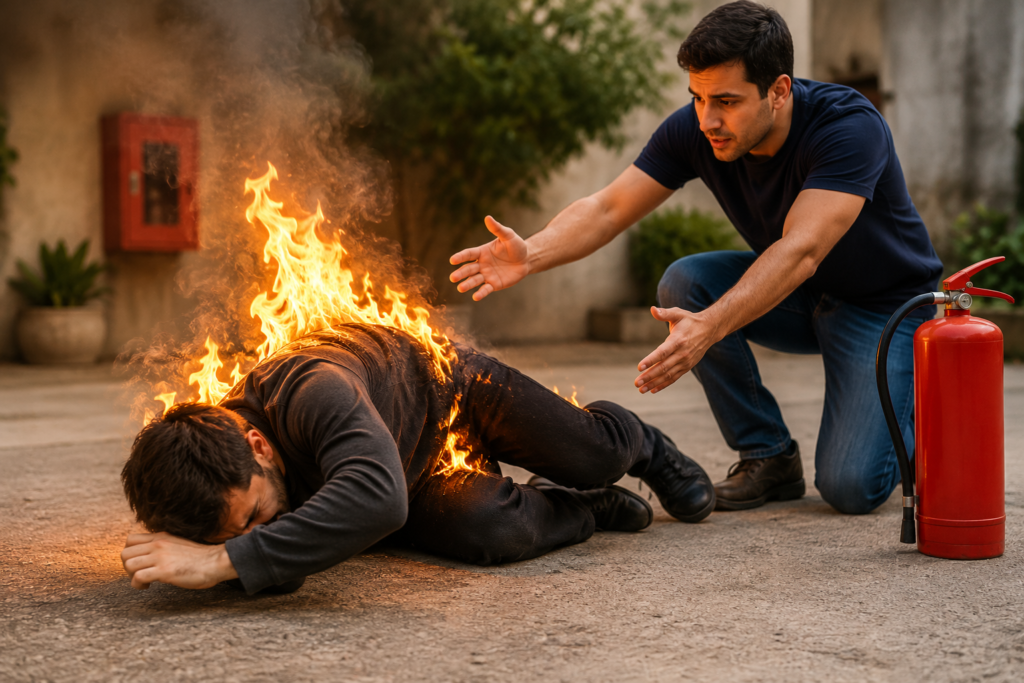
Fires can occur anywhere, at any time. A very serious one is if someone catches fire in his or her clothing. You may be able to save lives and prevent serious injuries by knowing what to do if someone is on fire. People often panic in a fire emergency, and as a result make risky choices. Quick thinking and timely action is essential as a burn may become worse in seconds. Be prepared for the event, so you can remain calm and act appropriately. The importance of taking immediate action Flames spread quickly on the body if clothing catches fire. As the fire continues, the risks of serious burns, shock and other life threatening issues increase. Taking immediate action can: The first few moments of the day can be the most critical. Step 1: Keep calm and call for assistance The first step is to stay cool. Panic can lead to misjudging decisions and exacerbate the situation. Immediately: There may be benefits in having extra people on hand to assist in the emergency. Step 2: Stop the Person from Running It is common for people to run when they are on fire. Unfortunately, running brings more air and oxygen to the fire. Tell the person to STOP moving! If needed, divert them from other potential sources of fire. The quickest way to prevent the fire spreading is to stop the movement. Step 3: Stop, Drop and Roll Stop, Drop and Roll is the most commonly recommended method for clothing fires. Stop Stop moving immediately. Drop If possible, drop to the ground and use hands to cover face. Roll Roll back and forth until fire is put out. The method used is to deprive the fire of oxygen to keep it burning. Step 4: Smother the Flames If a fire blanket, heavy coat or thick blanket is available, use it to smother the fire. Wrap the material around the victim, being careful to avoid covering the face, if possible. Extinguishing the fire rapidly by smothering, reduces the amount of oxygen and stops the fire. Step 5: Cool the Burns Once the fire has been extinguished, run cool water over the burned area. If possible, continue cooling for at least 20 minutes. The burn will cool down a little if this is done: Do not use ice as it will cause further damage to the tissue. Step 6: Get rid of loose garments and accessories Before swelling occurs, take off jewelry, belts, watches or loose clothing around burned area. Do not remove clothing that is adhered to the skin, however. It can result in additional damage. Remove only those objects that can be removed easily and safely. Step 7: Call for medical help Although burns may seem minor, medical assessment may be required. If:If the following occurs: Complications can be avoided and recovery facilitated by professional treatment. Common Pitfalls, What Not to Do? Many people unintentionally make burn injuries worse. Avoid: Proper First Aid and the application of it will minimise the further possibility of damage. Fire Prevention is Always Best It’s crucial to be able to react when a healthcare emergency occurs, but it’s far better to be proactive and prepared to handle it. Fire safety precautions consist of: Many fire-related injuries might be prevented with preparedness. Must Read this Blog: 7 Essential Facts About Do Fire Extinguishers Expire? Conclusion One of the key fire safety skills is understanding what to do if someone is on fire. The right answer is to not run, to use the Stop, Drop, and Roll technique, to smother the flames, to cool burns with water and to seek medical assistance when necessary. Quick response can greatly minimize injuries and maximize outcomes. These basic fire emergency procedures should be practiced by everyone in all homes, workplaces and public facilities.

7 Essential Steps: What Should You Do If Someone Is on Fire? Read More »

Why Fire Safety Blankets Are Made Out of Wool

6 Reasons Why Fire Safety Blankets Are Made Out of Wool?

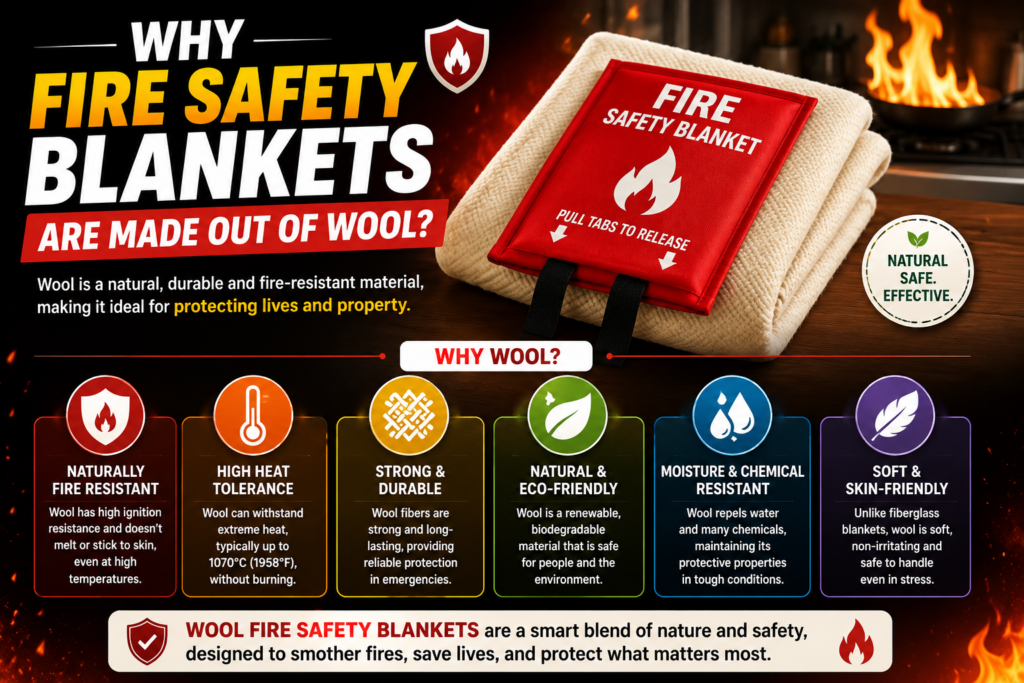
Fire safety blankets are easy-to-use, highly effective fire extinguishers for small fires. They act by sealing off oxygen, thus preventing the spread of fire. Of the various materials which are used for fire blankets, wool is one of the oldest and most dependable. Even today, many people ask an important question: why would fire safety blankets be made out of wool when modern materials exist? The key is the intrinsic fire resistance of wool, its safe performance in a fire and its special role in safeguarding people and property in emergencies. Let’s delve into this further. What Is a Fire Safety Blanket? Fire Safety Blanket is a fire extinguishing device that is used to extinguish small fires. Typically composed of materials that resist fire and used in emergency situations. It does so by taking away one of the components of fire, oxygen. Fire will not burn without oxygen. Fire blankets are commonly used in: Prior to the availability of modern fiberglass blankets, wool was one of the first types of materials used. Why Would Fire Safety Blankets Be Made Out of Wool? Fire safety blankets contain wool, which is a natural fire retardant that won’t burn when it gets hot. Wool is unlike synthetic materials which will melt or drip. Rather, it chars slowly and aids in the prevention of fires. Because of this it is a good choice to use on small fires and to protect people in emergency situations. The main reasons are: Wool is a natural fire resistant material One of the most important reasons wool is used is its natural resistance to fire. The protein-based fibre wool consists of keratin, which is like human hair. This is the reason that wool is different from cotton or synthetic fibers. Not easily ignitable and slows the rate of burning. When exposed to flame: This innate durability makes wool a safer fabric than many others. High Ignition Temperature of Wool Wool is relatively high in its ignition temperature as compared to many common items. It needs a temperature of about 570–600°C to ignite. This means: Even few seconds count in fire emergencies. Wool adds the added security. Wool Does Not Melt or Stick to Skin Melting fabric is one of the greatest hazards of fire. Numerous synthetic materials have a melting point that is low and adhere to skin, leading to serious injuries. Wool is more safe: This is particularly beneficial in protective fire blankets where human life is at stake. Wool Contains Natural Moisture Wool fibers have a small amount of moisture content. This is an important factor in fire resistance. If exposed to heat: This natural dampness makes wool less prone to catching fire than do other synthetic fibers. Wool Helps Smother Fire Effectively Fire safety blankets are used to smother fire. The dense fiber structure makes wool a good material. If applied to a flame: This suffocation process helps to quickly and safely prevent small fires. Wool does not give off toxic fumes readily Another great benefit of wool is that it does not release as many toxic fumes as many other synthetic products. In fire situations: This makes it more appropriate for settings such as homes and classrooms. Historical Use of Wool in Fire Safety Wool was much used as the material for protection against fire and heat before the modern development of fire resistant materials. It was used in: The material selected was wool, as it was readily available, long lasting and safer than cotton or synthetic fabrics of the era. Wool vs Modern Fire Safety Blanket Materials Today, most fire safety blankets are made from fiberglass or advanced heat-resistant fibers. These materials have more extreme performance. Wool Advantages: Wool Limitations: So, wool is still useful, but for only low to moderate risk environments. Does wool still exist? Of course, but not as frequently as formerly. Fiberglass blankets are the recommended choice for modern fire safety systems due to their ability to withstand high temperatures. However, wool is still used in: Despite its natural qualities it remains useful in certain circumstances. Why Wool was a smart early solution? Wool was one of the earliest fire resistant materials that was used because it was widely available and it was naturally safer than other fibres. It offered: This was a convenient option before the advent of modern engineering materials. A scientific explanation of why wool is fire resistant? In the structure of wool, there is N2 and moisture. These are components that help to retard combustion. In the event of a fire: This self-protective reaction is what differentiates wool from other natural fibres. Final Thoughts Wool is naturally fire resistant, non-melting and will smother fires if used properly, which is why there are fire safety blankets made from wool. It is a safe, natural and non-toxic means to put out small fires. Today, materials such as fiberglass are used more, but in some safety uses, wool is still an important material for its historical significance. Knowing the rationale behind the use of wool gives us an appreciation of the development of fire safety technology and the importance of natural materials in saving human life. National Fire Protection Association

6 Reasons Why Fire Safety Blankets Are Made Out of Wool? Read More »