
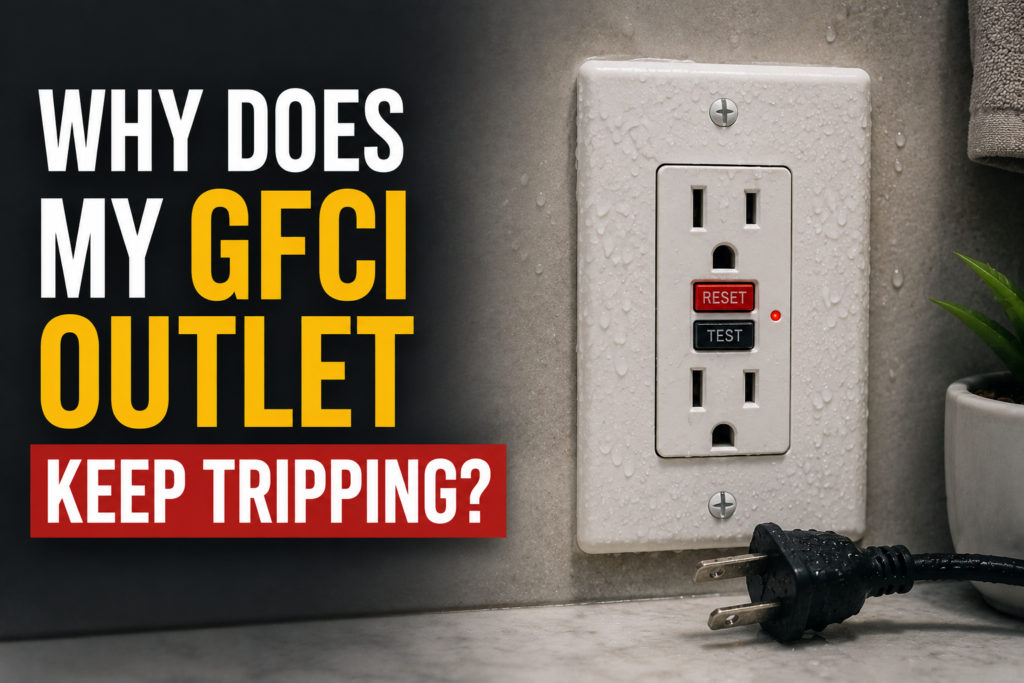
Why is my GFCI circuit breaker going bad? You’re not the only one who has had to reset the same outlet repeatedly. A Ground Fault Circuit Interrupter (GFCI) outlet safeguards you from electric shock. If it trips, it’s most likely asking you that it is not safe. An occasional trip is not necessarily a problem; however, if he is tripping regularly there is a problem that should be addressed.
Rather than continually pushing the reset button, it’s essential to learn what could be causing the outlet to be turned off.
What Is a GFCI Outlet?
A GFCI outlet is a special type of electrical outlet that is designed to monitor the flow of electricity. When it senses an electric current where it shouldn’t, like when water or people touch it, it opens the circuit and stops the current from flowing.
These outlets are typically located where water can be found such as:
- Bathrooms
- Kitchens
- Laundry rooms
- Garages
- Basements
- Outdoor locations
They are primarily used to help prevent electric shock.
1. Moisture Has Reached the Outlet
One of the most frequent causes of a GFCI outlet tripping is due to water.
Rain, leaks, condensation or splashes can cause a ground fault, which turns off the outlet as a safety precaution.
Don’t reset the outlet if it is wet until it has been inspected and the cause of the wetness has been solved.
2. Faulty Appliance Is Connected
Not all leaks are caused by the outlet.
If the GFCI is tripped on every power-up, the wiring or internal electrical component of the appliance may be damaged.
Unplug all items and reset outlet. Reconnect each one of the appliances, one at a time. If only one device trips an outlet, it’s possible that the device has a problem.
3. The Circuit is Overloaded
While GFCI outlets provide protection from ground faults, but not overloads, multiple high demanding appliances on one circuit can still cause electrical problems.
As far as practicable, do not use the same circuit for several heavy-duty appliances.
4. The Outlet Has Worn Out
But, just like other electrical equipment, GFCI outlets are not indestructible.
The internal components can wear out over time, causing annoying trips and/or a malfunction of the reset button.
If the outlet is an old outlet and it trips for no apparent reason, it may need to be replaced.
5. Wiring Problems
Repeated tripping can occur due to loose connections, broken wires or poor wiring.
Electrical wiring issues must never be overlooked as they could be a potential hazard for electric shocks or electrical fires.
If you think the wiring is damaged, do not make repairs, but call an electrician.
6. Another Outlet on the Same Circuit Has a Problem
Most people are not aware that a single GFCI outlet can provide protection for multiple regular outlets downstream.
A GFCI can trip even when the outlet is in good condition if an outlet that is connected to it has a fault.
Inspect the area around the outlets for areas of damage or moisture.
7. Outdoor Weather Conditions
GFCI outlets in the outdoors are subject to changing weather conditions.
When there is heavy rain, humidity, snow or condensation, moisture can get to the outlet box and will result in repeated trips.
This can be minimized with weatherproof covers and by sealing the outlet properly.
8. The GFCI is doing what it’s supposed to do
Sometimes there is no problem with the outlet.
The GFCI is just detecting this unsafe condition and turning off the power before it can cause injury.
That’s what it was meant for.
Tripping should not be an inconvenience and should signal repeated occurrences.
What Should You Do If It Keeps Tripping?
In the first place:
- Unplug any devices that have been plugged in.
- Press the reset button once.
- Turn electrical appliances back on, one by one.
- Look for water or other signs of damage.
- Discontinue your use of the outlet if the outlet keeps tripping.
When the outlet keeps tripping the breaker then without cause, have the electrical system checked by a licensed electrician.
Tips to Prevent GFCI Problems
A few simple practices can help minimize nuisance trips.
- Keep outlets dry.
- Replace broken electrical cords.
- Avoid overloading circuits.
- Regularly test GFCI outlets with the TEST and RESET buttons.
- Replace damaged or worn outlets as soon as possible.
Electrical system maintenance is a key way to ensure safety and reliability.
Final Thoughts
So, why is my GFCI Outlet tripping? In most cases, it’s because the outlet has detected a potential electrical hazard. Some of the most common causes include moisture, faulty appliances, damaged wiring, overloaded circuits, or an outlet that is worn.
Don’t ignore the issue or keep resetting the outlet, spare a few moments to find out what is going on. One of the most important and useful safety devices in your home is a properly functioning GFCI outlet and listening to its warnings can prevent electric shock and other electrical hazards.
FAQS
If nothing’s plugged in why is my GFCI outlet tripping?
This can happen due to moisture, broken wiring, due to another outlet on the same protected circuit or due to a faulty GFCI outlet.
May GFCI outlets be reset indefinitely?
Do not keep switching off and on the power if the outlet keeps tripping the circuit breaker. If the tripping happens often, it is most likely a problem with the electrical component and must be diagnosed.
Will a faulty appliance trip a GFCI outlet?
Yes. If the wiring or the internal circuit of an appliance is damaged, or the appliance has some kind of fault, it can trip the outlet as soon as it is connected to the power supply.
The lifespan of an arc-fault circuit interrupter outlet is how long?
The life of many GFCI outlets is approximately 10 years but this varies based on usage, environment and maintenance.
“May I install a GFCI outlet myself?”
If you are not familiar with electrical wiring, it is best to get a professional electrician to check and/or replace the outlet, if needed.