
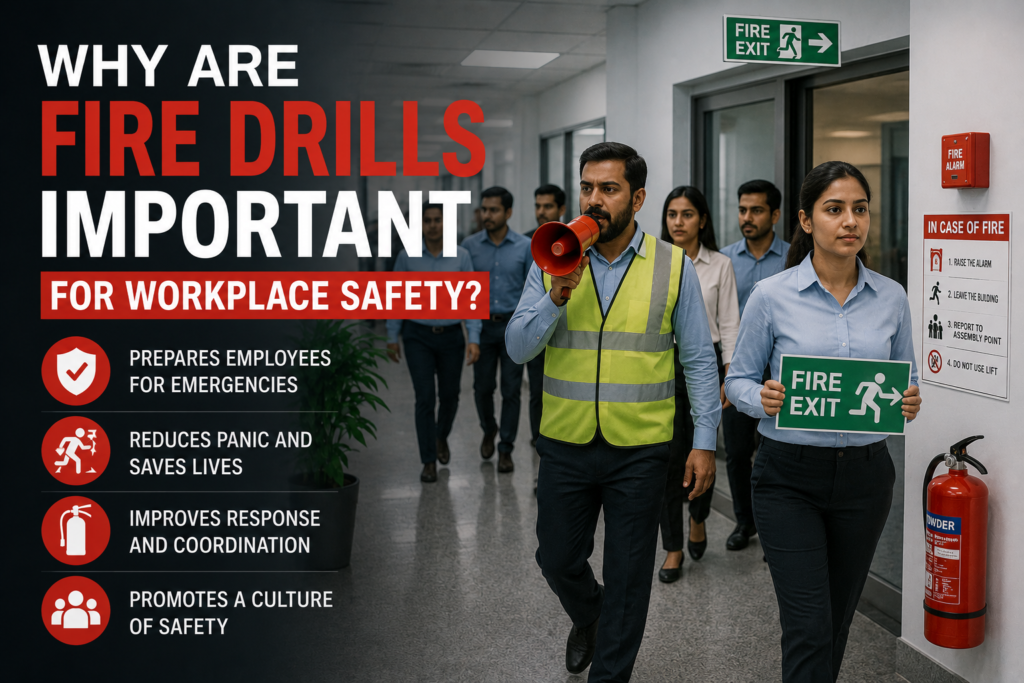
Why is fire drill considered as an essential activity for workplace safety? As part of the safety induction I ask every new employee this question. The usual response is, “So we know how to get out of the building. Well, of course it’s true, but a fire drill is not just about going to an assembly point. It’s about getting ready ahead of situations that could arise.
I don’t have to tell you that I have had to work in environments where people felt like fire drills were another rule of the company. One day, there was a small electrical fire in a storage room. Those staff members who had been practising evacuation remained calm and evacuated safely. The few who failed to comply with the previous drills did not know which way they were to go and wasted time. That’s why everyone was given a reminder of the importance of preparation.
A Fire Doesn’t Give You Time to Think
When a fire happens you will NOT have time to read or ask questions, that is one thing I always preach to my team.
Smoke spreads quickly. Visibility drops. People become confused.
That’s why we prepare in advance of a disaster. A fire drill helps your body and mind learn to react to fire instinctively. You don’t need to run around in a panic, you already know your way around and what to do.
Knowing Your Exit Can Save Your Life
Ever observe how the majority of people get into a building without regard to the emergency exits?
I regularly conduct workplace inspections and during each of these inspections, I make sure that I ask the employees to show me their closest emergency exit. Surprisingly, many hesitate.
That changes when it’s a fire drill. Workers become familiar with:
- Primary evacuation routes
- Alternative exits
- Assembly points
- Safe escape procedures
If one way is blocked with smoke or fire, it may be the difference between life and death if they know an alternate way.
Fire Drills Develop Confidence
First time drills can be stressful for new employees.
That’s completely normal.
There is a change after some practice with a couple of drills. Individuals cease their incorrect speculations and start making confident decisions. They understand how and when to walk, where to assemble and who to report to.
You don’t need to read a ‘how to’ book to be confident, you need experience.
Each Worker has a duty.
Every Worker Has a Responsibility
It’s everyone’s responsibility.
There is a role for every person during a drill. Supervisors are responsible for their employees, fire wardens are assigned to their area and check on it, first aid team members remain on hand in event of an emergency, and all employees follow the evacuation procedure.
If everyone has their part to play the whole evacuation will be quicker and better organized.
Fire Drills Uncover Issues
A great part of the benefit of a fire drill is that it reveals issues before a fire.
I have been involved in drills that have revealed:
- Boxes obstructing emergency exits.
- Fire doors unclosed
- Workers toward elevators
- Missing evacuation signs
- The lack of effective collaboration among departments.
These issues can be identified during practice and time can be allowed to correct these issues before lives are in danger.
Visitors Need Your Help Too
Fire safety training is provided to employees, but typically not to visitors.
Consider contractors, delivery personnel, customers, guests, etc. When the alarm goes on, they might not know where to go.
Thus, it is essential that employees are trained to remain calm and to guide visitors to the closest safe place without endangering themselves.
A safe work place will keep everyone safe in the building.
Practice Creates Better Teamwork
It’s not a matter of individuals when it comes to a successful evacuation.
It’s about teamwork.
Staff members can get used to communicating well, not stopping people up at the exits and taking turns to help each other.
In the event of an actual disaster, this teamwork ensures that there is no confusion and that the evacuation is carried out efficiently.
Fire Drills Build a Culture of Safety
Routine fire drills tell a message.
Employee safety matters.
With time, workers become more aware of other fire hazards as well. They find blocked exits, damaged extinguishers, faulty emergency lights and unsafe electrical equipment, as safety becomes a part of the workplace culture and not just a yearly requirement.
Common Mistakes I Always Correct
There are some errors which I never fail to notice as a fire safety officer.
Some employees try to complete their tasks prior to their departure.
Some other people stop to pick up bags or belongings.
I’ve even seen workers using elevators for drilling!
These habits can be hazardous in case of an actual fire.
When the alarm is beeped:
- Leave immediately.
- Avoid use of an elevator unless directed by emergency personnel.
- Walk quietly to assembly area.
- DO NOT return until given the all-clear.
These are relatively simple things that can save lives.
Fire Drills Are Only Part of Fire Safety
It’s important to conduct a fire drill, but it’s not the end of it.
A safe workplace also includes tested smoke alerts, working fire extinguishers, clear evacuation routes and emergency lighting.
Fire prevention and emergency preparedness go hand in hand. There’s no such thing as too many in one.
Final Thoughts
In all likelihood, the most important thing to take away from this article is that a fire drill is a practice for one of the worst days a workplace could experience.
Knowing the purpose of fire drills is not about enforcing company rules, it’s about saving lives. Each drill affords an opportunity for employees to gain confidence, enhance teamwork, recognize hazards and be able to react more quickly in the event of a real emergency.
You can waste the few minutes you may spend practicing today or save a lot of trouble tomorrow.
Why is it important to have fire drills in the workplace
Fire drills will ensure that employees know what to do quickly and safely in case of fire. They minimize panic, promote evacuation and assist everyone in understanding their responsibilities.
How many fire drills should be held in the workplace?
Frequency is based on local regulations and work place risks but many companies hold fire drills once or twice a year.
What should employees logon the fire drill?
Workers are to cease all activities, take the closest safe route to exit the workplace, stay away from elevators, go to the assembly area, and wait for additional instructions.
Can fire drills prevent injuries?
Yes. With regular practice, employees will be able to respond to the fire calmly and follow safe evacuation procedures, minimizing injuries in the event of a fire.
Who should be responsible for the workplace fire drill programme?
Workplace fire drills are usually planned, conducted and reviewed by an employer, a safety manager, or a designated fire safety officer.