
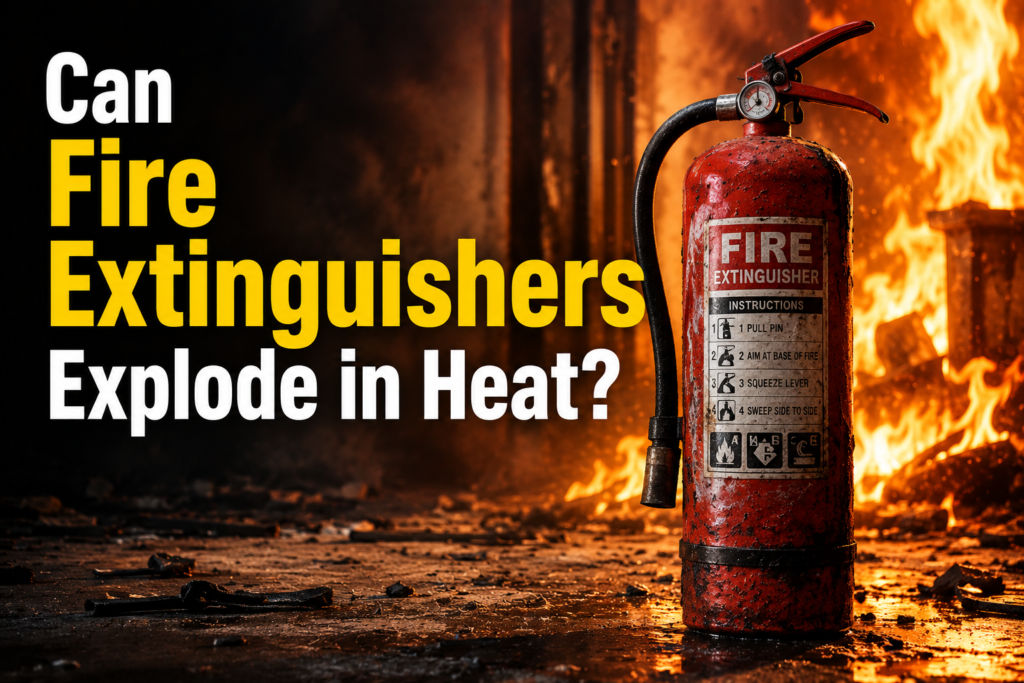
Will fire extinguishers explode when exposed to heat? Yes, they can; but not very often if kept properly. The fire extinguishers can withstand normal temperature changes, however, extreme heat can cause the pressure of the cylinder to be elevated. When the pressure gets too high or when the extinguisher is damaged, it may become dangerous.
Fortunately, this hazard is simple to minimize with proper fire extinguisher storage and maintenance.
Why Heat Affects Fire Extinguishers?
The majority of fire extinguishers are filled with compressed gas. The pressure in the cylinder increases with an increase in the temperature of the surroundings.
Extinguishers are made to endure normal use, but long periods of exposure to excessive heat will put undue strain on the cylinder.
This is why proper storage is an important component to fire safety.
How Hot Is Too Hot?
Portable fire extinguishers have a maximum and minimum temperature range that the extinguisher should be used in.
The following can cause problems with the extinguishers:
- Excessive exposure to direct sunlight for extended periods of time.
- Summertime hot vehicles
- Boilers or furnaces
- Industrial ovens
- Other high-temperature environments
If you’re not certain of the safe temperature range for your extinguisher, always refer to the manufacturer’s instructions on the label.
Can a Fire Extinguisher Actually Explode?
In rare cases, yes.
The pressure inside the cylinder may become very high, or the cylinder may be weakened by corrosion, damage or mismaintenance, which may cause the cylinder to burst open. If a cylinder becomes ruptured, it can release its contents with great force and may result in serious injury or damage to property.
Fortunately, the quality fire extinguishers have safety features and are tested to adhere to strict safety standards.
Signs Your Fire Extinguisher May Not Be Safe
Inspect your extinguisher regularly. Replace or have inspected if you notice:
- Rust or Corrosion on the cylinder
- Deep scratches and dents
- Leaking contents
- A fault in the safety pin or seal
- Damaged hose or nozzle.
- A pressure gauge that is out of the recommended range
Do not overlook the following problems if you notice them: Get it inspected or changed as soon as possible!
Where to Keep a Fire Extinguisher?
With proper storage, you can prolong the life of your extinguisher and keep it ready to use in case of an emergency.
Choose a location that is:
- Cool and dry
- Easy to access
- In shaded areas
- In a cool, non-smoky area
- Securely mounted to a wall or acceptable bracket
Never store fire extinguishers in places where they are likely to be exposed to extreme temperatures unless such extinguishers are rated for such use.
How to Keep Your Fire Extinguisher Safe?
Some simple practices will avoid most issues.
- Check the extinguisher on a regular basis.
- If your model comes with a pressure gauge, make sure to check that.
- Keep it unsoiled and undamaged.
- Have professional servicing planned as needed.
- Replace out-of-date or damaged extinguishers.
If you have an extinguisher, regular maintenance will ensure it is working properly if you do need it.
Common Myths on Fire Extinguishers:
“They explode easily.”
No, fire extinguishers are built to last and be strong. Normally do not explode under normal conditions.
“It’s OK to leave one in the car, forever,”
Extreme temperatures can occur in the interior of a vehicle. These conditions are not recommended for long term storage unless the extinguisher is specifically designed for long-term storage in these conditions.
“If the extinguisher looks fine, it doesn’t need inspection.”
What looks good on the outside may not be good on the inside. Even if the extinguisher looks like it is in good condition, routine inspections are still critical.
Final Thoughts
So, Do fire extinguishers explode in heat? Yes, but it is uncommon if they are stored, inspected and maintained properly. When the cylinder is not properly stored or is damaged, extreme heat can cause pressure to build inside the cylinder.
The best way to assure safety is to store your fire extinguisher in a cool, convenient place, maintain it regularly and replace it when it is damaged or needs to be replaced. A fire extinguisher will be effective only if you take care of it so as to minimize risk during a fire emergency.
Will the fire extinguisher explode in the Sun?
Exposure to extreme heat for more than a few minutes can cause an increase in internal pressure. It’s best to avoid storing fire extinguishers in direct sunlight for long periods.
Can a fire extinguisher be used in a car?
Can be, but must first be appropriate for use in vehicles and properly anchored. Don’t leave it in bright light for too long.
How many degrees will a fire extinguisher stand up to?
Safe operating and storage temperatures are different for each model. Never use an extinguisher against manufacturer’s instructions.
How often should I check my fire extinguisher(s)?
Regular visual inspection and maintenance should be conducted as per local regulations and manufacturer’s recommendations.
If my fire extinguisher is damaged, what should I do?
Use only a good extinguisher. Have them checked by a competent service organization, or change it if needed.