9 Warning Signs: Is It Dangerous If a Circuit Breaker Keeps Tripping?
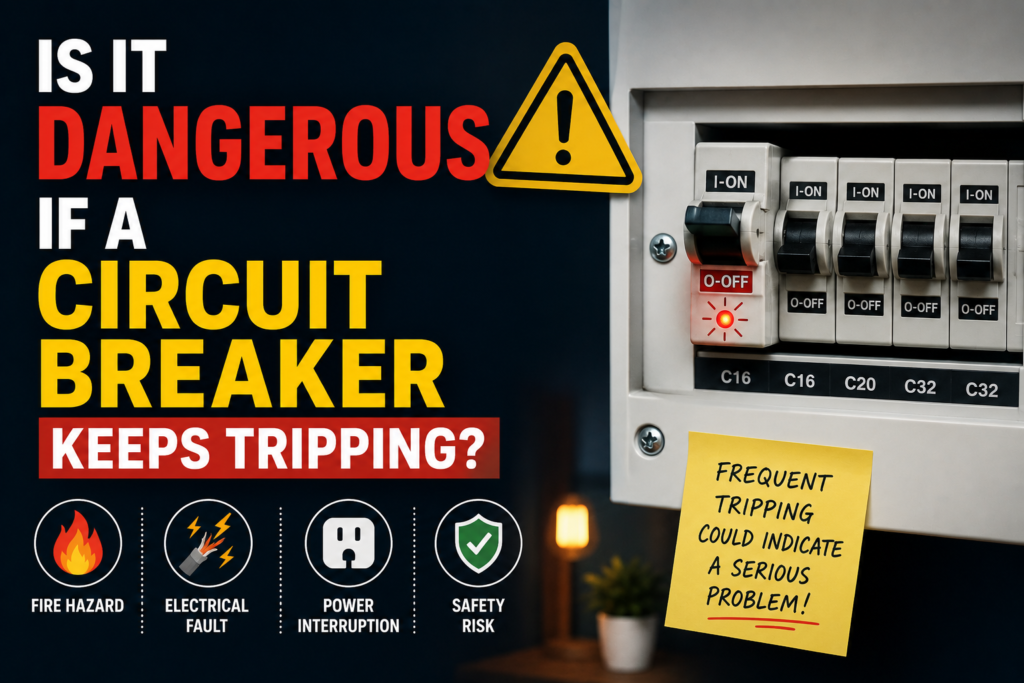
Is It Dangerous If a Circuit Breaker Keeps Tripping? Every time I talk with someone who’s new to working with an electric circuit or is a new homeowner, I always say that if a circuit breaker keeps tripping, don’t ignore it. A breaker is designed for your protection against electrical hazards! It continues to cycle on and off, it’s talking to you to say something is wrong. Repeated resetting, without getting to the root of the problem, can lead to further wiring problems, electrical fires, or electric shock. A circuit breaker is like the electrical systems safety guard. The failure is not a bailout from failure, it is a call to action. You must determine the cause of its trip and then turn it back on. Avoid treating it as a nuisance! I have observed people going to the electrical panel, turning the breaker back on and continuing with their day. After a couple minutes, it trips again. They don’t ask what the problem is, they keep RESETting it. One of the most frequently made electrical safety errors is to do this. If a breaker trips on a periodic overload, it is not necessarily a serious problem. However, frequent tripping should be viewed as an alarm that should be addressed. What’s the Use of a Circuit Breaker? A circuit breaker is a device that detects an issue and automatically shuts off the power. Its purpose is to protect: If there’s no breaker in place, a surge in power could overheat wires and ignite a fire and cause damage that isn’t noticeable in plain sight. The Most Common Reasons a Breaker Keeps Tripping But, before assuming that the breaker is defective, think of the most common causes. Too Many Devices on One Circuit This is known as an overloaded circuit. For instance, when a space heater, microwave, electric kettle, and toaster are all plugged into outlets that are on the same circuit, the circuit may overload the breaker. The answer can simply be to either reduce the electrical load or relocate some of these devices to another circuit. A Short Circuit In a short circuit, the electric current takes an alternate path. This can happen due to: Damaged wiringLoose connectionsFaulty appliancesWater that enters the electronic components. Short circuit is more hazardous than simple overloads and should be checked by a licensed electrician. Ground Fault A ground fault is the leakage of electricity from its intended path to ground. This frequently occurs in wet places like: BathroomsKitchensLaundry roomsOutdoor electrical installations Never overlook ground faults as they can lead to electric shock. A Faulty Appliance But sometimes the breaker isn’t the issue. An appliance with damaged internal wiring may cause the breaker to trip every time it’s switched on. When a breaker trips only when a particular appliance is plugged in, unplug it and refrain from using it until it is inspected or repaired. A Worn-Out Breaker While circuit breakers are designed to operate for a long time, they cannot operate forever. Over the years, a breaker can become worn and not function properly. This is not as common as overloaded circuits or Electro-Circuits. Only a qualified electrician should decide if a breaker needs to be replaced. Warning Signs You Should Never Ignore I always inspect the workplaces and ask workers to report electrical warning signs right away. When you see or hear: The symptoms can mean there is a deeper electrical issue that needs to be addressed. Should It Be Safe To Reset The Breaker? This is a question that I get asked a lot when teaching safety. Only if you know why it tripped, will you know what to do. If you believe you accidentally overloaded the circuit with too many appliances, you can turn off some items and the reset the breaker and it should work. If the breaker keeps tripping, however, or trips right away, do NOT reset the breaker again. A repeated reset may cover up a potentially hazardous problem – rather than resolve it. What You Should Do Instead? If a breaker keeps blowing, do the following basic safety precautions: Note: Electrical systems should only be checked or repaired by trained and qualified personnel. How to avoid future problems with breakers? Good habits can help prevent many electrical problems. I always recommend that workers and homeowners: Minimizing damage to equipment and electrical fires can be done with simple preventive measures. A Lesson I Share During Safety Training At one work site inspection, an employee commented that the breaker had been tripping for “a few weeks. Every time it occurred, somebody just turned it back on. We found damaged wiring in an equipment unit when we looked. The breaker prevented wiring from getting hot. The situation could have been a lot worse if the breaker didn’t do its job. Which is why I tell all new hires: A circuit breaker is not the issue, it’s telling you there is a problem. Final Thoughts If the circuit breaker keeps tripping, it may be dangerous and can prevent serious electrical hazards from occurring. Breaker – a safety device incorporated into the electrical circuit to safeguard persons, wiring and equipment. A couple of times this may be easily fixed, but if a circuit keeps blowing then there is something wrong. If the problem persists, find out what is causing it and get professional assistance instead of resetting the breaker again and again. Becoming a serious taker of electric warnings today can save from fires, damage to equipment and injuries tomorrow.
9 Warning Signs: Is It Dangerous If a Circuit Breaker Keeps Tripping? Read More »