Admin

Michael J. Anderson is a U.S.-based fire safety enthusiast and writer who focuses on making fire protection knowledge simple and accessible. With a strong background in researching fire codes, emergency response planning, and safety equipment, he creates content that bridges the gap between technical standards and everyday understanding.

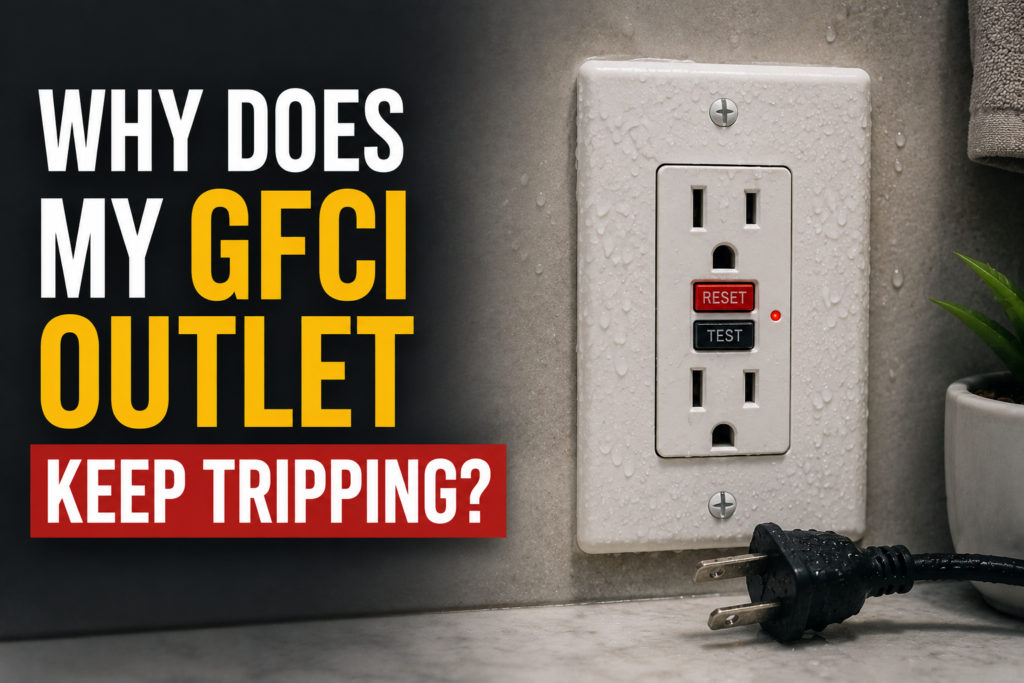
Why Does My GFCI Outlet Keep Tripping?

8 Common Reasons: Why Does My GFCI Outlet Keep Tripping?

Why is my GFCI circuit breaker going bad? You’re not the only one who has had to reset the same outlet repeatedly. A Ground Fault Circuit Interrupter (GFCI) outlet safeguards you from electric shock. If it trips, it’s most likely asking you that it is not safe. An occasional trip is not necessarily a problem; however, if he is tripping regularly there is a problem that should be addressed. Rather than continually pushing the reset button, it’s essential to learn what could be causing the outlet to be turned off. What Is a GFCI Outlet? A GFCI outlet is a special type of electrical outlet that is designed to monitor the flow of electricity. When it senses an electric current where it shouldn’t, like when water or people touch it, it opens the circuit and stops the current from flowing. These outlets are typically located where water can be found such as: They are primarily used to help prevent electric shock. 1. Moisture Has Reached the Outlet One of the most frequent causes of a GFCI outlet tripping is due to water. Rain, leaks, condensation or splashes can cause a ground fault, which turns off the outlet as a safety precaution. Don’t reset the outlet if it is wet until it has been inspected and the cause of the wetness has been solved. 2. Faulty Appliance Is Connected Not all leaks are caused by the outlet. If the GFCI is tripped on every power-up, the wiring or internal electrical component of the appliance may be damaged. Unplug all items and reset outlet. Reconnect each one of the appliances, one at a time. If only one device trips an outlet, it’s possible that the device has a problem. 3. The Circuit is Overloaded While GFCI outlets provide protection from ground faults, but not overloads, multiple high demanding appliances on one circuit can still cause electrical problems. As far as practicable, do not use the same circuit for several heavy-duty appliances. 4. The Outlet Has Worn Out But, just like other electrical equipment, GFCI outlets are not indestructible. The internal components can wear out over time, causing annoying trips and/or a malfunction of the reset button. If the outlet is an old outlet and it trips for no apparent reason, it may need to be replaced. 5. Wiring Problems Repeated tripping can occur due to loose connections, broken wires or poor wiring. Electrical wiring issues must never be overlooked as they could be a potential hazard for electric shocks or electrical fires. If you think the wiring is damaged, do not make repairs, but call an electrician. 6. Another Outlet on the Same Circuit Has a Problem Most people are not aware that a single GFCI outlet can provide protection for multiple regular outlets downstream. A GFCI can trip even when the outlet is in good condition if an outlet that is connected to it has a fault. Inspect the area around the outlets for areas of damage or moisture. 7. Outdoor Weather Conditions GFCI outlets in the outdoors are subject to changing weather conditions. When there is heavy rain, humidity, snow or condensation, moisture can get to the outlet box and will result in repeated trips. This can be minimized with weatherproof covers and by sealing the outlet properly. 8. The GFCI is doing what it’s supposed to do Sometimes there is no problem with the outlet. The GFCI is just detecting this unsafe condition and turning off the power before it can cause injury. That’s what it was meant for. Tripping should not be an inconvenience and should signal repeated occurrences. What Should You Do If It Keeps Tripping? In the first place: When the outlet keeps tripping the breaker then without cause, have the electrical system checked by a licensed electrician. Tips to Prevent GFCI Problems A few simple practices can help minimize nuisance trips. Electrical system maintenance is a key way to ensure safety and reliability. Final Thoughts So, why is my GFCI Outlet tripping? In most cases, it’s because the outlet has detected a potential electrical hazard. Some of the most common causes include moisture, faulty appliances, damaged wiring, overloaded circuits, or an outlet that is worn. Don’t ignore the issue or keep resetting the outlet, spare a few moments to find out what is going on. One of the most important and useful safety devices in your home is a properly functioning GFCI outlet and listening to its warnings can prevent electric shock and other electrical hazards. FAQS

8 Common Reasons: Why Does My GFCI Outlet Keep Tripping? Read More »
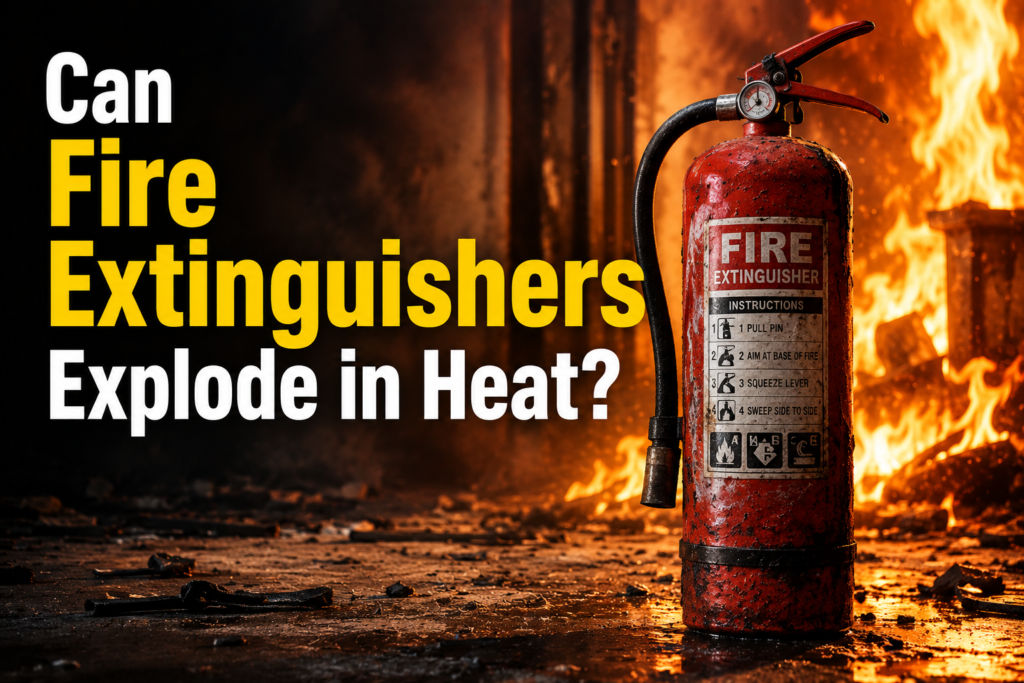
Can Fire Extinguishers Explode in Heat?

7 Important Facts: Can Fire Extinguishers Explode in Heat?

Will fire extinguishers explode when exposed to heat? Yes, they can; but not very often if kept properly. The fire extinguishers can withstand normal temperature changes, however, extreme heat can cause the pressure of the cylinder to be elevated. When the pressure gets too high or when the extinguisher is damaged, it may become dangerous. Fortunately, this hazard is simple to minimize with proper fire extinguisher storage and maintenance. Why Heat Affects Fire Extinguishers? The majority of fire extinguishers are filled with compressed gas. The pressure in the cylinder increases with an increase in the temperature of the surroundings. Extinguishers are made to endure normal use, but long periods of exposure to excessive heat will put undue strain on the cylinder. This is why proper storage is an important component to fire safety. How Hot Is Too Hot? Portable fire extinguishers have a maximum and minimum temperature range that the extinguisher should be used in. The following can cause problems with the extinguishers: If you’re not certain of the safe temperature range for your extinguisher, always refer to the manufacturer’s instructions on the label. Can a Fire Extinguisher Actually Explode? In rare cases, yes. The pressure inside the cylinder may become very high, or the cylinder may be weakened by corrosion, damage or mismaintenance, which may cause the cylinder to burst open. If a cylinder becomes ruptured, it can release its contents with great force and may result in serious injury or damage to property. Fortunately, the quality fire extinguishers have safety features and are tested to adhere to strict safety standards. Signs Your Fire Extinguisher May Not Be Safe Inspect your extinguisher regularly. Replace or have inspected if you notice: Do not overlook the following problems if you notice them: Get it inspected or changed as soon as possible! Where to Keep a Fire Extinguisher? With proper storage, you can prolong the life of your extinguisher and keep it ready to use in case of an emergency. Choose a location that is: Never store fire extinguishers in places where they are likely to be exposed to extreme temperatures unless such extinguishers are rated for such use. How to Keep Your Fire Extinguisher Safe? Some simple practices will avoid most issues. If you have an extinguisher, regular maintenance will ensure it is working properly if you do need it. Common Myths on Fire Extinguishers: “They explode easily.” No, fire extinguishers are built to last and be strong. Normally do not explode under normal conditions. “It’s OK to leave one in the car, forever,” Extreme temperatures can occur in the interior of a vehicle. These conditions are not recommended for long term storage unless the extinguisher is specifically designed for long-term storage in these conditions. “If the extinguisher looks fine, it doesn’t need inspection.” What looks good on the outside may not be good on the inside. Even if the extinguisher looks like it is in good condition, routine inspections are still critical. Final Thoughts So, Do fire extinguishers explode in heat? Yes, but it is uncommon if they are stored, inspected and maintained properly. When the cylinder is not properly stored or is damaged, extreme heat can cause pressure to build inside the cylinder. The best way to assure safety is to store your fire extinguisher in a cool, convenient place, maintain it regularly and replace it when it is damaged or needs to be replaced. A fire extinguisher will be effective only if you take care of it so as to minimize risk during a fire emergency.

7 Important Facts: Can Fire Extinguishers Explode in Heat? Read More »

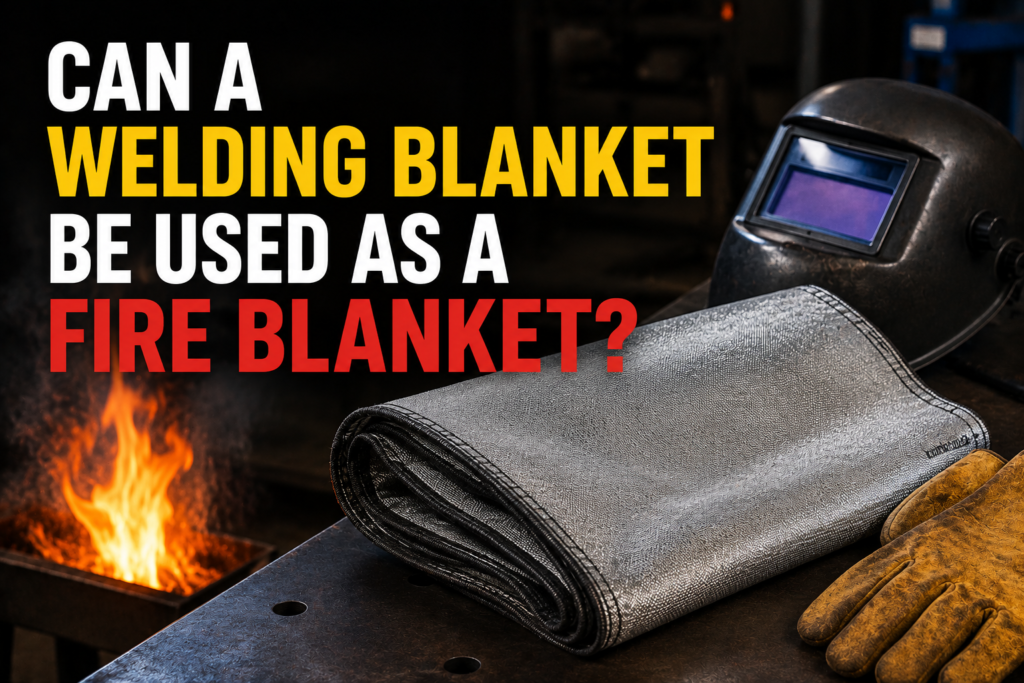
Can a welding blanket be used as a fire blanket?

7 Essential Facts: Can a Welding Blanket Be Used as a Fire Blanket?

Is it possible to use a welding blanket as a fire blanket? Don’t mistake a welding blanket for a fire blanket and understand the differences in their uses and the importance of using the right safety gear. Is it possible to use a Welding Blanket as a Fire Blanket? Can a welding blanket be used as a fire blanket? Among the many questions asked, particularly among DIY enthusiasts, welders, and workshop owners is this. Many people think that both blankets can be used in the same way, because both are constructed of heat-resistant material. However, that’s not always the case. They look alike but are for different tasks. Understanding the difference can assist with selecting the proper equipment and safely handling fire emergencies. What is a Welding Blanket? A welding blanket is a protective cover that is constructed of high-temperature fabrics or fiberglass. It primarily prevents heat, molten metal, and sparks from reaching nearby surfaces and equipment during welding, cutting or grinding. These are the areas where welding blankets are widely used: They help prevent accidental fires by preventing hot sparks getting in contact with flammable materials. What is a Fire Blanket? A fire blanket is emergency fire safety equipment that is used to extinguish small fires. It does so by smothering the fire and removing oxygen from it. Fire blankets are often found in: They are particularly helpful for small fires and for clothing fires and can be used as a first attack before the fire spreads. Are They the Same? The answer is a simple no. Both products are heat resistant, but for different applications. A welding blanket is a specially crafted item that is meant to protect the work area from sparks and hot metal when welding. Fire blanket is used only for small fires and is a special type of blanket. Do not use one in place of the other unless rated so by the manufacturer. Is it okay to use a Welding Blanket in a fire? In some cases, a welding blanket will be able to help limit the spread of heat and will also cover some small fires which are caused by the metal and also heat. It is not to be used as a substitute for an adequate fire blanket, however. Fire blankets are made and tested to extinguish fires in emergencies. They are also made to be easy to use in case of an emergency. If a fire blanket is needed at your place of work or at home, a certified fire blanket is safer than using a welding blanket. Why Using the Right Blanket Matters? In the event of a fire, time is of the essence. Out-of-the-box equipment may not be effective in emergencies and can make it harder to manage a fire. The right blanket aids in immediate and effective response. It also helps to keep everyone’s heads clear in an emergency, as everyone knows what to use. When can you use a Welding Blanket? The best time to use a welding blanket is when you need to: It is not an emergency firefighting device, but a preventative safety device. When to use a Fire Blanket? A fire blanket is for emergencies for small fires. It can be used to: When the fire is growing, or has become too large, get out and call the fire department right away. Tips for Better Fire Safety Fire safety requires the proper equipment to be used. You should also: Sometimes, the best way to avoid a small incident from becoming a serious emergency is to prepare for it. Final Thoughts So, can a welding blanket be used as a fire blanket? Unfortunately not in most cases. Both are heat resistant but for different applications. A welding blanket will prevent sparks and hot metal from falling on the work area, and a fire blanket is a specially designed fire extinguisher designed to help extinguish small fires in case of emergency. Always use equipment for its intended use for the greatest safety. Having a welding blanket and fire blanket in the correct surroundings can help enhance fire protection and be able to better respond to a fire emergency.

7 Essential Facts: Can a Welding Blanket Be Used as a Fire Blanket? Read More »

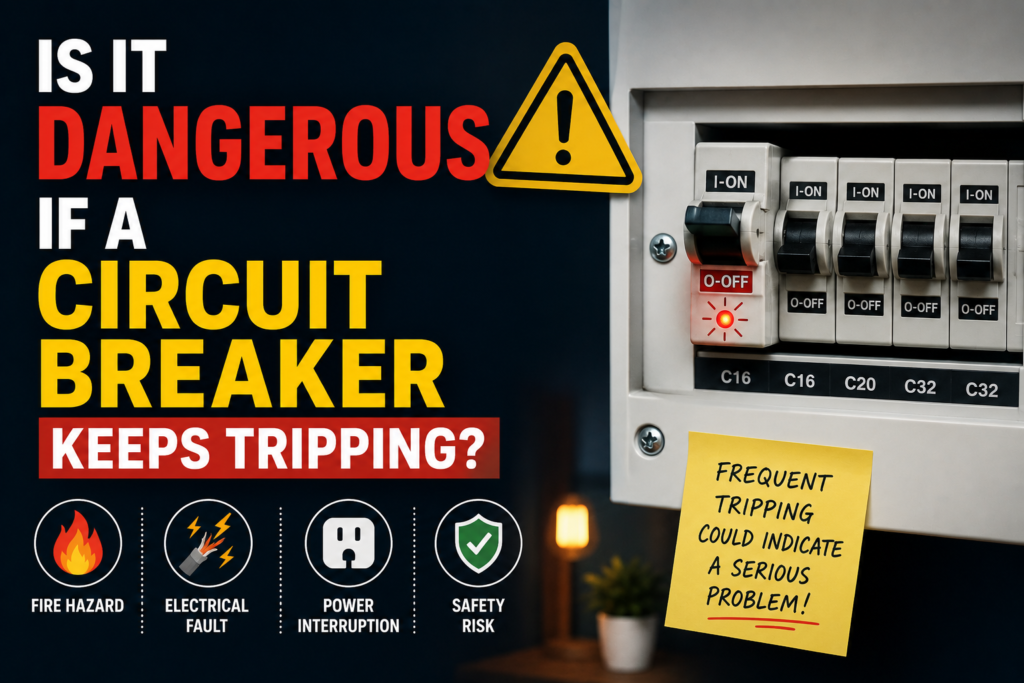
Is It Dangerous If a Circuit Breaker Keeps Tripping?

9 Warning Signs: Is It Dangerous If a Circuit Breaker Keeps Tripping?

Is It Dangerous If a Circuit Breaker Keeps Tripping? Every time I talk with someone who’s new to working with an electric circuit or is a new homeowner, I always say that if a circuit breaker keeps tripping, don’t ignore it. A breaker is designed for your protection against electrical hazards! It continues to cycle on and off, it’s talking to you to say something is wrong. Repeated resetting, without getting to the root of the problem, can lead to further wiring problems, electrical fires, or electric shock. A circuit breaker is like the electrical systems safety guard. The failure is not a bailout from failure, it is a call to action. You must determine the cause of its trip and then turn it back on. Avoid treating it as a nuisance! I have observed people going to the electrical panel, turning the breaker back on and continuing with their day. After a couple minutes, it trips again. They don’t ask what the problem is, they keep RESETting it. One of the most frequently made electrical safety errors is to do this. If a breaker trips on a periodic overload, it is not necessarily a serious problem. However, frequent tripping should be viewed as an alarm that should be addressed. What’s the Use of a Circuit Breaker? A circuit breaker is a device that detects an issue and automatically shuts off the power. Its purpose is to protect: If there’s no breaker in place, a surge in power could overheat wires and ignite a fire and cause damage that isn’t noticeable in plain sight. The Most Common Reasons a Breaker Keeps Tripping But, before assuming that the breaker is defective, think of the most common causes. Too Many Devices on One Circuit This is known as an overloaded circuit. For instance, when a space heater, microwave, electric kettle, and toaster are all plugged into outlets that are on the same circuit, the circuit may overload the breaker. The answer can simply be to either reduce the electrical load or relocate some of these devices to another circuit. A Short Circuit In a short circuit, the electric current takes an alternate path. This can happen due to: Damaged wiringLoose connectionsFaulty appliancesWater that enters the electronic components. Short circuit is more hazardous than simple overloads and should be checked by a licensed electrician. Ground Fault A ground fault is the leakage of electricity from its intended path to ground. This frequently occurs in wet places like: BathroomsKitchensLaundry roomsOutdoor electrical installations Never overlook ground faults as they can lead to electric shock. A Faulty Appliance But sometimes the breaker isn’t the issue. An appliance with damaged internal wiring may cause the breaker to trip every time it’s switched on. When a breaker trips only when a particular appliance is plugged in, unplug it and refrain from using it until it is inspected or repaired. A Worn-Out Breaker While circuit breakers are designed to operate for a long time, they cannot operate forever. Over the years, a breaker can become worn and not function properly. This is not as common as overloaded circuits or Electro-Circuits. Only a qualified electrician should decide if a breaker needs to be replaced. Warning Signs You Should Never Ignore I always inspect the workplaces and ask workers to report electrical warning signs right away. When you see or hear: The symptoms can mean there is a deeper electrical issue that needs to be addressed. Should It Be Safe To Reset The Breaker? This is a question that I get asked a lot when teaching safety. Only if you know why it tripped, will you know what to do. If you believe you accidentally overloaded the circuit with too many appliances, you can turn off some items and the reset the breaker and it should work. If the breaker keeps tripping, however, or trips right away, do NOT reset the breaker again. A repeated reset may cover up a potentially hazardous problem – rather than resolve it. What You Should Do Instead? If a breaker keeps blowing, do the following basic safety precautions: Note: Electrical systems should only be checked or repaired by trained and qualified personnel. How to avoid future problems with breakers? Good habits can help prevent many electrical problems. I always recommend that workers and homeowners: Minimizing damage to equipment and electrical fires can be done with simple preventive measures. A Lesson I Share During Safety Training At one work site inspection, an employee commented that the breaker had been tripping for “a few weeks. Every time it occurred, somebody just turned it back on. We found damaged wiring in an equipment unit when we looked. The breaker prevented wiring from getting hot. The situation could have been a lot worse if the breaker didn’t do its job. Which is why I tell all new hires: A circuit breaker is not the issue, it’s telling you there is a problem. Final Thoughts If the circuit breaker keeps tripping, it may be dangerous and can prevent serious electrical hazards from occurring. Breaker – a safety device incorporated into the electrical circuit to safeguard persons, wiring and equipment. A couple of times this may be easily fixed, but if a circuit keeps blowing then there is something wrong. If the problem persists, find out what is causing it and get professional assistance instead of resetting the breaker again and again. Becoming a serious taker of electric warnings today can save from fires, damage to equipment and injuries tomorrow.

9 Warning Signs: Is It Dangerous If a Circuit Breaker Keeps Tripping? Read More »

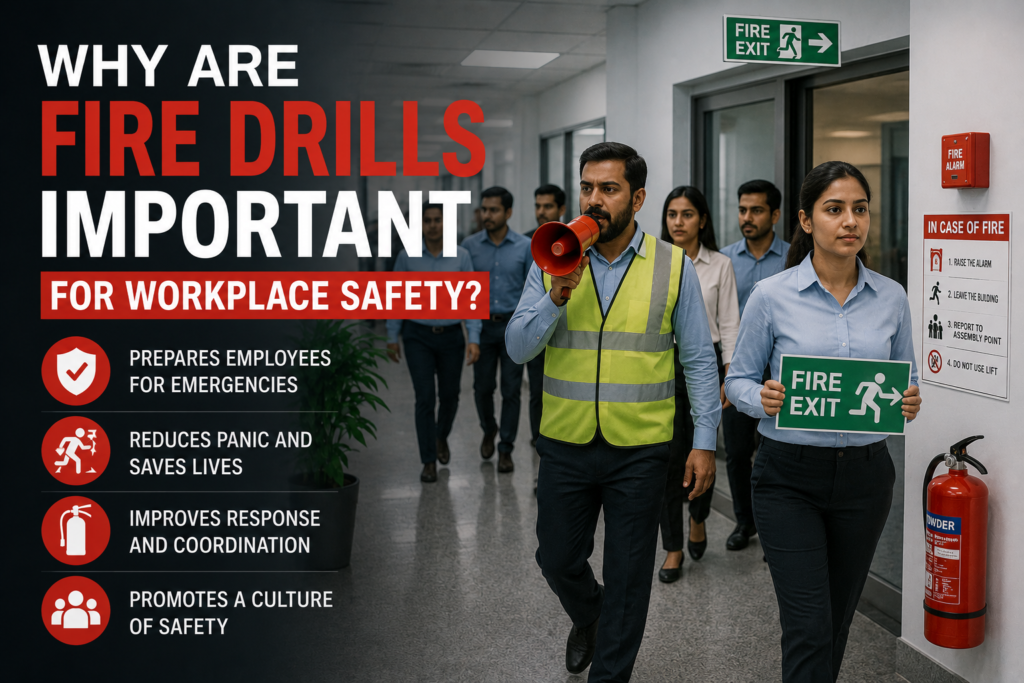
Why Are Fire Drills Important for Workplace Safety?

10 Critical Reasons Why Fire Drills Are Important for Workplace Safety

Why is fire drill considered as an essential activity for workplace safety? As part of the safety induction I ask every new employee this question. The usual response is, “So we know how to get out of the building. Well, of course it’s true, but a fire drill is not just about going to an assembly point. It’s about getting ready ahead of situations that could arise. I don’t have to tell you that I have had to work in environments where people felt like fire drills were another rule of the company. One day, there was a small electrical fire in a storage room. Those staff members who had been practising evacuation remained calm and evacuated safely. The few who failed to comply with the previous drills did not know which way they were to go and wasted time. That’s why everyone was given a reminder of the importance of preparation. A Fire Doesn’t Give You Time to Think When a fire happens you will NOT have time to read or ask questions, that is one thing I always preach to my team. Smoke spreads quickly. Visibility drops. People become confused. That’s why we prepare in advance of a disaster. A fire drill helps your body and mind learn to react to fire instinctively. You don’t need to run around in a panic, you already know your way around and what to do. Knowing Your Exit Can Save Your Life Ever observe how the majority of people get into a building without regard to the emergency exits? I regularly conduct workplace inspections and during each of these inspections, I make sure that I ask the employees to show me their closest emergency exit. Surprisingly, many hesitate. That changes when it’s a fire drill. Workers become familiar with: If one way is blocked with smoke or fire, it may be the difference between life and death if they know an alternate way. Fire Drills Develop Confidence First time drills can be stressful for new employees. That’s completely normal. There is a change after some practice with a couple of drills. Individuals cease their incorrect speculations and start making confident decisions. They understand how and when to walk, where to assemble and who to report to. You don’t need to read a ‘how to’ book to be confident, you need experience. Each Worker has a duty. Every Worker Has a Responsibility It’s everyone’s responsibility. There is a role for every person during a drill. Supervisors are responsible for their employees, fire wardens are assigned to their area and check on it, first aid team members remain on hand in event of an emergency, and all employees follow the evacuation procedure. If everyone has their part to play the whole evacuation will be quicker and better organized. Fire Drills Uncover Issues A great part of the benefit of a fire drill is that it reveals issues before a fire. I have been involved in drills that have revealed: These issues can be identified during practice and time can be allowed to correct these issues before lives are in danger. Visitors Need Your Help Too Fire safety training is provided to employees, but typically not to visitors. Consider contractors, delivery personnel, customers, guests, etc. When the alarm goes on, they might not know where to go. Thus, it is essential that employees are trained to remain calm and to guide visitors to the closest safe place without endangering themselves. A safe work place will keep everyone safe in the building. Practice Creates Better Teamwork It’s not a matter of individuals when it comes to a successful evacuation. It’s about teamwork. Staff members can get used to communicating well, not stopping people up at the exits and taking turns to help each other. In the event of an actual disaster, this teamwork ensures that there is no confusion and that the evacuation is carried out efficiently. Fire Drills Build a Culture of Safety Routine fire drills tell a message. Employee safety matters. With time, workers become more aware of other fire hazards as well. They find blocked exits, damaged extinguishers, faulty emergency lights and unsafe electrical equipment, as safety becomes a part of the workplace culture and not just a yearly requirement. Common Mistakes I Always Correct There are some errors which I never fail to notice as a fire safety officer. Some employees try to complete their tasks prior to their departure. Some other people stop to pick up bags or belongings. I’ve even seen workers using elevators for drilling! These habits can be hazardous in case of an actual fire. When the alarm is beeped: These are relatively simple things that can save lives. Fire Drills Are Only Part of Fire Safety It’s important to conduct a fire drill, but it’s not the end of it. A safe workplace also includes tested smoke alerts, working fire extinguishers, clear evacuation routes and emergency lighting. Fire prevention and emergency preparedness go hand in hand. There’s no such thing as too many in one. Final Thoughts In all likelihood, the most important thing to take away from this article is that a fire drill is a practice for one of the worst days a workplace could experience. Knowing the purpose of fire drills is not about enforcing company rules, it’s about saving lives. Each drill affords an opportunity for employees to gain confidence, enhance teamwork, recognize hazards and be able to react more quickly in the event of a real emergency. You can waste the few minutes you may spend practicing today or save a lot of trouble tomorrow.

10 Critical Reasons Why Fire Drills Are Important for Workplace Safety Read More »

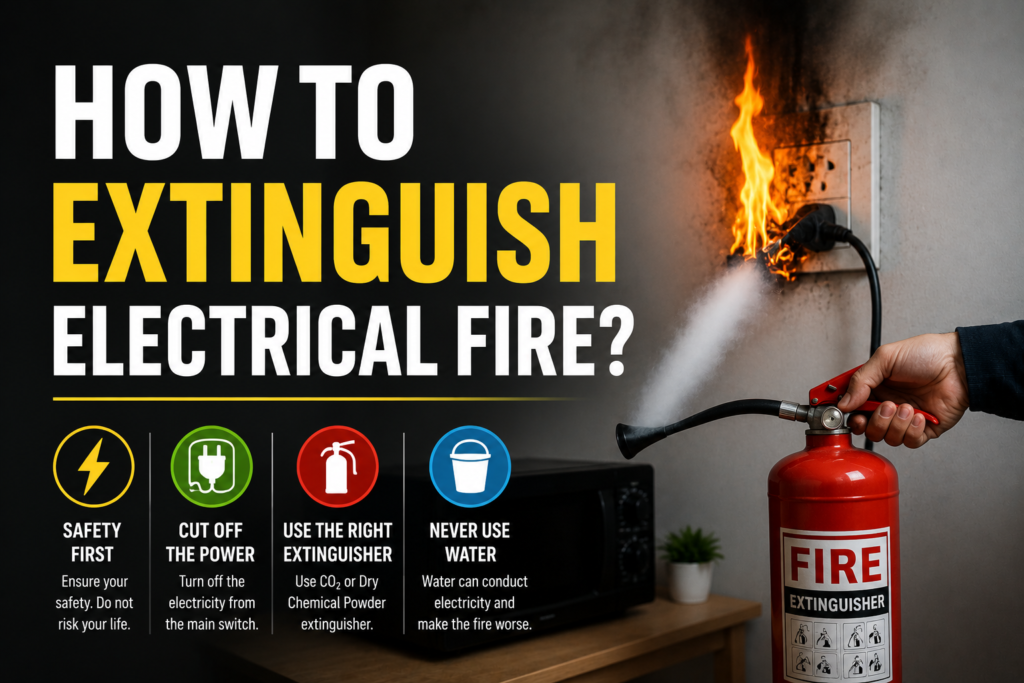
How to Extinguish Electrical Fire?

How to Extinguish Electrical Fire? 9 Essential Actions

There are many reasons why everyone should know how to extinguish electrical fire, as it can start out of nowhere and grow in minutes. Responding properly to the fire, whether it starts in a power outlet, appliance, extension cord or electrical panel, can help save lives and limit property damage. But if you use the wrong method (specifically water) the situation can become far worse. Being prepared for an emergency is one of the most important fire safety skills you can have. Imagine the Situation While you’re sitting at home, you see sparks emanating from a power strip behind your TV. Seconds later, smoke begins rising, followed by small flames. The first thing you’d think of doing is taking the nearest bucket of water. That instinct could pose a threat. Power and water don’t mix. The best course of action for dealing with an electrical fire is to remain calm and take the proper steps. Action 1: Keep Cool and evaluate the Fire The first few moments are crucial. In the case of a small fire, if it is contained, it might be possible to put it out safely. If the fire is moving quickly, there is a lot of smoke in the room, or you don’t feel safe, get out and dial your local emergency numbers. Your safety is always your first priority. Action 2: Disconnect the Power If It Is Safe Electric fires will persist as long as electricity is flowing in the damaged equipment. If power can be safely reached to the affected circuit or main circuit, turn off the electricity to the circuit or to the main circuit. Never risk to unplug the power. If you can not turn off the power safely, proceed to step 2. Action 3: Use the Correct Fire Extinguisher All fire extinguishers are not recommendable for electrical fires. The safest are: These extinguishers act as an insulant in the fight against fire. Read the label on your extinguisher to find out which type of fires it can extinguish. Action 4: Never Throw Water on an Electrical Fire One of the biggest errors made by people is drinking water. Water conducts electricity, and can cause severe electric shock if still energised. It also can spread a fire and cause damage to nearby electrical equipment. Never use water for an electrical fire, unless the power has been turned off and you are sure that there is no electrical hazard left. Action 5: Aim at the Base of the Flames When using a fire Extinguisher, aim at the fire, not at the fire flame. PASS is a technique to remember: This technique assists in getting extinguishing agents to the fuel. Action 6: Watch for Re-Ignition The danger can be far from over even after the flames have been extinguished. Electrical equipment can still be very hot and damage in the interior of the appliance or the wiring could reignite. Do not get too close and wait until the area is safe, as determined by emergency responders or a licensed electrician. Action 7: Evacuate If the Fire Grows If the fire is too large to control, evacuate! If possible, close doors behind you, which will help stop the spread of smoke and fire. Don’t put off evacuating to salvage personal items. If outside, remain outside until told otherwise by emergency personnel. Action 8: Electrical equipment inspected Do not re-use damaged electrical equipment. If there is an electrical fire: Acknowledging the damage may could make it more likely that there will be another fire. Action 9: Understand how to avoid electrical fires The safest electrical fire is one that doesn’t ignite. Examples of simple prevention practices are: Simple maintenance measures can avert disaster. Common Errors That Can aggravate Electrical Fires Electrical fires are made worse by the lack of knowledge of their potential dangers by people. Using Water Immediately The first choice of a live electrical fire should never be water. Using the Wrong Fire Extinguisher Always be sure that your extinguisher is appropriate for an electrical fire. Ignoring Burning Smells Overheating wires can sometimes give off a burning smell. Operating damaged equipment Any electrical equipment that has ignited or overheated should be checked prior to its next use. Blocking Electrical Panels The circuit breaker must be easy to access in case of an emergency. What Causes Electrical Fires? What Causes Electrical Fires? The most common causes of electrical fires are: Ongoing maintenance can help detect many of these hazards that pose a risk before they cause serious problems. Why Every Home Should Have the Right Fire Extinguisher? A smoke detector alerts you to danger, but can’t extinguish a fire. It can be helpful to have the right fire extinguisher in the area as an additional safeguard. Place fire extinguishers in locations where electrical equipment is commonly used, such as: It is important that everyone in the household knows how to use one safely also. Final Thoughts A proper knowledge of how to extinguish electrical fire properly can make a big difference during emergency. The most critical precautions are: remain calm, extinguish the fire if it is safe to do so, use the proper fire extinguisher, and never use a water extinguisher on a propane or electrical fire. If the fire is out of control, evacuate, and call for the police or fire department. The preparation is as crucial as your response. There are ways to lessen the risk of electrical fires and to better protect your home and family by taking proper measures to maintain an electrical system and use appliances responsibly and ensuring you have the proper fire extinguisher within easy reach.

How to Extinguish Electrical Fire? 9 Essential Actions Read More »

why water isn't used in fire extinguisher?

why water isn’t used in fire extinguisher?

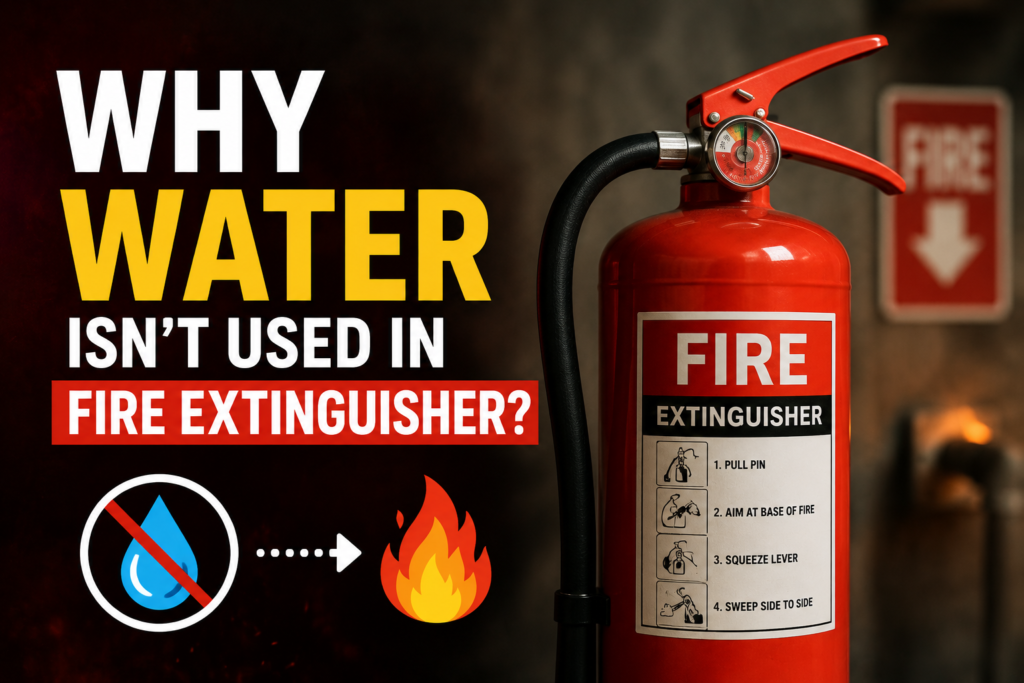
One of the questions you will hear after you have heard that not all fires should be put out with water is, “why water isn’t used in fire extinguisher” Water is one of the oldest and most effective extinguishing methods for some fires, but may render others far more hazardous. Hence, the modern fire extinguishers contain the different extinguishing agents depending on the type of fire they are designed to extinguish. Now say that you come to a fire scene investigation. The room is filled with smoke, but with a little time the investigators know that using water would have made it worse rather than better. Why? The secret to escape any kind of fire is to learn about the various types of fire. The water system is functioning properly Water is an effective extinguisher for Class A fire, which is caused by ordinary combustible materials like: These materials are combustible, being kept burning by the heat. That heat is taken away by cooling the burning material down below the ignition temperature, which is achieved by using water. In such fires, water is a good extinguishing agent. Case File: The Kitchen Fire That Got Bigger A small pan of burning cooking oil burns. A container of water is snatched up and poured on the blaze. Rather than leaving the house, the fire bursts out in a big fireball. Why was this the case? Cooking oil can heat up to a much higher temperature than water will boil. The water gets put in the hot oil, and is immediately vaporized into a stream of steam. The steam quickly expands and flings burning oil droplets into the air. The outcome can be an explosive fire spread. This is why fires involving cooking oil of Class K (or Class F in some areas) should only be extinguished with extinguisher devices that are designed for them. Case File: The Electrical Equipment Fire An office printer catches fire while plugged in to the electrical power. Someone thinks about putting out the fire with water. This is another potential danger. Water conducts electricity. When live electrical equipment is used: In the case of Class C electrical fires, non-conductive extinguishing agents like carbon dioxide (CO₂) or dry chemical extinguishers would be far safer to use. Case File: The Fuel Spill A fuel storage tank containing gasoline is burning in a garage. It would appear that water is the answer. Unfortunately, gasoline floats on water. The water might just be used to spread the fire, rather than extinguish it, and the fire would spread further. For this reason water should NOT be used on class B fires involving: Typically, foam, dry chemical or carbon dioxide extinguishers work better. Why Modern Fire Extinguishers Use Different Agents? There are several different ways of putting out a fire. Modern extinguishers may contain: Water For common combustible material. Foam In many fire caused by flammable liquids. Dry Chemical Powder Depending upon formulation, suitable for various fire classes. Carbon Dioxide (CO₂) Non-residious and is good for electrical fires. Wet Chemical Designed for commercial kitchen fires in cooking oils & fats. Different agents extinguish the fire in a different fashion. The science behind fire extinguishment There are three things fire requires to keep burning: The Fire Triangle is formed by this combination. Fire extinguishers work by eliminating one of these components, or reducing its intensity. Water does not conduct electricity, it conducts heat, primarily. Foam helps to keep fuel away from oxygen. Carbon dioxide decreases the amount of oxygen near the flames. The dry chemical powders will interrupt the chemical reaction that keeps combustion going. The knowledge of this principle is the reason why it is impossible for one extinguisher to extinguish all fires. Common mistakes made during Fire Emergencies There are many incorrect assumptions that are made when responding to fire. Water does not extinguish all fires There are several classes of fire and each one will require different extinguishing procedures. Using the Wrong Fire Extinguisher Selecting the incorrect extinguisher may worsen the situation. Ignoring Fire Labels All extinguishers are properly labeled indicating the classes of fire they are suited to extinguish. Delaying Evacuation Once the fire is not immediately controllable, rescue from the fire should be the first priority. Choosing the Right Fire Extinguisher When buying a fire extinguisher, take into account the place of use. Multipurpose dry chemical extinguishers are the preferred type for homes because they are effective on a variety of common fire types. However, there are types of extinguishers that are better suited to the kitchen and to offices with electrical equipment, carbon dioxide extinguishers and wet chemical extinguishers. Identifying the types of fire extinguishers and the hazards they are designed to extinguish will greatly enhance fire safety. Fire Safety Tips Every Homeowner Should Know Having an extinguisher is just the beginning of good fire safety Remember to: Preparation prior to a fire is more valuable than reaction during a fire. Final Thoughts It is important to know why water is not suitable for extinguishing fire with a water fire extinguisher to ensure the safety of lives and property. Water works well on combustible materials, but can make grease fires, electrical fires, and flammable liquid fires much worse. Hence, modern fire extinguishers are fitted with various special extinguishing agents for various fire classes. It can be a lifesaver in an emergency to know the right extinguisher to use and when not to use water. Always determine the type of fire first and if you can and safe to do so, use an extinguisher if necessary, and leave if the fire is too big to deal with.

why water isn’t used in fire extinguisher? Read More »

How to Stop Smoke Detector from Chirping?

How to Stop Smoke Detector from Chirping?

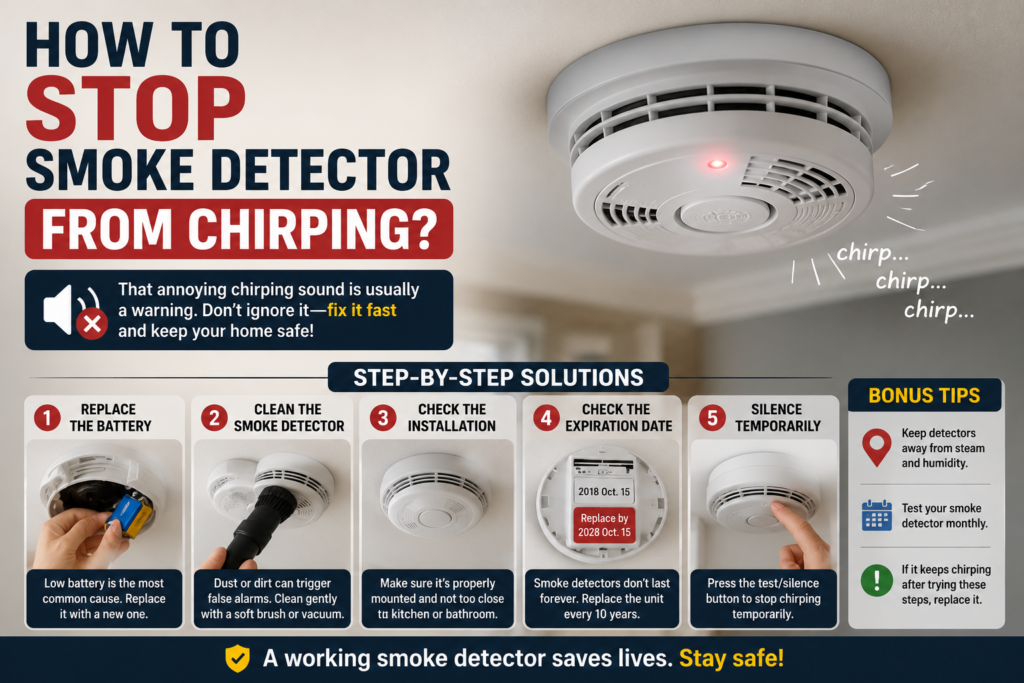
When the constant chirping begins in the middle of the night, one of the most frequently asked home safety questions is, “how to stop smoke detector from chirping.” You can’t always help but get aggravated at the chirping, but it is your smoke alarm’s way of saying “hey, take action.Sometimes you just can’t help but get aggravated about the chirping, but it’s your smoke detector’s way of saying “hey, take action. Fortunately, many chirping issues can be resolved within minutes after determining the cause of the chirping. Rather than dismiss the sound, or even take the detector out of the room altogether, it’s essential to diagnose the problem correctly so your home can still be safe from fire. Consider the Chirp as a Warning, NOT an Annoyance A smoke detector is built to be able to talk to you. If the alarm sounds, it is most likely a smoke or fire alarm, and a short chirp that repeats every 30 to 60 seconds is a maintenance alarm, not a fire alarm. That little noise is calling for assistance, before the detector can no longer defend your home. Fix 1: Replace the Battery A weak battery is the most typical cause of a chirping smoke detector. A low battery can be the cause of regular chirps to let you know that the battery is low even if the alarm works. Replace with a high quality battery following manufacturer’s specifications. Replace it after few minutes to determine whether chirping stops. Fix 2: Reset the Smoke Detector There are some detectors that will keep chirping even after the battery has been changed. This is because the unit contains some electrical energy that it retains. Most detectors can be reset by following these instructions: The warning signal usually will clear up if the reset is performed properly. Fix 3: Check the Battery Installation The issue may not always be the battery. Make sure: Some loose connections can lead to persistent chirping. Fix 4: Clean the Smoke Detector The sensors in the detector can be disturbed by dust, cobwebs and small insects. Use: Cleaning will ensure consistent operation and can stop extra chipping. Fix 5: Look for End-of-Life Warnings Today’s smoke detectors have a finite lifespan. The average lifespan of a unit is approximately 10 years, at which point parts within the unit start to become obsolete. Some detectors emit a characteristic chirp upon the end of the useful life. When the detector is over 10 years old, it can be best to replace it. Fix 6: Check for Power Problems Hardwired smoke alarms are connected to household electrical power and have a battery backup in case of a power failure. Some models chirp when there is a power outage. Inspect: The power will typically be restored and this will solve the problem. Fix 7: Reduce Environmental Interference Smoke detectors can be impacted by extreme environmental factors. Possible causes include: Reconsider placement if near a bathroom or kitchen; follow manufacturer’s installation instructions. Fix 8: Test the Detector After making any repairs, test the smoke detector. Test the alarm by pressing the test button until the alarm is heard. If it is successful, the detector is receiving power and is operating. Testing should be a part of your home maintenance routine. FIX 9: Check for Physical Damage Smoke detectors may be damaged with aging. Look for: Any visible damage likely will impact the performance and will generally need replacement. Fix 10: Replace the Smoke Detector When all of the above troubleshooting steps have been performed and the detector is still chirping, it may be time to replace it. When a new smoke detector is installed: Since smoke detectors are a life-saving device, it’s a good investment to replace an old detector. Common Mistakes to Avoid Many homeowners make matters worse than the chirping when they try to do something about it. Removing the Battery Permanently This means that your house is without any protection from fire. Ignoring End-of-Life Warnings Old detectors might not function correctly in case of fire. Installing the wrong type of battery Do not use any other type battery than that recommended by the manufacturer. Forgetting Routine Maintenance Frequent testing and cleaning can prevent unforeseen problems. How to Prevent Future Chirping? Regular smoke detector maintenance ensures proper functioning. Good habits include: Take these simple steps to minimize the risk of surprise chirping without compromising fire protection. Why You Should Never Ignore a Chirping Smoke Detector? A chirping detector is not just a noisemaker. It’s a kind of cautionary sign. Failure to take the warning seriously could lead to: If you have a fire in your office, your detector will be ready, and you will be able to rectify the situation quickly. Final Thoughts If you know how to silence the chirping of smoke detectors you’ll avoid the frustration and keep your home protected. A low battery, out-of-date detector, dust and a simple reset are usually the causes of the problem. Once you know the cause, and the proper troubleshooting procedure, you can prevent the chirping without sacrificing fire safety in your home. Keep in mind, your smoke detector is one of the most crucial safety devices in your house. Regular maintenance and timely replacement ensures it is going to serve you when you need it.

How to Stop Smoke Detector from Chirping? Read More »

How Does a Fire Sprinkler System Work?

How Does a Fire Sprinkler System Work?

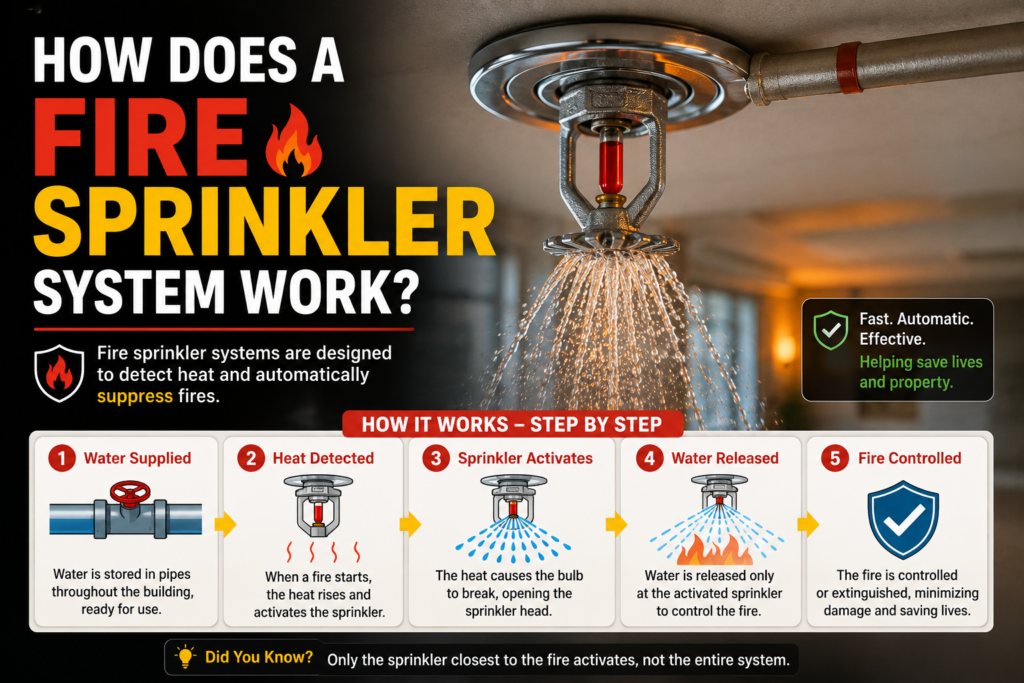
What is the operation of a fire sprinkler system? Have you ever noticed small sprinklers on your building’s ceiling? If so, you may have asked yourself, “What do the sprinklers do when a fire occurs?” A lot of people think that all sprinkler heads go off simultaneously and water the entire building. In fact, fire sprinkler systems are a lot more intelligent than that. Suppose there is one drop of water in a pipe network above your ceiling. It can stay completely un-moving until it is heated by a fire’s warmth near a sprinkler head. That water can only help extinguish that fire once it has started to make its way to it. Let’s take a trip down that road and learn about how a fire sprinkler system keeps people and property safe. The Journey Begins: Water Waits Inside the Pipes There is always a fire sprinkler system in place. The pipes in the building can be filled with pressurized water or be dry until turned on. Whatever type of system, everything will immediately respond automatically if dangerous heat is detected. Sprinklers are not smoke reactive. They are activated by heat. This design can reduce the amount of water being discharged because of minor occurrences such as a burned toast or steam that comes from a hot shower. The First Sign of Danger The more a fire grows, the more heat that it releases. Hot air rises, toward the ceiling where sprinkler heads are located. It is equipped with a heat-sensitive element that is typically a small fragile glass bulb containing the liquid or a metal fusible link in each sprinkler head. The heat-sensitive component breaks or melts when the surrounding temperature is at a certain level, generally 135°F to 165°F (57°C to 74°C). This one action begins the whole process. Only the Sprinkler Closest to the Fire Opens Among the most popular sprinkler system misconceptions is the belief that all sprinkler heads turn on simultaneously. This is a very rare occurrence. Rather, only the sprinkler head that is exposed to sufficient heat will open. There are a number of advantages to this targeted response: If a fire grows to the point that it reaches the temperature necessary to cause the activation of the sprinkler head, then that sprinkler head will also be triggered.If a fire grows large enough to cause activation of the sprinkler head, it will be activated as well. Water rushes towards fire Once the sprinkler head opens, water immediately flows through the opening. The sprinkler’s deflector plate disperses the water into a specific spray pattern. The sprinkler doesn’t create a single strong stream of water, and makes sure to spray the water over the entire area that it’s designed to cover. This enables the water to: The intent is to extinguish the fire before firefighters can arrive. Why is it that sprinklers go off when it’s hot rather than when it’s smoky? Many people ask this question: “Why doesn’t smoke activate sprinklers by itself? The answer is simple. Smoke can be generated as a result of normal household activities, such as cooking. Sprinklers would go on every time there was smoke, thus creating a problem of water damage where it is not needed. Heat is a much better indicator of a dangerous fire. This will result in effective and reliable sprinkler systems. Each building has a different sprinkler system Not all buildings have the same type of sprinkler system. Wet Pipe Systems The most common ones are these. Water is always in the pipes, so that if a sprinkler turns on water can be turned off immediately. Dry Pipe Systems Pipes are filled with air and not water. Water enters the system when a sprinkler opens, the air escapes. These are frequently planted where there is a chance of freezing temperatures. Pre-Action Systems The systems need extra detection before the water can get into the pipes. They can be seen in museums, data centers, and libraries where water can cause damage to valuable artifacts. Deluge Systems All sprinkler heads are open. When this is on, all the sprinklers activate at the same time. These are generally applied in high hazard industrial systems. What Happens After Fire is Under Control? After the fire is extinguished, the sprinkler system keeps pumping water until it is turned off by the fire department or trained personnel. Afterward, professionals inspect: If any sprinkler heads are activated, they are replaced prior to service. The system is maintained on a routine basis to ensure it will be prepared for future emergencies. Common Myths About Fire Sprinkler Systems There are numerous misconceptions that render people unaware of the functioning of these systems. Myth: All sprinklers turn on at the same time Sprinkler heads exposed to enough heat will normally turn on. Myth: Smoke activates sprinklers Most sprinkler systems are not smoke activated. Myth: Sprinklers Cause More Damage Than Fire A controlled water discharge will usually cause less damage than a wild fire. Myth: Sprinklers are a substitute for the Fire Department While sprinklers can help to contain or slow fires, firefighters are still crucial to fully extinguish the blaze and make the building safe. Why Fire Sprinkler Systems Save Lives? In an emergency, fire sprinkler systems give precious time. They help by: If fire is detected early, it can often be managed and mitigate the injuries and financial damages. How to Keep a Fire Sprinkler System Working Properly? As with all safety equipment, sprinkler systems need to be maintained on regular basis. Property owners should: By maintaining the system properly, you can ensure that it operates when it’s most needed. Final Thoughts If you understand how a fire sprinkler system works, then you will be able to understand why these systems are one of the best methods for fire protection. Fire sprinklers respond to the heat, only open when necessary, and drench the fire directly, instead of pouring water over a whole building. This rapid, automatic response assists fire control, safety of life

How Does a Fire Sprinkler System Work? Read More »

Can smoke detectors detect carbon monoxide? Learn the difference between smoke alarms and carbon monoxide detectors, how they work, and why both are essential for home safety.

8 Surprising Facts: Can Smoke Detectors Detect Carbon Monoxide?

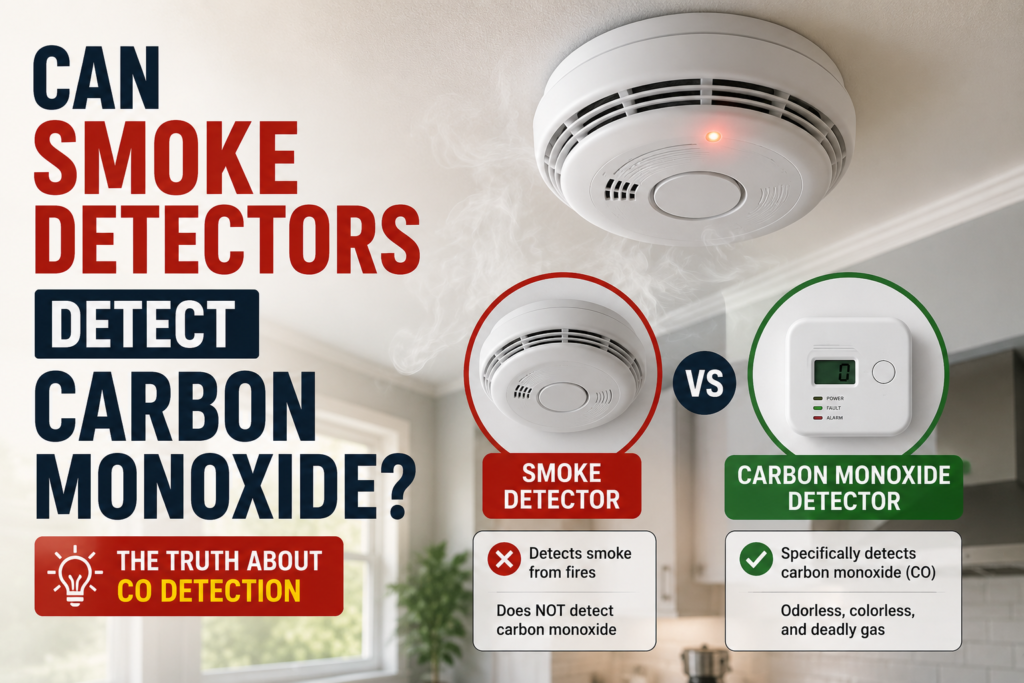
Can smoke detectors detect carbon monoxide? Most homeowners think if they have smoke alarms installed in all rooms in their home they are safe from all fire hazards. But smoke and carbon monoxide are quite separate hazards and an understanding of how these detectors operate might save lives. The answer is: Most of the traditional smoke detectors are not designed to detect carbon monoxide. They are intended to detect smoke generated by fires, but carbon monoxide is invisible, odourless and can only be detected with special technology. Let’s discuss the differences and learn ways to keep your family and home safe. Why is this question important? Each year thousands of people are exposed to Carbon monoxide and are unaware of it. Carbon monoxide is different from smoke in that: Since people do not detect it with their senses, they need a reliable detection equipment. Myth vs Fact Fact: All smoke alarms do not detect CO Many people think all types of alarms are the same. Fact Most typical smoke detectors only sense smoke and fire particles. They do not monitor the CO concentration. For carbon monoxide protection, a carbon monoxide-specific alarm or a combination alarm (which includes CO detection) is necessary. Understanding Smoke Detectors Smoke detectors are intended to alert us early to a fire. They generally work by detecting: Smoke alarms are primarily to warn people of the presence of a fire before it can spread. This early warning may give sufficient time to evacuate safely. Understanding Carbon Monoxide Detectors Carbon Monoxide detectors are used to detect carbon monoxide gas levels. These devices are used to continuously monitor the air and alert to unsafe levels. Here are some of the most common sources of CO: A carbon monoxide detector’s absence can mean that dangerous levels can go undetected. Why Smoke Detectors Cannot Usually Detect Carbon Monoxide? The technologies that smoke detectors and carbon monoxide detectors have differ. Smoke alarms detect particles in the air that are produced by a burning fire. Carbon monoxide detectors contain sensors that are sensitive to the presence of carbon monoxide gas. Carbon monoxide is not a smoke with a visible particle and traditional smoke detectors cannot detect it. This is why it is sometimes required to have separable protection. What are Combination Smoke and Carbon Monoxide Alarms? Things have changed in the world of safety devices. Combination alarms combine: into a single unit. Benefits include: Many people select combination units in order to boost overall safety. Recognizing signs of Carbon Monoxide Exposure The symptoms are often the first sign of carbon monoxide exposure since carbon monoxide is a colorless, odorless, and tasteless gas. Common symptoms include: Headaches Increased levels of carbon monoxide can cause persistent headaches. Dizziness Exposure may cause loss of balance and coordination. Nausea The symptoms are often confused as sickness by many victims. Fatigue Feeling unusually tired after getting a good night’s sleep. Confusion Excessive levels may impair mental processes and judgment. If several people are experiencing symptoms at the same time, then CO is a potential cause. Where to Place Carbon Monoxide Detectors? Effectiveness is enhanced by proper placement. Whereas the following are suggested locations: Manufacturers’ instructions are followed for best performance. Where to Place Smoke Detectors? For maximum fire protection, smoke alarms are commonly installed: The strategic placement makes it possible to provide early warnings during emergency situations. Common Home Safety Mistakes Many homeowners don’t realize they are lowering their level of protection. Assume that the smoke alarms work There are differences between smoke alarms and carbon monoxide detectors. Ignoring Battery Replacement In case of an emergency, dead batteries can render alarms ineffective. Failing to Test Devices The regular testing helps to ensure proper operation. Installing too few alarms The coverage should be throughout the home. Ignoring Expiration Dates There are lots of alarms that have a restricted life span and will need to be replaced at some time. How frequently should Detectors be tested? Testing is a crucial component of home safety. Most manufacturers recommend: Regular servicing makes sure that alarms perform as expected when they are required. Difference between a Smoke Detector and Carbon Monoxide Detector Both devices can save lives, but for different hazards. Smoke detectors safely help prevent: Carbon monoxide detectors will help to prevent exposure to: Protection against both threats is available in the safest homes. Why Every Home Should Have Both? Fire and CO incidents can happen separately. During a carbon monoxide leak, a smoke detector could give no alarm. Likewise, an alert from a carbon monoxide detector might not be triggered by a fire that is beginning. The combined use of both devices provides a better safety system and family protection. Final Thoughts So, do smoke alarms work in the event of a CO leak? Most of the time, the answer is no–traditional smoke detectors are made to detect smoke from a fire, and CO detectors detect the invisible CO gas. These hazards need to be detected using different technologies, so homeowners shouldn’t think there’s one device that can do everything. To get the most protection, think about installing smoke alarms and carbon monoxide detectors, or combination units that offer protection for both. A little investment in right detection equipment can save your family from two of the worst household hazards. FAQs

8 Surprising Facts: Can Smoke Detectors Detect Carbon Monoxide? Read More »