
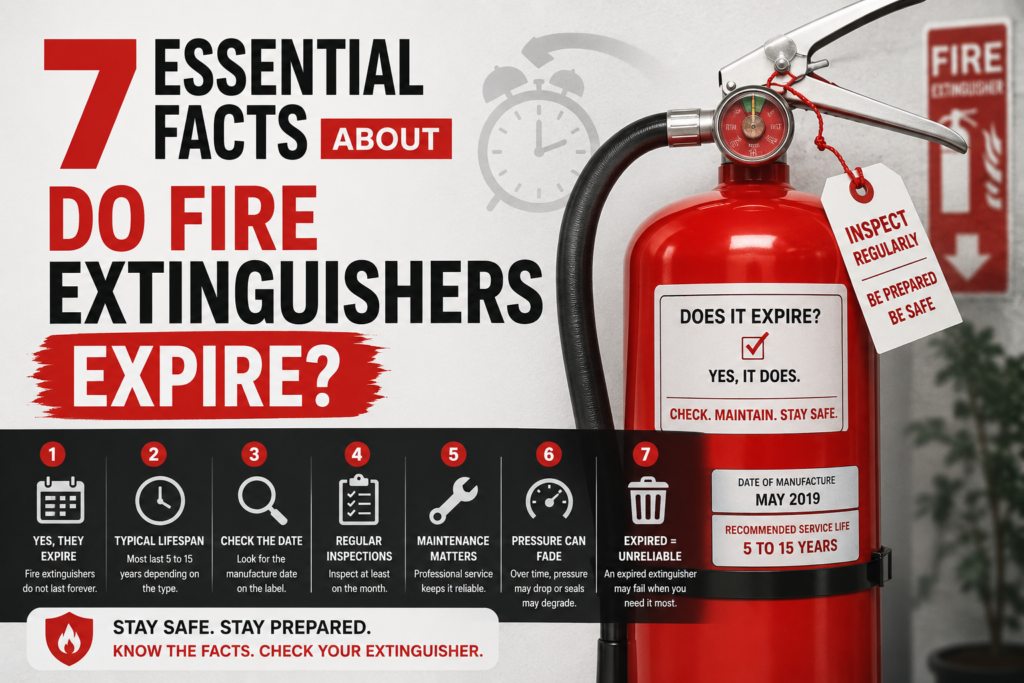
Fire extinguishers are one of the most significant pieces of fire safety equipment in homes, schools, commercial buildings, warehouses and offices. They are used to give an early warning response, in the early stages of a fire, to help prevent injuries, property damage and possible life-threatening situations.
But many people think that a fire extinguisher should never be taken down or removed. This is a misconception that is common. One of the common queries asked is; do fire extinguishers expire?
Yes, it is true. Fire extinguishers don’t necessarily expire on a given date but have a certain lifespan. As time goes on, internal parts may deteriorate, pressure may drop, and damage may occur affecting performance.
Knowing the life of fire extinguishers and when they should be inspected, serviced or replaced is an essential component of any fire safety plan.
What Does It Mean for a Fire Extinguisher to Expire?
Fire Extinguishers don’t suddenly expire on a certain date as food products do. Rather, they slowly become less reliable the older they get.
A fire extinguisher that is no longer good for use can have:
- Reduced pressure
- Corroded internal components
- Hoses or valves that are broken.Broken hoses or valves.
- Leaking extinguishing agents
- Worn safety seals
These problems may make the extinguisher ineffective in the event of a fire.
How long do fire extinguishers last?
The life of a fire extinguisher varies by type, manufacturer, usage and maintenance program.
Most of today’s fire extinguishers generally have a service life of:
- For rechargeable models, the recharge time is between 10 and 15 years.
- Depending on the type, about 10 to 12 years for ones that are disposable
But the answer to whether or not an extinguisher should stay in service cannot be based on its lifespan. It is also important to have regular checks and maintenance.
The signs that a fire extinguisher might need to be replaced
There are a number of indicators that can show a fire extinguisher isn’t functioning properly.
Rust or corrosion that can be seen with the eye
Corrosion can cause corrosion of the cylinder and internal parts of the extinguisher. Any rust, no matter how small, can signal more serious issues.
Physical Damage
The extinguisher can be affected by dents, cracks, busted handles, or broken nozzles, which can impact how it works and how safe it is to use.
Pressure Gauge Problems
Many extinguishers will have a pressure gauge. When the needle is not within the green zone, servicing or replacement might be needed.
Remove Safety Pin or Seal
If the safety pin or the tamper seal is missing the extinguisher may be used or tampered.
Leaking Extinguishing Agent
If the leakage can be seen, it should be considered a serious problem as it will inhibit effectiveness during an emergency situation.
Why Regular Fire Extinguisher Inspections are important?
Any problems that occur can be found with regular inspections.
For each existing facility, visual checks should be made monthly for the following:
- Pressure levels
- Physical condition
- Accessibility
- Safety seals
- Labels and instructions
Regular checks keep extinguishers in good working order when necessary.
Annual Maintenance Requirements
Fire Extinguishers should be professionally maintained in accordance with applicable fire safety regulations and manufacturer guidelines, in addition to monthly inspections.
Maintenance services every year confirm:
- Internal condition
- Pressure levels
- Mechanical operation
- Meeting safety standards.
Professional servicing can find problems that may not be detected in normal maintenance visits.
Are Fire Extinguishers Rechargeable?
Fire extinguishers come in two types, some are disposable and others are rechargeable.
If they are in good condition, rechargeable models may be serviced and recharged. If the extinguisher shows signs of severe corrosion, structural damage or is past its safe service life, however, the unit is usually recommended to be replaced.
Most extinguishers have no means of being recharged and are considered to be “dead” once they have been used up.
Are There Different Types of Fire Extinguishers that Expire at Different Times?
Yes. The life of the cylinder may be influenced by the type of extinguishing agent and the type of cylinder.
There are various types of extinguishers, such as:
- Water fire extinguishers
- Foam fire extinguishers
- Dry powder extinguishers
- Carbon dioxide (CO₂) extinguishers
- Wet chemical extinguishers
There are specific inspection and maintenance requirements for each type. Always refer to the manufacturer’s directions.
What Happens If You Use an Expired Fire Extinguisher?
A worn or outdated extinguisher could be useless when it’s required.
Potential problems include:
- Failure to discharge
- Reduced extinguishing effectiveness
- Pressure loss
- Mechanical malfunction
These failures can compound fire damage and put occupants at a higher risk.
How to make a fire extinguisher last longer?
By practicing appropriate maintenance, fire extinguishers can be used for the longest time possible.
Best practices include:
- Performing monthly inspections
- Scheduling professional servicing
- Keeping extinguishers in proper environment
- Making sure that units are not damaged physically.
- Following manufacturer recommendations
Reliability and overall fire safety are enhanced by good maintenance
Proper Storage Is Important
Extinguisher life can be influenced by the environment.
Extinguishers should NOT be stored in areas where there is:
- Excessive moisture
- Extreme temperatures
- Direct sunlight
- Corrosive chemicals
Avoid premature wear and damage by good storage.
Must read this Blog: 6 Reasons Why Fire Safety Blankets Are Made Out of Wool?
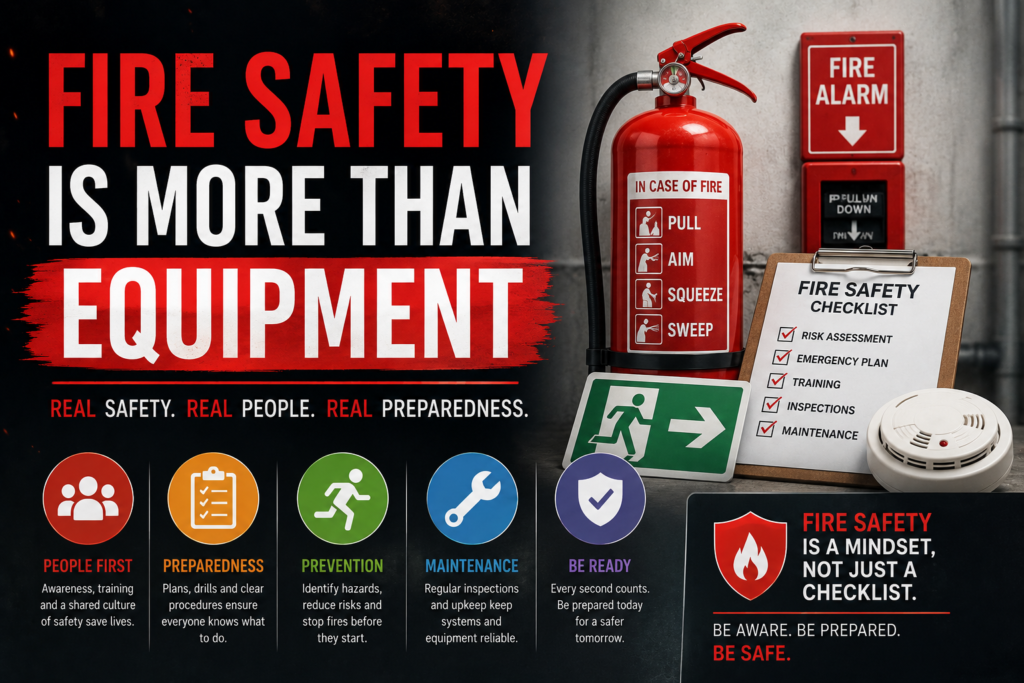
Fire Safety Is More Than Equipment
A fire extinguisher is just a component of a good fire safety plan.
Businesses & homeowners should also:
- Provide training for occupants on how to use extinguishers.
- Install smoke alarms
- Maintain emergency exits
- Develop evacuation plans
- Perform regular safety checks
Putting prevention, preparedness and equipment maintenance together makes it a safer environment.
Conclusion
So, can you use a fire extinguisher after it has expired? Fire extinguishers do have a limited service life, and should not be relied upon to be used forever. Many units will serve you for 10-15 years, but the condition, maintenance and inspection history are more important than the age of the unit.
Fire extinguishers are properly maintained by regular inspections, professional servicing and timely replacement when needed. Taking the time to invest in proper maintenance can be a big benefit during a fire emergency.
If a fire extinguisher has not been used, do they expire?
Yes. Fire extinguishers, even those not used, can deteriorate over time, and will need servicing or replacement at some point.
How often should Fire Extinguishers be inspected?
Monthly visual examination is indicated and yearly professional maintenance is recommended.
May I recharge my fire extinguisher?
Rechargeable extinguishers may be maintainable and re-refillable. Typically, disposable versions do not have a charge.
How long does a fire extinguisher last?
Properly maintained, most fire extinguishers have a life of about 10-15 years.
What are the indications of a worn out fire extinguisher?
Inspect for rust, damage, pressure loss or leaks, missing safety seals, or failed inspections.