
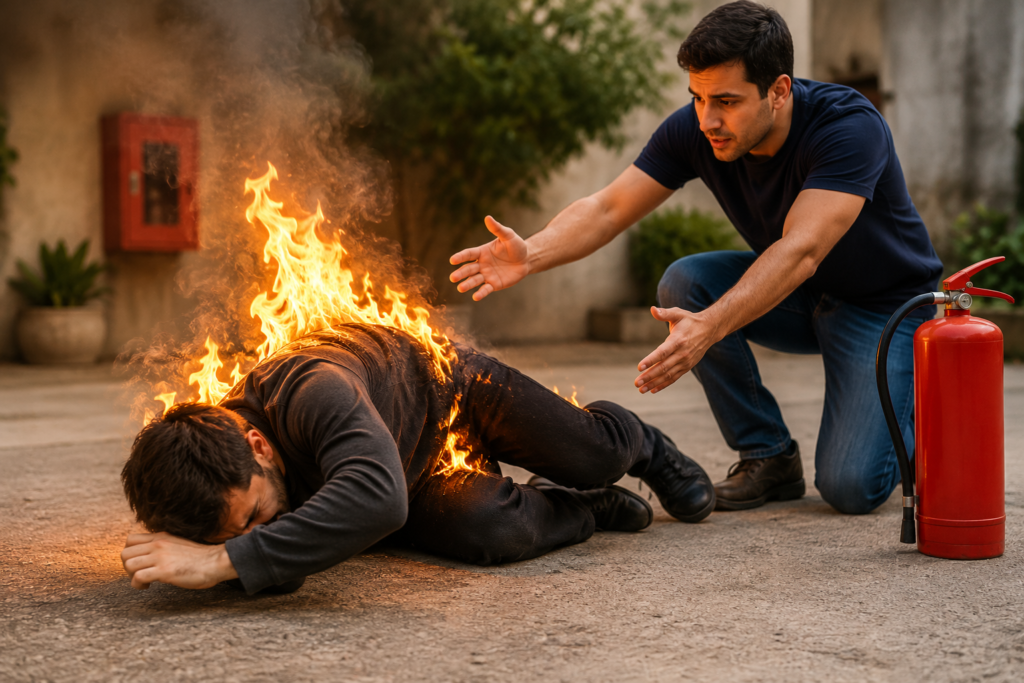
Fires can occur anywhere, at any time. A very serious one is if someone catches fire in his or her clothing. You may be able to save lives and prevent serious injuries by knowing what to do if someone is on fire.
People often panic in a fire emergency, and as a result make risky choices. Quick thinking and timely action is essential as a burn may become worse in seconds. Be prepared for the event, so you can remain calm and act appropriately.
The importance of taking immediate action
Flames spread quickly on the body if clothing catches fire. As the fire continues, the risks of serious burns, shock and other life threatening issues increase.
Taking immediate action can:
- Reduce burn severity
- Prevent fire from spreading.
- Keep the victim from injury.Prevent further injury to the victim.
- Improve recovery outcomes
The first few moments of the day can be the most critical.
Step 1: Keep calm and call for assistance
The first step is to stay cool. Panic can lead to misjudging decisions and exacerbate the situation.
Immediately:
- Alert people nearby
- Call emergency services
- If you can, find someone else to help you.
There may be benefits in having extra people on hand to assist in the emergency.
Step 2: Stop the Person from Running
It is common for people to run when they are on fire. Unfortunately, running brings more air and oxygen to the fire.
Tell the person to STOP moving! If needed, divert them from other potential sources of fire.
The quickest way to prevent the fire spreading is to stop the movement.
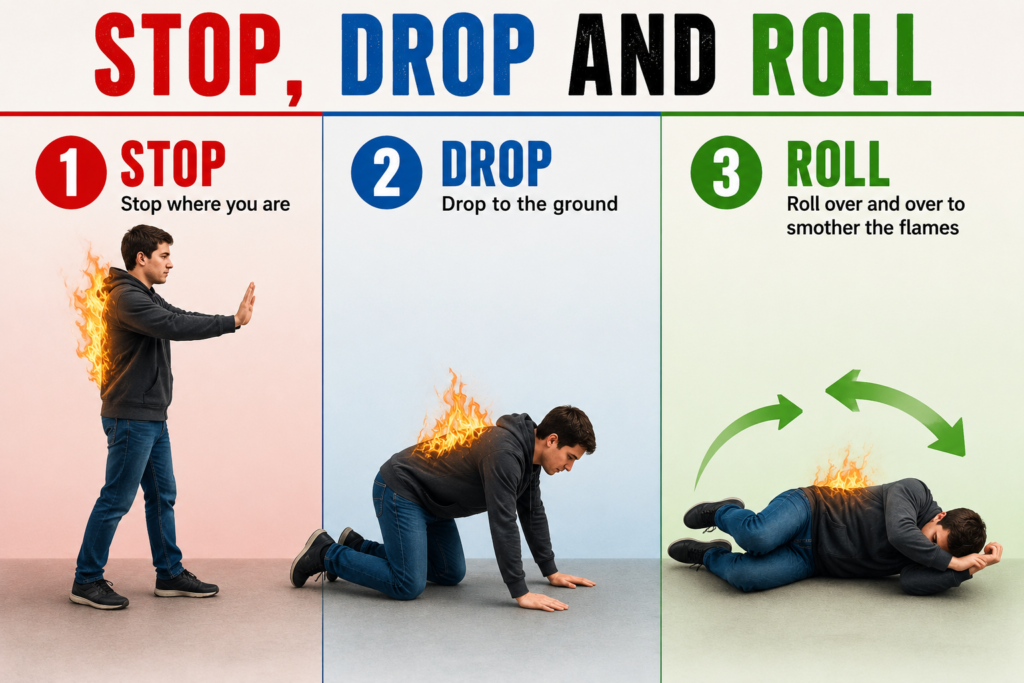
Step 3: Stop, Drop and Roll
Stop, Drop and Roll is the most commonly recommended method for clothing fires.
Stop
Stop moving immediately.
Drop
If possible, drop to the ground and use hands to cover face.
Roll
Roll back and forth until fire is put out.
The method used is to deprive the fire of oxygen to keep it burning.
Step 4: Smother the Flames
If a fire blanket, heavy coat or thick blanket is available, use it to smother the fire.
Wrap the material around the victim, being careful to avoid covering the face, if possible.
Extinguishing the fire rapidly by smothering, reduces the amount of oxygen and stops the fire.
Step 5: Cool the Burns
Once the fire has been extinguished, run cool water over the burned area.
If possible, continue cooling for at least 20 minutes.
The burn will cool down a little if this is done:
- Reduce pain
- Limit skin damage
- Lower burn depth
Do not use ice as it will cause further damage to the tissue.
Step 6: Get rid of loose garments and accessories
Before swelling occurs, take off jewelry, belts, watches or loose clothing around burned area.
Do not remove clothing that is adhered to the skin, however. It can result in additional damage.
Remove only those objects that can be removed easily and safely.
Step 7: Call for medical help
Although burns may seem minor, medical assessment may be required.
If:If the following occurs:
- The burns are wide spread
- The face is affected
- Hands or feet burned.
- Breathing difficulties occur
- Smoke inhalation is suspected.
Complications can be avoided and recovery facilitated by professional treatment.
Common Pitfalls, What Not to Do?
Many people unintentionally make burn injuries worse.
Avoid:
- Having the person run
- Using ice on burns
- Using butter, oil or toothpaste.
- Lifting clothing from skin.Scraping clothing off skin.
- Delaying medical treatment
Proper First Aid and the application of it will minimise the further possibility of damage.
Fire Prevention is Always Best
It’s crucial to be able to react when a healthcare emergency occurs, but it’s far better to be proactive and prepared to handle it.
Fire safety precautions consist of:
- Installing smoke alarms
- Ensuring that fire extinguishers are within easy reach.
- Fire blankets should be used in high-risk areas.
- Practicing emergency evacuation plans
- Regular fire safety inspections are carried out.Fire safety inspections are conducted regularly.
Many fire-related injuries might be prevented with preparedness.
Must Read this Blog: 7 Essential Facts About Do Fire Extinguishers Expire?
Conclusion
One of the key fire safety skills is understanding what to do if someone is on fire. The right answer is to not run, to use the Stop, Drop, and Roll technique, to smother the flames, to cool burns with water and to seek medical assistance when necessary.
Quick response can greatly minimize injuries and maximize outcomes. These basic fire emergency procedures should be practiced by everyone in all homes, workplaces and public facilities.
If a person is on fire, what is the first thing you should do?
Make the person stop running and ask the person to Stop, Drop and Roll right away.
Would you douse someone with water if they were on fire?
Yes, if safe to do so. Cool water can be used to extinguish flames and cool burns.
What is the meaning of “Stop, Drop, and Roll”?
It involves stopping any movement, dropping to the ground and rolling over to smother the fire.
Should clothing get stuck to burned skin, should it be removed?
No, anything that has to be worn on the skin needs to stay on until the medical personnel have had the chance to evaluate the injury.
Why is it unsafe to run with clothes on fire?
Running will increase the supply of oxygen to the fire and will cause it to burn faster.