
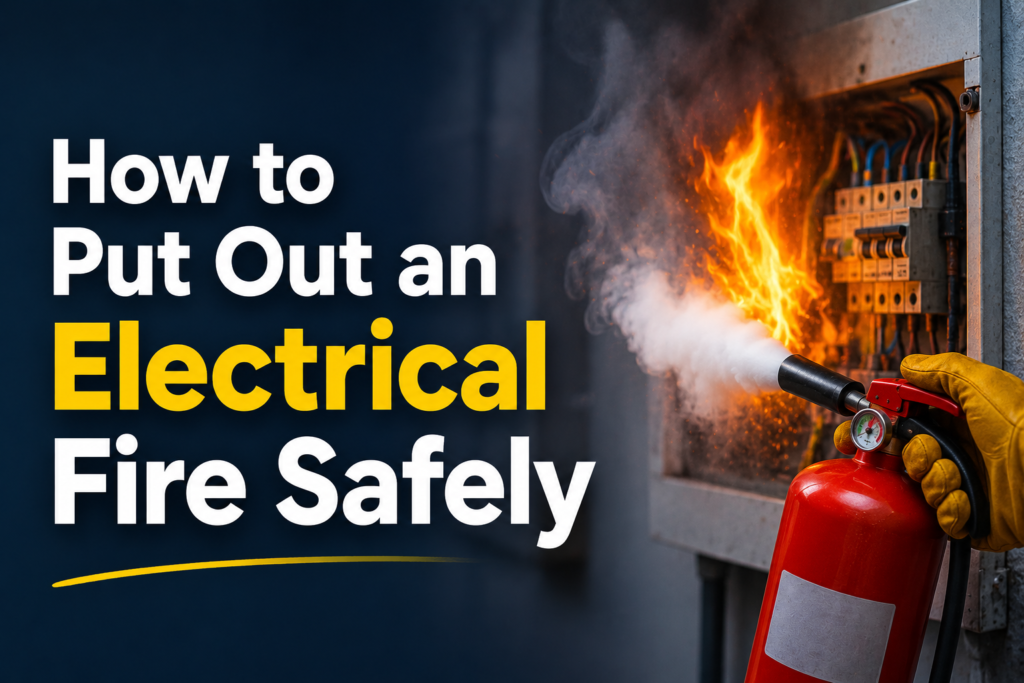
Electrical fires can be one of the most hazardous types of fires because they include live electrical currents that can easily start fires to surrounding materials. These fires usually result from electrical components or equipment failure, from overloaded circuits, from faulty wiring, or damaged appliances, and should be treated differently than other types of fires.
Many people make the error of trying to extinguish an electrical fire as if it were any other fire. The wrong method for extinguishing fires can, however, create further danger, electrocute the person using the extinguisher or cause the fire to spread. Knowing exactly what to do to extinguish an electrical fire properly can save lives, property and valuable equipment.
The following guide outlines how to safely deal with an electrical fire, what equipment you should use to help with the fire and what you should not do during an emergency.
What is an Electrical Fire?
An electrical fire is a fire that is started by heat from electricity, causing a fire to start in materials that are near the electrical source. These fires may begin in residential, office, factory, warehouse and commercial buildings.
Common causes include:
- Faulty wiring
- Overloaded outlets
- Damaged extension cords
- Defective appliances
- Electrical panel failures
- Poor maintenance
- Aging electrical systems
Electrical fires can burn rapidly as electricity can be installed behind walls, ceilings and floors where flames can be concealed in the initial phase of the fire.
Why Electrical Fires Are Especially Dangerous?
Electric fires carry dangers which aren’t shared by common fires.
Some of the main dangers include:
Risk of Electrocution
Water, metal, and other conductive materials can conduct live electrical currents.
Hidden Fire Spread
Electrical fires can burn behind walls, and remain hidden.
Equipment Damage
Damage can occur to computers, machinery and electrical systems even after the fire is out.
Toxic Smoke
Insulation, wiring and plastics combust and may release toxic smoke and fumes.
The risks associated with such fires necessitate a unique approach for electrical fires.
Step 1: Remain calm and evaluate the situation
The first thing to do is to stay cool.
When panicking, decisions might be made without thinking, and risks may be taken that are not needed. Quickly determine:
- The size of the fire
- Whether there is a risk to any lives
- If it is required to evacuate,
- If a fire is manageable, or if it can be put out safely.
If fire is spreading quickly or is producing a lot of smoke, leave right away and dial 999 for an ambulance.
Step 2: Disconnect the Power Source
The best method of extinguishing an electrical fire is to cut off the power.
If possible:
- Unplug from the power source.
- Switch off the circuit breaker
- Turn off the main power.
Do not put yourself at risk when disconnecting power.
If a fire makes it unsafe to reach electrical controls, evacuate to a safe distance and call fire authorities!
Step 3: Use the Correct Fire Extinguisher
The selection of the right fire extinguisher is very important.
Use: electrical fire extinguishers:
Class C Fire Extinguishers
Class C extinguishers are for use on energized electrical equipment.
CO₂ Fire Extinguishers
Carbon dioxide extinguishers are especially popular when used around electrical equipment because they leave no residue and do not conduct electricity.
Dry Chemical Fire Extinguishers
Multipurpose dry chemical extinguishers will also work on electrical fires.
Use the extinguisher according to the instructions printed on the extinguisher.
Step 4: Remember the PASS Method
If you have to use a fire extinguisher, remember PASS:
Pull
Draw the safety pin out.
Aim
Target the fire’s base.
Squeeze
Squeeze the handle.
Sweep
Move the nozzle back and forth.
This technique allows the use of the extinguishing agent effectively.
Must read this detailed Blog: 7 Essential Facts About What RACE Stands for in Fire Safety
Step 5: Don’t Extinguish an Electrical Fire with Water
Probably the most critical electrical fire safety rule is to never use water on energized electrical equipment.
Water is an electric conductor and can:
- Cause electrocution
- Spread electrical current
- Increase injury risks
- Worsen the emergency
Don’t use water until electrical power has been shut off and officials say it’s safe.
Step 6: Stay Back: Maintain a safe distance
Even slight electrical fires can get out of hand.
Maintain a safe distance while:
- Monitoring the fire
- Using an extinguisher
- Evacuating the area
Be sure to have an unobstructed way of escape behind you.
If the fire starts to spread, evacuate right away.
Step 7: When the fire cannot be controlled evacuate?
Not all fires are worth fighting.
Evacuate immediately if:
- Smoke becomes excessive
- The fire grew out of control and spread from the initial point.
- The fire comes into contact with a wall or ceiling
- Visibility decreases
- You feel unsafe
Always property protection comes second to personal safety.
Step 8: Call Emergency Services
If the fire looks out of control, even if it seems to be out, emergency services should be called for as needed.
Electrical fires can reignite due to:
- Hidden wiring damage
- Smoldering insulation
- Internal electrical faults
Professional inspection will help to make sure the area is safe before it is used again.
Step 9: Check and repair the cause
Once the emergency is over, determine the cause of the fire.
Typical projects following a fire are:
- Electrical inspections
- Wiring replacement
- Equipment testing
- Circuit upgrades
- Safety audits
If the problem is ignored it could result in further incidents.
Common Electrical Fire Hazards and Mistakes Made During Electrical Fires
They make mistakes in their reaction and this is the cause of many injuries.
Avoid these mistakes:
Using Water
Water and electricity don’t mix.
Touching Damaged Equipment
Smoke may burn and continue to be hot for an extended time, even after the flames have gone out.
Delaying Evacuation
Delaying evacuation may expose individuals to more smoke and fire.
Waste of time using the wrong extinguisher
Not every type of extinguisher will work for electrical fires.
Ignoring Warning Signs
Any burning smell, sparks, flickering lights or overheating devices are not to be ignored.
Learn how to prevent electrical fires
Prevention is the best fire safety management strategy.
Inspect Wiring Regularly
Old or damaged wiring should be repaired in a timely fashion.
Avoid Overloading Outlets
Excessive numbers of devices on a circuit can create excessive heat.
Replace Damaged Cords
It is never safe to use frayed cords.
Use Certified Equipment
Good quality electrical products can offer greater safety.
Schedule Professional Inspections
Regular inspections can detect risks before they arise and turn into emergencies.
Essential Fire Safety Equipment
The proper fire safety equipment should be kept in all buildings.
Important items include:
- Class C fire extinguishers
- Smoke alarms
- Fire blankets
- Emergency lighting
- Electrical surge protection
- Clearly marked exits
The availability of appropriate equipment can make a big difference in emergency responses.
Electrical Fire Safety in Workplaces
Clear fire safety procedures should be set up in business.
These should include:
- Employee training
- Fire drills
- Emergency contact plans
- Equipment maintenance
- Fire extinguisher inspections
A trained staff is ready for action in emergencies.
Conclusion
Knowing how to extinguish an electrical fire is an important fire safety measure for homeowners, employees, and business owners. Electrical fires are not handled the same as regular fires due to risks of energized equipment and electrical currents.
If possible, disconnect the power, use a suitable class C, CO₂ or dry chemical fire extinguisher and, if the fire is too hot to handle safely, evacuate. DON’T put water on a live electrical fire, and ALWAYS put safety before fire.
With a combination of the right fire response measures, preventive maintenance and fire safety training, you can minimize the risk of an electrical fire incident and make your workplace a safer place for everyone.
Which extinguisher would you use to put out an electrical fire?
The typical fire extinguishers used for electrical fire are Class C, CO₂, or dry chemical extinguishers.
Is it safe to use water to put out an electrical fire?
Is it safe to use water to put out an electrical fire?
Should the fire be an electrical fire should I disconnect the power?
Yes, provided that it is done safely, without risk to yourself.
Is it possible for an electrical fire to re-flash?
Yes. It is important to hire a professional inspection service after the fire to make sure that there are no reigniting problems present, such as damaged wiring and smoldering materials.