
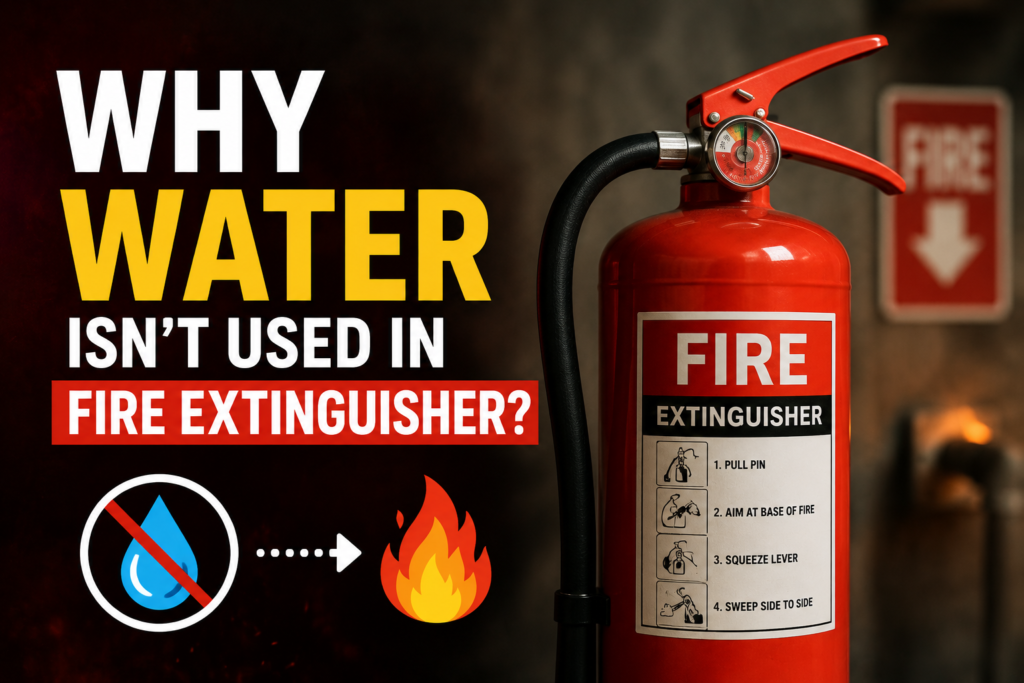
One of the questions you will hear after you have heard that not all fires should be put out with water is, “why water isn’t used in fire extinguisher” Water is one of the oldest and most effective extinguishing methods for some fires, but may render others far more hazardous. Hence, the modern fire extinguishers contain the different extinguishing agents depending on the type of fire they are designed to extinguish.
Now say that you come to a fire scene investigation. The room is filled with smoke, but with a little time the investigators know that using water would have made it worse rather than better. Why? The secret to escape any kind of fire is to learn about the various types of fire.
The water system is functioning properly
Water is an effective extinguisher for Class A fire, which is caused by ordinary combustible materials like:
- Wood
- Paper
- Cardboard
- Cloth
- Furniture
These materials are combustible, being kept burning by the heat.
That heat is taken away by cooling the burning material down below the ignition temperature, which is achieved by using water.
In such fires, water is a good extinguishing agent.
Case File: The Kitchen Fire That Got Bigger
A small pan of burning cooking oil burns.
A container of water is snatched up and poured on the blaze.
Rather than leaving the house, the fire bursts out in a big fireball.
Why was this the case?
Cooking oil can heat up to a much higher temperature than water will boil.
The water gets put in the hot oil, and is immediately vaporized into a stream of steam. The steam quickly expands and flings burning oil droplets into the air.
The outcome can be an explosive fire spread.
This is why fires involving cooking oil of Class K (or Class F in some areas) should only be extinguished with extinguisher devices that are designed for them.
Case File: The Electrical Equipment Fire
An office printer catches fire while plugged in to the electrical power.
Someone thinks about putting out the fire with water.
This is another potential danger.
Water conducts electricity.
When live electrical equipment is used:
- Electric shock
- Electrocution
- Equipment damage
- Fire spreading
In the case of Class C electrical fires, non-conductive extinguishing agents like carbon dioxide (CO₂) or dry chemical extinguishers would be far safer to use.
Case File: The Fuel Spill
A fuel storage tank containing gasoline is burning in a garage.
It would appear that water is the answer.
Unfortunately, gasoline floats on water.
The water might just be used to spread the fire, rather than extinguish it, and the fire would spread further.
For this reason water should NOT be used on class B fires involving:
- Gasoline
- Diesel
- Paint
- Solvents
- Alcohol
- Other flammable liquids
Typically, foam, dry chemical or carbon dioxide extinguishers work better.
Why Modern Fire Extinguishers Use Different Agents?
There are several different ways of putting out a fire.
Modern extinguishers may contain:
Water
For common combustible material.
Foam
In many fire caused by flammable liquids.
Dry Chemical Powder
Depending upon formulation, suitable for various fire classes.
Carbon Dioxide (CO₂)
Non-residious and is good for electrical fires.
Wet Chemical
Designed for commercial kitchen fires in cooking oils & fats.
Different agents extinguish the fire in a different fashion.
The science behind fire extinguishment
There are three things fire requires to keep burning:
- Heat
- Fuel
- Oxygen
The Fire Triangle is formed by this combination.
Fire extinguishers work by eliminating one of these components, or reducing its intensity.
Water does not conduct electricity, it conducts heat, primarily.
Foam helps to keep fuel away from oxygen.
Carbon dioxide decreases the amount of oxygen near the flames.
The dry chemical powders will interrupt the chemical reaction that keeps combustion going.
The knowledge of this principle is the reason why it is impossible for one extinguisher to extinguish all fires.
Common mistakes made during Fire Emergencies
There are many incorrect assumptions that are made when responding to fire.
Water does not extinguish all fires
There are several classes of fire and each one will require different extinguishing procedures.
Using the Wrong Fire Extinguisher
Selecting the incorrect extinguisher may worsen the situation.
Ignoring Fire Labels
All extinguishers are properly labeled indicating the classes of fire they are suited to extinguish.
Delaying Evacuation
Once the fire is not immediately controllable, rescue from the fire should be the first priority.
Choosing the Right Fire Extinguisher
When buying a fire extinguisher, take into account the place of use.
Multipurpose dry chemical extinguishers are the preferred type for homes because they are effective on a variety of common fire types.
However, there are types of extinguishers that are better suited to the kitchen and to offices with electrical equipment, carbon dioxide extinguishers and wet chemical extinguishers.
Identifying the types of fire extinguishers and the hazards they are designed to extinguish will greatly enhance fire safety.
Fire Safety Tips Every Homeowner Should Know
Having an extinguisher is just the beginning of good fire safety
Remember to:
- Become familiar with how your extinguisher works.
- Regularly inspect pressure gauges.
- Check for expiration dates and service requirements.
- Ensure that the extinguishers are easily accessible.
- Install smoke alarms in the house.
- Have a family evacuation plan.
Preparation prior to a fire is more valuable than reaction during a fire.
Final Thoughts
It is important to know why water is not suitable for extinguishing fire with a water fire extinguisher to ensure the safety of lives and property. Water works well on combustible materials, but can make grease fires, electrical fires, and flammable liquid fires much worse. Hence, modern fire extinguishers are fitted with various special extinguishing agents for various fire classes.
It can be a lifesaver in an emergency to know the right extinguisher to use and when not to use water. Always determine the type of fire first and if you can and safe to do so, use an extinguisher if necessary, and leave if the fire is too big to deal with.