
NASHVILLE—The future of property/casualty insurance is here and it looks a lot like … a devoted personal assistant for the policyholder, one that moves at lightning speed and never complains or takes a day off.
“You want your customer personalization to really come across as a concierge service,” said Russell Page, chief information officer for Hagerty, an insurer that specializes in coverage for classic cars and specialty vehicles.

Page spoke this week at the Insurance Innovators USA annual conference in Nashville. He and others stressed that rapidly evolving technology, including artificial intelligence systems, while far from perfect, have positioned insurers to focus more on customer service, anticipating policyholder needs in unprecedented ways and providing personalized attention like never before.
Insurance companies like Hagerty, for example, can use AI to not only determine the true value of a classic car, but also to know where the best repair shops are and even to alert the customer when and where similar vehicles are coming up for sale.
Page quoted Blade Kotelly, the often-cited author and Massachusetts Institute of Technology lecturer: “People want personalized service. But they don’t care if it comes from a person.”

Andrew Rose, president of General Motors Insurance, put it like this: Auto insurers should embrace AI for many reasons. But one advantage of the tech means that carriers can hone customer service in ways undreamt of just a few years ago. Insurers, for example, now learn almost instantaneously when an insured car has been totaled in an accident—and can quickly take steps to provide a replacement vehicle.
“In 2005, Amazon Prime launched and changed the world with two-day shipping,” Rose told the audience. Insurers are now at a similar moment in history, able to change policyholder service and responses in fundamental ways.
“This is insurance reimagined,” Rose said. “It’s being reset before our eyes at incredible speed.”
As fascinating and productive as AI systems seem to be, though, they still have some major issues than can cost businesses and their insurance companies significantly, explained Amy Horowitz, assistant vice president at Informatica, a cloud data-management company.

Horowitz gave the example of Air Canada, which lost a well-publicized lawsuit in 2024 after its AI-powered chatbot hallucinated answers that were inconsistent with company policy. The bot told a grieving passenger that she could access bereavement fares retroactively, according to news reports.
“The stakes are high. Reputational damage is real,” Horowitz said at the conference.
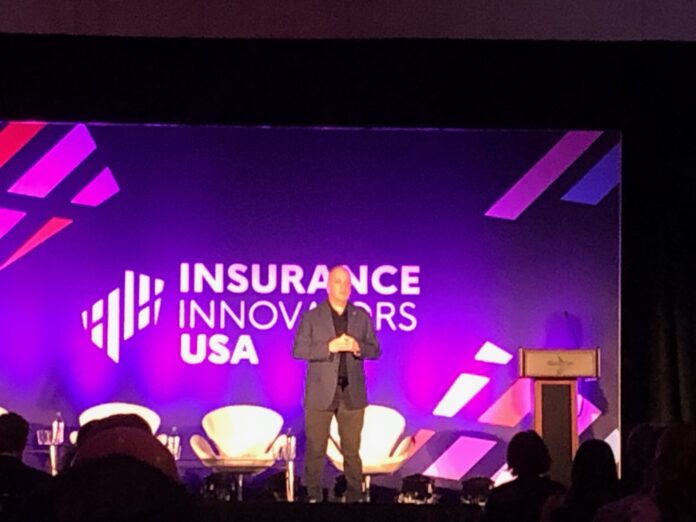
Top photo: Andrew Rose, president of General Motors Insurance, speaking on day 1 of the conference. (Insurance Journal photo)

Want to stay up to date?
Get the latest insurance news
sent straight to your inbox.

