
By Cris Villalonga-Vivoni
The Hour
NEW YORK — Michael Barasch still remembers the cars and how the once-bustling parking lot at the Greenwich train station was hauntingly still the morning after the attacks on the World Trade Center on Sept. 11, 2001, in New York City.
When Barasch, who had been working in the city, returned home and saw the rows of cars that now sat untouched and silent.
| MORE: When commercial fires don’t go as planned
Lower Manhattan, on the other hand, was bustling with recovery efforts and an attempt at normalcy as schools and offices reopened just days following an attack that killed 2,977 people days earlier.
A partner at Barasch & McGarry law firm, Barasch’s office was only a few blocks away from the World Trade Center and what became known as “Ground Zero.”
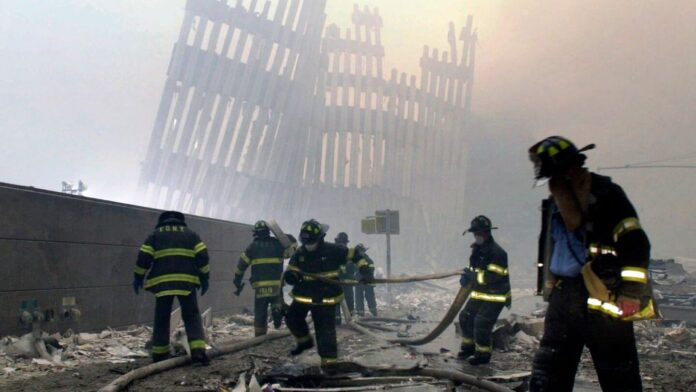
The city was covered in debris and dust from the collapsed towers, which, in reality, was a mixture of over 350 chemical agents, including gases, glass fibers, jet fuel, asbestos, plastic, pulverized furniture, and other toxic substances. It blanketed the lower parts of Manhattan and Brooklyn, entering residential buildings, schools, and offices, exposing people both indoors and outside.
The Centers for Disease Control and Prevention estimated that 400,000 people were exposed to the toxic contaminants; however, the long-term health impacts weren’t fully realized until years later. In the last 25 years, over 80,000 people have been diagnosed with a physical or mental condition as a result of their experiences on and following 9/11.
“Everybody feels like they’re a ticking time bomb. It’s not a question of if, but when they get cancer,” Barasch said. “Early Detection really does save lives.”
In the years since, Barasch has played a key role in advocating for a federally funded program to support 9/11 first responders and survivors facing complex health issues. The World Trade Center Health Program has helped served more than 150,000 people affected by the 9/11 terrorist attacks in New York City, the Pentagon and crash site in Pennsylvania since launching in 2011.
After a year of grassroots lobbying, Barasch said Congress recently approved permanent, lifetime funding for the health program to ensure all who need coverage can access it, especially as enrollment continues to rise each year.
Funding a program, however, can only get you so far when it’s operating with 25% less staff after major personnel cuts and restructuring over the last year. Barasch adds that An ongoing, agency-wide hiring freeze makes it impossible to fill the gaps, leaving people waiting to be enrolled and access their funded benefits.
“It’s been a disastrous perfect storm, and that it now takes over six months to get an appointment, which could make the difference between a cancer being diagnosed in stage one or stage four,” he said. “So it really is a matter of life and death that they had this full funding bill passed. Now we implore (HHS) Secretary Kennedy to drop the hiring freeze and hire back the nurses and doctors who were authorized by Congress in 2010 and give the 9/11 community the healthcare it so desperately needs.”
A funding victory
The World Trade Center Health Program was created after years of federal lobbying, spurred in part by the 2006 death of NYC Detective James Zadroga. A recovery worker and client of Barasch, Zadroga died at 34 years old from pulmonary fibrosis. An autopsy found glass, asbestos and other toxins in his lungs from 9/11 dust exposure.
In 2010, President Barack Obama signed the James Zadroga 9/11 Health and Compensation Act into law, establishing the health program and reopening the September 11th Victim Compensation Fund.
The health program offers no-cost specialized, annual preventive care for people who have specific, certified conditions related to 9/11, like cancers, respiratory and digestive diseases, and mental health disorders. Conditions not already certified must go through an approval process to qualify for coverage.
For Curtis Andrews, for example, having access to annual exams through the health program helped catch eight different skin cancers caused by exposure.
The North Haven resident was part of a 20-firefighter crew from North Haven that raced to the area later known as “Ground Zero” after the Twin Towers had collapsed. Wading through knee-deep debris and smoky residue, his job included assisting in search and rescue operations, administering food and IVs, and providing support to local first responders.
Andrews, who had signed up for the health program soon after launching, said he developed eight different skin cancers over the years. They were detected and removed early enough that it never developed into a bigger issue. He’s since been “blessed” with good health and insurance coverage that’s let him rely less and less on the federal assistance.
“We’ve actually lost more people since of 9/11- illnesses then actually died on 9/11,” he said. ” It’s crazy, but folks are coming down with stuff still, and they need to get treatment and be taken care of. So I’m glad that Congress has stepped up to fund it.”
The program doesn’t reimburse members or health care providers for the costs of cancer treatments received before coverage began. However, once enrolled, some individuals may qualify for financial compensation through the separate victim compensation fund, administered by the U.S. Department of Justice.
The funding formula that initially sustained the health program, however, underestimated how many individuals would be impacted by the exposure. It began with over 61,700 participants and has since grown to over 150,000 nationwide, according to the latest available data. Of them, about 1,670 are Connecticut residents, placing it seventh nationwide in enrollment.
At Barasch’s firm alone, they helped enroll around 5,000 individuals into the World Trade Center program last year. Without additional funding from Congress, Barasch said the program it couldn’t meet growing demand.
“When Congress passed the health program, they felt that they had funded it for 120 doctors and nurses. Well, in the last 15 years, what has happened due to this explosion of cancers, there has been a 25% increase in the number of first responders and civilians who have enrolled in the program.”
Spearheaded by bipartisan efforts, the new legislation updates how the program is financed and extends it until 2090, when the program expires.
Part of the grassroots campaign, Barasch said, involved urging his 45,000 clients to reach out to their elected officials and demand continued support for the health program.
“I have two cancers… I’ve lost many people in my office, and over two dozen people in my office are the children of 9/11 responders and survivors. So we take this so personally,” Barasch said. “I’m so thrilled that now we can rest easy.”
Norwalk resident, James Rossetti, said it took years for his cancer to manifest.
Rossetti was at the New York State Supreme Courthouse, a few blocks from the World Trade Center, when the first explosions rang out. Returning to a dust-covered, silent city a few days later, Rossetti, who was an assistant county clerk at the time, was part of the team that expedited over 2,500 death certificates of those who died in the attacks so families could start collecting benefits.
He was diagnosed with prostate cancer last year as a result of exposure to toxic air. Although doctors removed the cancerous mass, Rossetti said he needs an additional five weeks of radiation therapy.
Rossetti said he is enrolled in the health program, but his private insurance has helped cover treatment so far. Regardless, it’s a relief to have a fallback, he said, noting that the routine check-up that caught the cancer was through the health program.
“You don’t know how many years it will take for signs or or symptoms or illnesses to come to fruition, so to speak. And you know, we’re manifest itself and you know, and that probably is what happened in my case, and that’s probably what happened in a lot of people’s cases. So the fact that it’s continued to be funded is great, because you just don’t know how many potential you know victims there are out there,” he said.
Losing personnel
The milestone, however, has a caveat, Barasch said, as personnel cuts and an ongoing hiring freeze has increased certification wait times.
In 2025, around 16 people, or 20% of the staff, were laid off twice as part of the government restructuring and cuts under DOGE. Among those cut included Dr. John Howard, the longtime institute director and administrator of the 9/11 program who was appointed in the first Trump administration.
“He at least had some job security being the head of the program. What would you do? Do you think if you were just a regular doctor or nurse and you’ve been fired twice and then rehired… maybe you should take an early buyout,” Barasch said. “Which is what so many people did, and they did not come back. So even if we rehire people, we have lost some of the most experienced doctors and nurses and that really hurts the 9/11 community.”
At this point, Barasch estimates there’s around 25% less staff compared to the start of 2025. Yet, a hiring freeze in effect since last year makes it impossible to fill the gaps.
“We enroll people, and it takes six months for them to get an appointment and have their illness certified,” he said. “Only until it’s certified can they get all the treatment that they deserve in order.”
Barasch said he hopes to meet with HHS Secretary Robert F. Kennedy soon to discuss the needs of the 9/11 community and urge him to lift the hiring freeze if possible.
Lawmakers are also still waiting on answers on why the personnel cuts happened in the first place. In September, for example, U.S. Sen. Richard Blumenthal and three other U.S. senators sent a letter to the health secretary looking for more information about the staff cuts and reductions in the program.
“Full funding for the World Trade Center Health Program keeps our promise to these heroes and ensures they have the continued medical care and resources they need,” said Blumenthal in a statement to CT Insider. “I was proud to join my New York colleagues in the fight to secure this crucial funding, and will keep holding this administration accountable for being responsive to the needs of 9/11 first responders and survivors.”
Drifting afloat
Vincent Caprio said he lost his longtime case manager after she was reassigned to address the influx of enrollees and fill staffing hole.
Caprio was attending a conference at the Marriott World Trade Center when he overheard the first plane hit the World Trade Center. Throughout the rest of the day, he then directed people out of the towers while helping bring those injured to the makeshift medical triage.
Over the next several months, Caprio would go back to Ground Zero, volunteering more than 400 hours in the cleanup effort.
An Easton resident, Caprio is certified for five 9/11-related conditions: cancer, respiratory disease, GERD, sinus issues and PTSD.
It took a while for Caprio to get his certifications, but credits his case manager for helping him through it. Case managers are available to assist individuals seeking to enroll in the 9/11 Health Program through provider networks affiliated with the program.
During his five years in the program, Caprio said he has had to navigate a complicated and often frustrating billing and benefits system. Losing his case manager, he said, has left him feeling like he’s drifting float.
“I’m told by the Governor and Lieutenant Governor, my senator, my congressman, that I’m an American hero, that makes me feel good… I have all these awards that they can put on my casket. My name will be on a wall somewhere. But then you get back to the day-to-day reality,” he said. “It’s very challenging because when you get home, you’re involved with the bureaucracy of getting your bills paid and your medications paid that they’re supposed to be paying for.”

Fire Chief Tim Sendelbach rejected allegations of insubordination, misinformation and creating division, arguing the Loveland Fire Rescue Authority board’s claims lack evidence as it moves to terminate his contract

Police say the man lit fires in his Pocono Pines townhome to “kill spiders,” including placing a love seat over a smoldering blaze, and the fire spread to three adjoining units

A veteran firefighter testified he flagged smoldering areas days before embers from the Lachman fire reignited into the blaze that killed 12.

After Mid County Fire Protection District firefighters pulled out due to a roof collapse, relatives say they were told the home had been searched
© 2026 The Hour (Norwalk, Conn.).
Visit www.thehour.com.
Distributed by Tribune Content Agency, LLC.

The discount is 10% off the total order and can be reused on future purchases

