
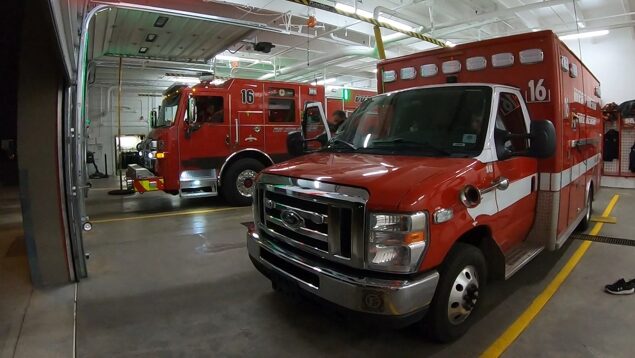
VIDEO: West Metro Fire Rescue is changing when firefighters begin their shifts after a months-long sleep study showed early start times were cutting significantly into their rest. For decades, firefighters at West Metro have worked 48-hour shifts, starting at 7 a.m. and ending two days later at the same time. During those shifts, crews respond to calls around the clock, often with little uninterrupted sleep.
Assistant Chief Mike Binney said the long-standing schedule, combined with early morning commutes, was costing firefighters valuable rest even before their first call of the day. “There’s got to be a more efficient way to do this,” Binney thought.
Earlier this year, Binney partnered with the Yale School of Public Health and the Colorado Office of eHealth Innovation to track sleep patterns for 166 firefighters. The study collected biometric data over multiple months both on- and off-duty, creating one of the most detailed datasets ever gathered on firefighter sleep.
The results showed firefighters averaged about six hours of sleep per day while on shift. Data also revealed that the 7 a.m. start time was forcing firefighters to wake up more than an hour earlier than their natural sleep cycle on both the first and last day of their shifts. “We’re waking people up at on average 5:32 in the morning to come to work,” Binney said. “We can see this is a pretty glaring thing that we can do with policy to fix this issue.”
Beginning in January, West Metro will shift the start of firefighter workdays from 7 a.m. to 9 a.m. The goal is to allow crews to wake up naturally on the first day of duty, without relying on alarms after an early commute. “This later shift start time should get it to the point where our firefighters almost don’t need an alarm unless they’re commuting from a lot further away,” Binney said.
The schedule change was put to a vote among union members and passed by a wide margin.
Captain Luke Bazacas, a 14-year veteran at Station 16, said sleep is often broken into short stretches overnight due to frequent calls. “Sometimes we’re fortunate on rare occasions to sleep,” Bazacas said. “Getting those additional hours kind of on the back end in the morning is hugely beneficial,” Captain Reed Norwood said.
Fire crews commonly rely on caffeine to stay alert during long shifts, something firefighters openly acknowledge at stations across the district. West Metro leaders hope the later start time reduces that dependence while improving overall alertness and safety. “That’s the nature of what we do,” Binney said. “People are going to need help in the middle of the night, and we’re the ones to do it.”
Starting in January, the same group of firefighters will again wear sleep tracking devices for several months under the new schedule. That data will be compared to the original study to determine whether the change leads to measurable improvements in rest, performance and long-term health. “One way or another we’ll know,” Binney said. “We can really put the health and safety and wellness of our workers at the forefront from making policy decisions that we were unable to do before this kind of information existed.”

