
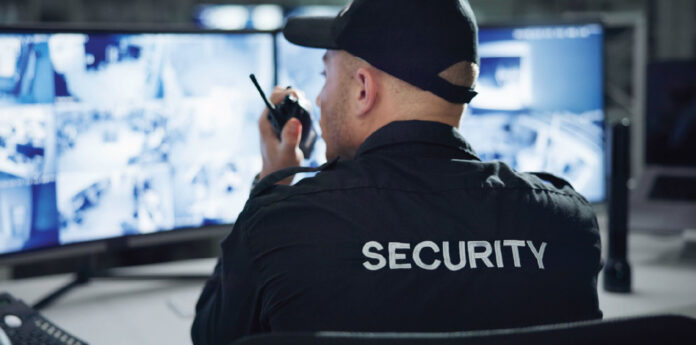
Modern video surveillance systems are a cornerstone of commercial security, helping businesses monitor activity, verify incidents, and gather valuable operational insights.
From office buildings and retail environments to healthcare and manufacturing facilities, video technology supports both life safety and business intelligence when integrated with access control and alarm systems.
In this guide, we explain how video surveillance systems work, the most common camera types and placements, storage and monitoring options, and how video analytics are transforming security operations in commercial spaces.
What Is a Video Surveillance System?
A video surveillance system is a network of cameras, recorders, and software used to observe and document activity in and around a facility. Cameras capture footage that can be viewed live or stored for future reference, helping organizations protect assets, verify incidents, and improve operational safety.
Modern systems often combine IP cameras, digital storage, and video analytics to provide real-time alerts, remote access, and detailed event records. When integrated with access control and intrusion detection, they form a central part of a comprehensive commercial security strategy.
Benefits of Commercial Video Surveillance Systems
Implementing a commercial video surveillance system offers advantages that extend beyond traditional security. When properly designed and maintained, these systems strengthen safety, compliance, and day-to-day operations.
- Deterrence and Prevention: The visible presence of cameras helps discourage unauthorized access, theft, and vandalism.
- Incident Verification: Real-time monitoring and recorded footage provide reliable documentation for investigations and insurance claims.
- Operational Awareness: Video systems can reveal workflow bottlenecks, queue lengths, or equipment misuse, improving efficiency and accountability.
- Regulatory Compliance: Many industries—such as healthcare, education, and manufacturing—use video documentation to meet audit and safety requirements.
- Integration and Insight: When connected with access control and alarm systems, surveillance footage enhances situational awareness and supports coordinated response procedures.
These benefits illustrate why video surveillance systems are now considered essential infrastructure in commercial and institutional environments—not just tools for security, but valuable sources of data-driven insight.
Video Surveillance (CCTV)
Closed-circuit television (CCTV) and network-based video surveillance systems serve as the visual layer of a facility’s security infrastructure. Cameras capture and transmit footage to local or cloud-based recorders, where authorized users can review live or archived video.
A well-designed surveillance system helps organizations:
- Deter theft, vandalism, and unauthorized access
- Verify alarms and incidents in real time
- Support investigations and documentation
- Monitor operational safety and compliance
The Security Industry Association (SIA) and ASIS International emphasize that surveillance planning should align with a facility’s broader security strategy, ensuring balanced coverage, defined retention policies, and adherence to privacy regulations. (Source: SIA | Source: ASIS International)
What Is the Difference Between CCTV and Video Surveillance Systems?
The terms CCTV and video surveillance systems are often used interchangeably, but they describe different technologies.
- CCTV (Closed-Circuit Television) refers to traditional analog systems that transmit video through physical cabling to monitors or DVRs.
- Modern video surveillance systems rely on IP (Internet Protocol) cameras, which deliver digital footage over a secure network, enabling cloud storage, remote access, and intelligent analytics.
While both record and monitor activity, IP-based video surveillance offers higher resolution, scalability, and integration with other building systems such as access control and intrusion detection.
Video Surveillance: Camera Types, Placement & Coverage
Choosing the right commercial security cameras depends on site layout, lighting, and monitoring goals. A layered approach—combining camera types and strategic placement—provides the most effective coverage.
Common Video Surveillance Camera Types
- IP Cameras: Digital network cameras that provide high-resolution imaging and remote connectivity.
- PTZ Cameras (Pan-Tilt-Zoom): Offer mechanical movement and zoom capability to follow motion or cover wide areas with fewer units.
- Dome Cameras: Compact, discreet, and vandal-resistant—ideal for retail and indoor environments.
- Bullet Cameras: Cylindrical outdoor models that serve as visible deterrents and withstand harsh conditions.
Video Surveillance Placement Considerations
- Entrances and Exits: Monitor main access points and egress routes.
- Perimeter Areas: Protect building exteriors, loading docks, and parking lots.
- Interiors: Focus on corridors, lobbies, and restricted zones.
- Critical Assets: Safeguard server rooms, cash-handling areas, and storage facilities.
The National Institute of Standards and Technology (NIST) recommends incorporating surveillance into a layered security model that integrates physical, electronic, and procedural controls. (Source: NIST)
Storage, Retention & Remote Viewing With Video Surveillance Systems
The effectiveness of any video surveillance system depends on how footage is captured, stored, and accessed.
Storage & Retention
- NVR (Network Video Recorder): Local storage for IP-based systems.
- Cloud-Based Storage: Secure, scalable retention without on-site hardware.
- Hybrid Systems: Combine both for redundancy and faster retrieval.
Retention periods vary by industry—typically 30 to 90 days for general commercial use, and longer for healthcare or government environments. All storage solutions should comply with organizational privacy policies and regulatory requirements.
Remote Viewing & Monitoring
Modern systems support remote viewing through encrypted access portals or mobile applications. Authorized users can monitor live feeds, receive event notifications, and verify alarms in real time.
When connected to a professional monitoring center, alerts are escalated according to predefined standard operating procedures (SOPs). Coordination with first responders or dispatchers depends on jurisdictional protocols and agency policies. (Source: UL Standards – Security & Signaling Systems)
Video Analytics, Alerts & Business Intelligence
Today’s video surveillance systems extend beyond passive monitoring. Using advanced video analytics, organizations can transform raw footage into actionable data.
Analytics tools include:
- People Counting and Dwell Time Measurement
- Heatmaps to visualize customer movement and traffic flow
- Loitering and Restricted-Area Alerts for loss prevention
- Object Left/Removed Detection for situational awareness
- Queue-Length Thresholds for operational efficiency
When thresholds are met, event-based notifications can alert staff or monitoring operators. These tools enhance situational awareness and support decision-making across security and operations—without replacing trained personnel.
The Security Industry Association notes that analytics improve accuracy, reduce false alarms, and enable earlier intervention during critical events. (Source: SIA – Video Analytics Report)
Learn More About Integrated Security Solutions
Commercial video surveillance systems play a vital role in protecting commercial spaces, supporting compliance, and improving situational awareness. When integrated with access control, security systems, and alarm systems, they create a unified safety network that helps organizations respond intelligently and efficiently.
Learn how modern video surveillance systems protect commercial spaces and integrate with access control.
Contact A Total Solution, Inc. for professional insight into designing compliant, scalable surveillance systems for your facility.

