
US data center development has slowed because the power grid is reaching its limit to accommodate more large facilities, according to research from energy consultancy Wood Mackenzie.
Developers added data centers that would consume about 25 gigawatts of electricity to their project pipelines in the fourth quarter of 2025, roughly half as much as they added in the third quarter. Projected capital spending by the biggest developers will decelerate in 2026 compared with the previous year for the first time since 2023, the WoodMac report states.
“Both utilities and grid operators are essentially putting the brakes on and making it more challenging to connect data centers,” said Ben Hertz-Shargel, WoodMac’s head of Grid Edge and the author of the report. The enormous demand for data centers hasn’t changed, he said, but “there’s only so much power to go around.”
The introduction of artificial intelligence has turbocharged data center development and transformed US energy markets, with some facilities sucking up as much power as entire cities. Utilities and independent power producers have benefited as tech companies compete to connect to electricity wherever they can find it, while some local communities and politicians have protested against the massive buildings.
Much of the US grid needs expensive upgrades after years of underinvestment. The data center boom, with its need for new power plants, transmission lines and other infrastructure, has intensified the need for capital spending. A gigawatt is roughly the output of a single nuclear reactor and can power about 750,000 homes.
Grid constraints have made tech firms and other developers focus more on their existing projects to make sure they get built rather than add on new projects with more challenging prospects, Hertz-Shargel said. The limits to data center development include not enough power generation, labor shortages and a focus on affordability, he added.
The amount of US data centers under development is still staggering, with facilities requiring 241 gigawatts in the development pipeline at the end of 2025. That’s an almost 160% increase compared with the start of last year, according to WoodMac. The largest developers’ projected spending is set to rise by only about60% of last year’s growth with the expectation they’ll spend $94 billion more than last year.
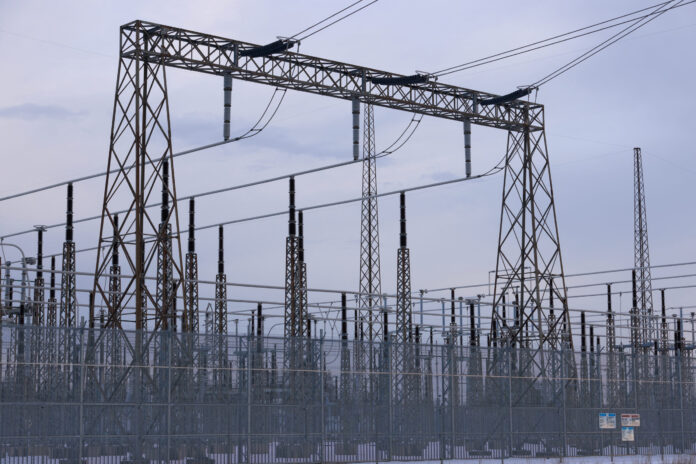
Photo: A power substation in US. (Bloomberg)
Topics
USA
The most important insurance news,in your inbox every business day.
Get the insurance industry’s trusted newsletter

