
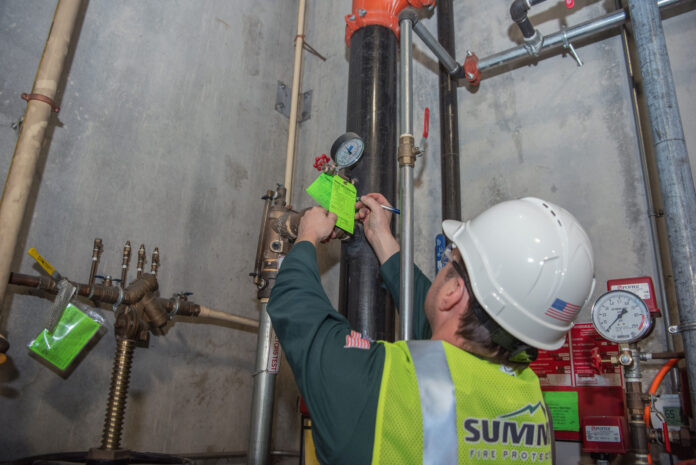
When you look at a fire extinguisher, there’s a lot going on. With multiple labels, tags, and other information, it can be a little overwhelming at first glance. Understanding these tags, however, is critical to ensuring that you have the right extinguishers in the right places, they’re ready when you need them, and that you’re meeting regulatory and insurance requirements.
In this guide, we’ll explain the labels and tags on your fire extinguisher — including the manufacturer’s label, inspection tag, tamper seal, and more — so you can keep your business safe and compliant.
What kinds of tags are on a fire extinguisher?
Fire extinguishers come in many shapes and sizes, but in general, they all have:
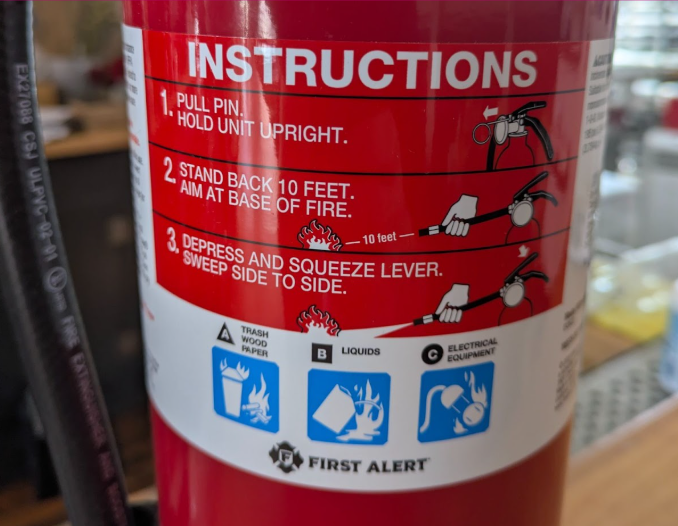
- Manufacturer’s Label – shows brand, model, instructions for use, and rated fire classes
- Manufacture Date Stamp – shows when the cylinder was made
- Inspection Tag – records periodic inspections
- Tamper Seal – indicates that the pull pin has not been removed
In addition to these, you might also find:
- Hydrostatic Label – These labels are found on certain high-pressure and/or reusable extinguishers that are required to undergo regular internal examination and hydrostatic testing.
- Internal Maintenance Label – These are put on the extinguisher after a 6-year maintenance is performed.
The hydrostatic label and internal maintenance label are very similar, and in some instances, the same label serves both purposes.
Manufacturer’s label
The manufacturer’s label was placed there by the company that made it. It tells you:
- What class of fire your extinguisher can fight (A, B, C, D, or K)
- Instructions and pictograms showing how to use the extinguisher
- Safety warnings and disclaimers
- Details about the manufacturer (company name, address, etc.)
- When the fire extinguisher was made
- UL (Underwriters Laboratory) Listing
The UL Listing is one of the most important parts of the label, and if any of the label is torn off that contains the required UL Listed information, the extinguisher must be removed from service.
When it comes to the types of fires that can be fought with that particular extinguisher, there are usually words and pictures along with the letter classification to ensure the user knows exactly what they can use it for. The NFPA identifies 5 classes of fire based on the type of fuel involved. They are:
- Class A: Fires involving ordinary materials such as wood, paper, cloth, and plastics.
- Class B: Fires involving flammable liquids or gases like gasoline, oil, solvents, and grease.
- Class C: Fires involving electrical equipment such as wiring, panels, motors, and appliances.
- Class D: Fires involving combustible metals like magnesium, titanium, sodium, or lithium.
- Class K: Fires involving cooking oils and fats, typically found in commercial kitchens.
Manufacture date
The manufacturing date is important for calculating when you’ll need a certified professional to conduct certain inspections, services, and tests on your extinguisher. You’ll typically find it on the manufacturers label, near the serial number of the UL logo. It may also be printed or stamped onto the cylinder itself, typically on the bottom.
Inspection Tag
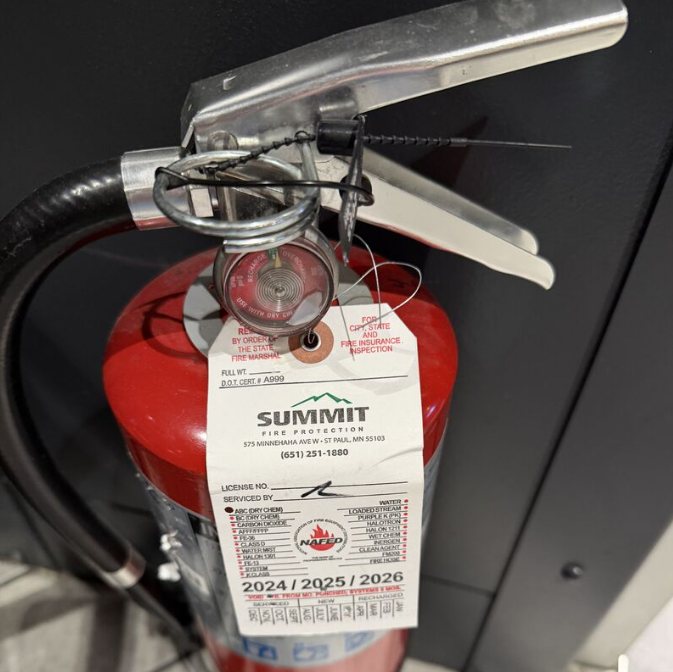
All workplaces are required byOSHA and NFPA standards to include tags documenting a fire extinguisher’s most recent inspection and servicing. The inspection tag records the previous date of servicing so you can ensure your extinguisher is fully operational.
Inspection tags come in different designs, and can be made from different materials.Tags can be affixed to the extinguisher, either by clip or wire, and could be either a paper tag, or a tyvek material tag. For some outdoor and vehicle applications, the tag may be a UV rated plastic or vinyl sticker affixed to the shell of the extinguisher.
Generally, they include a box denoting the current or upcoming year and all twelve months. The certified professional will hole punch the corresponding year and month at an annual inspection.Your next certified inspection will need to be conducted 1 year from the date punched on the tag. Tags also include the license number and signature of the certified professional performing the inspection, as well as an indication of what kind of inspection was performed.
Hydrostatic testing dates
Hydrostatic testing – which is required for certain kinds of refillable fire extinguishers – involves emptying the cylinder for a full internal and external inspection, followed by a test of the extinguisher’s maximum pressure and a recharging of the extinguisher.
Extinguishers that require this test will have a separate hydrostatic testing label. The date listed is the previous date of hydrostatic testing so that you can calculate when it must be tested again. If your extinguisher has never been hydrostatically tested, you should calculate your next due date from the date of manufacture.
Tamper seal
Tamper seals – also known as tamper tags or safety seals – are small plastic or wire ties wrapped around your fire extinguisher’s handle and pull pin. You can’t remove the pull pin without breaking the seal. If a tamper seal is broken, you must get your extinguisher inspected for a full servicing and recharge, no matter why the seal was broken.
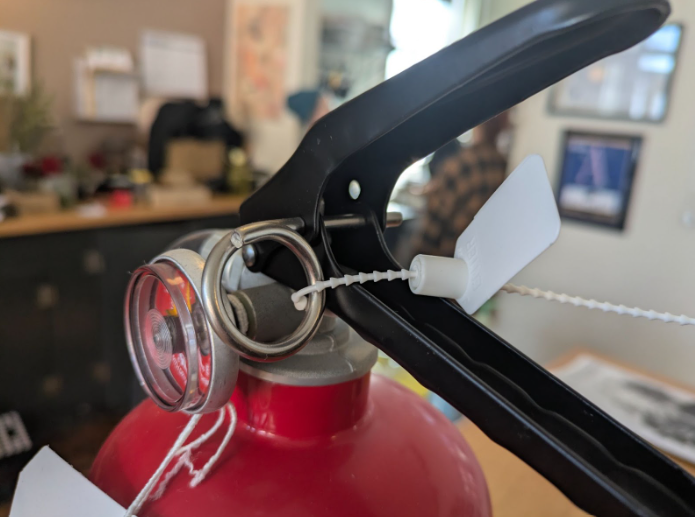
This is important because even if a fire extinguisher is only partially discharged, the remaining expellant pressure can leak off, causing it to fail in an emergency. For this reason, an extinguisher with a broken tamper seal may not pass legal or industrial fire safety standards and could result in voided insurance claims for fire damage. Tamper seals must be changed out annually by the professional who is conducting the annual inspection of the fire extinguisher.
Ensuring your first line of defense is ready when you need it
Portable fire extinguishers help prevent small fires from becoming large, costly disasters. To that end, the labels and tags on your fire extinguisher ultimately serve one purpose: ensuring that your fire extinguisher is ready when you need it. If you’re ever unsure of the status of any of your extinguishers, it’s a good idea to consult a professional.
From helping you select the correct extinguishers for your organization to inspecting and maintaining them, Summit Fire Protection is here to ensure your business is always safe and meets all regulatory and insurance requirements.
Contact the Summit Fire Protection team today for all of your fire and life safety needs.

