
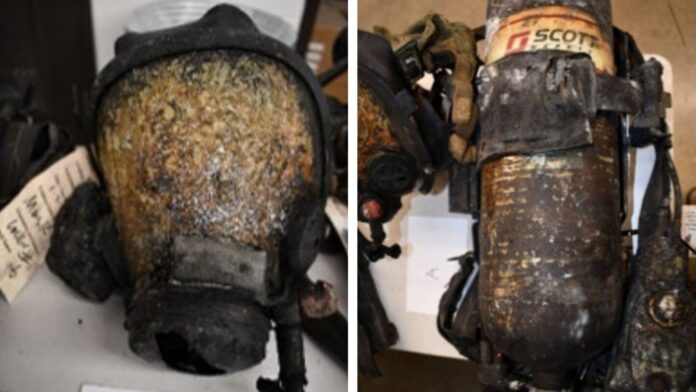
HOUSTON — A NIOSH investigation highlights how delayed water application, rapidly changing fire conditions and scene distractions contributed to serious burn injuries during an early-morning apartment fire.
| EARLIER: ‘Very close to losing their lives’: Houston firefighters burned during mayday
Incident overview
Three members of a ladder company suffered severe burn injuries during a primary search at a garden apartment fire in Houston on Jan. 7, 2025, according to a National Institute for Occupational Safety and Health investigation.
The incident unfolded minutes after the first alarm was dispatched for a reported apartment fire. A ladder company entered the first-floor unit to conduct a search while an engine company attempted to stretch and charge a handline. Before water was applied to the fire, interior conditions rapidly deteriorated. Flames filled the doorway and a closed door had cut off the crew’s exit path.
A Mayday was transmitted as crews forced the door and removed the trapped firefighters. All three were transported with serious burns, including injuries covering up to 24% of total body surface area.
Key investigation findings
One major factor was the delay in water being applied to the fire before interior search operations began. The ladder company entered the apartment to perform a primary search while the first-due engine attempted to stretch and charge a handline. A civilian altercation with an engine company officer disrupted the hose deployment process, preventing the hoseline from advancing with the search team. Without suppression in place, the fire grew unchecked and conditions quickly deteriorated.
Rapid fire growth inside the apartment created extreme thermal conditions. When the ladder company entered, fire was already venting from an open doorway and window. Within minutes, flames intensified and filled the entry point, trapping the crew and forcing a Mayday. Investigators noted that changing fire dynamics outpaced the crew’s ability to recognize the escalating hazard.
Another contributing factor involved the difficulty of recognizing environmental changes while wearing structural PPE. Investigators found that protective equipment can delay firefighters’ perception of rising heat levels. While PPE protects firefighters from short-term exposure, it can also mask rapidly increasing thermal conditions, allowing firefighters to unknowingly move deeper into a hostile environment.
Communication and situational awareness also played a role. Incident command received updates suggesting the fire was contained to the first floor and that water was on the fire. Those reports did not reflect the actual conditions developing inside the apartment. The gap between reported and actual conditions delayed recognition of the hazard faced by the interior crew.
Finally, investigators noted that scene distractions affected fireground operations. The altercation between a civilian and a firefighter diverted attention and resources during a critical phase of the incident. The disruption delayed the hoseline deployment and contributed to the lack of coordinated fire attack when the search team entered the structure.
Recommended department actions
Ensure firefighters employ tactics aligned with fire conditions when making entry. Interior operations such as search should be coordinated with suppression efforts so crews are not operating ahead of a charged hoseline. This approach reflects guidance in NFPA 1710 regarding effective deployment of resources during structure fires.
Ensure personnel identify isolation opportunities when conditions deteriorate. Firefighters operating inside a structure should constantly evaluate escape routes and potential refuge locations, including closing doors or isolating rooms from advancing fire conditions. This concept is central to modern fireground survival training and aligns with operational safety principles in NFPA 1500.
Train firefighters in the “GRAB LIVES” fireground survival techniques. The survival framework — which emphasizes controlling air supply, reducing profile and isolating from fire — provides firefighters with structured actions during disorientation or rapidly worsening conditions. Consistent training reinforces muscle memory for Mayday scenarios and supports requirements outlined in NFPA 1407 related to firefighter rescue training.
Develop a department culture that balances aggressive interior operations with proactive risk management. Investigators emphasized that departments must reinforce a mindset where tactical decisions are constantly reevaluated against fire conditions and survivability profiles. Establishing divisions and groups early in the incident — as recommended by NFPA 1561 — improves communication and situational awareness on complex incidents.
| Referenced in the NIOSH report: How to build a successful fire service organizational culture
Coordinate response procedures with local law enforcement to protect emergency scenes. Firefighters occasionally encounter interference from bystanders or emotionally involved civilians during incidents. Establishing protocols with police agencies can help prevent disruptions that distract crews or delay fireground operations.
Ensure firefighters understand the capabilities and limitations of their PPE. While modern turnout gear provides substantial thermal protection, it is not designed to allow extended exposure to extreme heat. Departments should incorporate PPE performance education into training so firefighters understand how protective gear may influence their perception of rapidly changing conditions.
Training discussion questions
- How should command ensure search teams do not advance ahead of a charged hoseline during apartment fires?
- What cues might firefighters use to recognize worsening thermal conditions despite the insulating effects of PPE?
- How should departments manage civilian interference at emergency scenes without compromising operational focus?
How does your department train on and conduct fireground searches? Can you search ahead of a hoseline or without a hoseline present? Can you search only if there is a charged hoseline in operation?

A public feud in Clinton Township is raising questions about EMS response models, as officials push for more EMT-based responses while firefighters warn reducing paramedic staffing could cut advanced care

Vice President JD Vance used the IAFF’s Alfred K. Whitehead Legislative Conference to highlight White House backing for firefighter legislation, including Social Security reform, grant funding and toxic exposure protections

Danbury Fire Department’s new progressive alerting system gradually increases alarm volume and uses voice announcements, part of a growing effort to reduce firefighter stress

Surveyors in Melbourne Beach discovered a young manatee trapped in a concrete stormwater structure, prompting an hours-long, multiagency rescue

First Due earned a spot on the 2026 GovTech 100 for the second consecutive year, recognizing its AI-powered, all-in-one platform supporting fire and EMS operations

