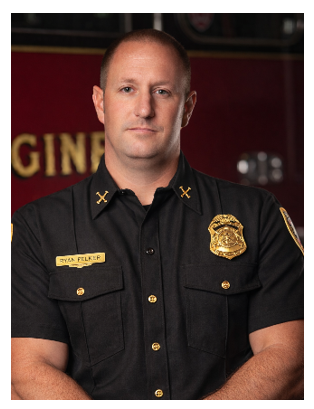

Author: C. Ryan Felker
The urgency had slowed. The radios were finally quiet. The scene had settled, but neither of us had.
My company officer for the day — now one of my closest friends — sat beside me on the tailboard of an idling engine. Elbows resting on his knees, eyes fixed forward. When I glanced over, I saw something I did not expect. There were tears in his eyes. I felt them in mine as well.
We were not the type to show emotion outwardly. We were steady. Composed. Reliable.
That moment reshaped my understanding of strength in the fire service.
The Culture We Inherit
In this profession, we are trained early to handle what is in front of us and move on to the next call. We pride ourselves on composure. We train for chaos. We compartmentalize because the job demands it.
The message is rarely spoken outright, but it is clearly understood: do your job, maintain control, and do not let it affect you.
Tradition has built a fire service filled with disciplined, capable professionals. It has shaped generations who run toward danger and carry themselves with confidence under pressure. There is honor in that tradition.
But tradition can also carry expectations that go unexamined.
In the weeks following the Umpqua Community College mass shooting in Douglas County, Oregon, I did what I had always done. I returned to work. I completed my responsibilities. I maintained the steady presence I believed my crew and superiors expected.
Outwardly, nothing had changed.
Internally, something happened.
What We Often Miss
At first, I did not recognize the shift. I became more reserved. Less outwardly positive. More inclined to keep my thoughts to myself. Crowded places began creating anxiety I had never experienced before. There was withdrawal where there had once been presence. I was navigating my life as if blindfolded, unaware of the shift.
I told myself I was fine. That was the expectation I had internalized.
I did not see the change. My wife did.
She pointed out that my normally engaged and upbeat personality had grown distant. There was withdrawal where there had once been presence. Her words forced me to acknowledge something I had avoided: I was carrying more than I had admitted, and it was showing.
Seeking help was not dramatic. It was not a breaking point. It was simply a decision — an acknowledgment that resilience does not mean silent endurance.
That realization challenged a deeply rooted belief in our culture: that strength is defined solely by composure and the ability to move forward unaffected.
Operational Readiness and Behavioral Health
Mental health is sometimes framed as separate from operational readiness. It is not.
Unaddressed stress does not disappear. It affects communication. It shortens patience. It influences judgment and decision-making. Over time, it erodes the very traits we depend on in high-risk environments.
We expect clear thinking, effective teamwork, and disciplined action on the fireground. Ignoring the cumulative impact of traumatic exposure undermines those expectations.
This is not about softness. It is about sustainability.
Over the past decade, the profession has begun openly recognizing a behavioral health crisis affecting firefighters nationwide. Peer support programs have expanded. Critical incident stress management teams are more common. Departments are investing in training and awareness.
But cultural change lags program implementation.
When identity and tradition are intertwined, change can feel like criticism of the past. It is not. It is evolution.
Leadership Responsibility
Leadership in the fire service extends beyond tactics and scene management. It includes protecting the long-term health of the people we lead.
My experience sharpened that understanding. What began as a personal realization evolved into a professional commitment. I became involved in our department’s peer support team and now help lead efforts focused on providing outlets for critical incident stress management and ongoing support.
The goal is not to dismantle tradition. It is to strengthen it.
When firefighters know they can speak honestly about stress without stigma, trust increases. Cohesion improves. Longevity becomes more realistic.
Strength that ignores human limits is fragile. Strength that acknowledges them is durable.
Redefining Strength
For much of my career, I believed strength was defined primarily by composure under pressure and the ability to move forward without hesitation. If I could not “shake it off,” perhaps I was not cut out for the job.
I no longer believe that.
True strength includes composure, courage, and discipline. But it also includes awareness. It includes recognizing when an incident has had an impact. It includes modeling humility to seek support when needed. It includes creating an environment where others feel permitted to do the same.
The moment on the tailboard was not a weakness. It was clarity.
If we want longevity in this profession — not just survival, but sustainability — we must expand our definition of strength. Behavioral health is not separate from operational excellence. It is foundational to it.
The fire service does not lack courage. It does not lack commitment. What we continue to refine is how we care for the people who answer the call.
Cultural evolution does not require abandoning tradition. It requires building upon it.
Strength is not silence.
Strength is readiness — physically, mentally, and emotionally — sustained over the span of a career.
That understanding continues to guide me in how I lead today
Where Do We Go From Here?
If we are willing to admit that this job leaves a mark, I often use a “brain tattoo” analogy, then we also have to decide what we’re going to do with that scar.
Change doesn’t start with a new policy. It starts with a conversation.
It looks like a company officer sitting on the back step after a hard call and asking, “How are you really doing?”, and being willing to sit in the silence that follows.
It looks like chiefs acknowledging that strength and struggle can coexist.
It looks like departments talking about peer support before it’s needed, not after someone is already drowning.
We don’t have to overhaul the fire service overnight, but we can normalize checking in. Give space for our people to decompress. We can model healthy processing. We can make it clear that asking for help is not weakness, it is professionalism.
When the next critical incident happens, because it will, our people shouldn’t have to wonder if they’re allowed to speak. They will know.
For departments seeking structured guidance, national and regional peer support and behavioral health programs provide established frameworks to build upon.
Strength isn’t silence. It’s leadership.
PBS NewsHour – 10 dead in southwest Oregon college shooting, including gunman

Wikipedia – 2015 Umpqua Community College shooting
https://en.wikipedia.org/wiki/2015_Umpqua_Community_College_shooting?utm_source=chatgpt.com
Author Bio:
Ryan Felker is a Battalion Chief with Central Douglas Fire & Rescue in Roseburg, Oregon. He serves on his department’s peer support team and helps lead initiatives related to critical incident response and member support. As a chief officer, he is committed to building resilient crews, strengthening leadership culture, and developing firefighters who are prepared both operationally and personally for the demands of the job.