
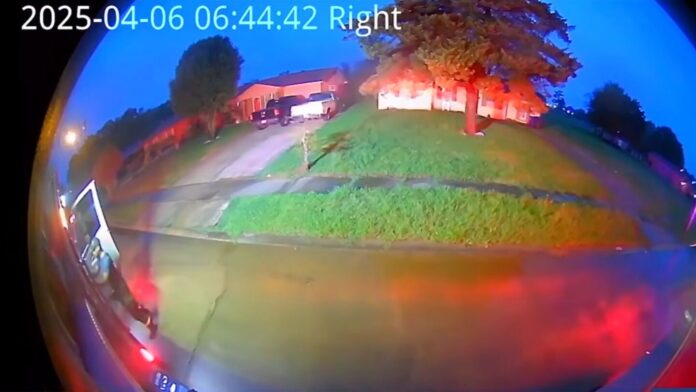
SHREVEPORT, La. — As relatives move forward with legal action over a Shreveport house fire that killed four family members, newly released video, audio and investigative records are providing a clearer picture of what unfolded and how firefighters responded.
The April 2025 fire on Kemp Lane killed Mildred Carter-Rawls, 84; her granddaughter, Eureka Garner, 56; and Garner’s two young granddaughters, Tayona Robinson, 7, and Ne’vaeh Garner, 5. Nearly a year later, the victims’ families have filed two wrongful death lawsuits against the City of Shreveport, former fire captain Devin Kennedy and the Shreveport Fire Department.
| EARLIER: Lawsuit alleges La. firefighters failed to search for victims in deadly house fire
Records obtained by KTBS through a public records request include internal interviews conducted by fire investigators, which provide a detailed account of the response by crews from Station 6, with three firefighters.
6:43 a.m.
According to the records, crews were dispatched around 6:41 a.m. to a reported possible house fire. Engine 6 arrived just over two minutes later and found flames coming from the front of the home.
Video from the scene shows Firefighter Byronesha Santiago quickly getting off the truck and helping deploy a hoseline and Fire Engineer James Lattier assisted with equipment. Kennedy, who was leading the crew, took additional time to finish putting on his gear, according to KTBS.
Investigators noted he was not fully dressed in protective equipment when he arrived, and at one point, was missing his helmet, which Lattier later retrieved from the truck.
Kennedy acknowledged he was not fully geared up when the crew arrived, saying he put on only the lower portion of his bunker gear while en route and did not finish dressing until they reached the scene. He also said he realized at the front of the house that he did not have his helmet and noted that the mistake had happened before.
Investigators also questioned Kennedy about whether he was fully geared up when crews arrived. He said he was still finishing dressing on scene and told investigators he tried to force open the front door but could not because something appeared to be blocking it, which he believed was a couch. Kennedy said he injured his back during the attempt and added that crews put water on the fire after arriving.
6:48 a.m. (3 minutes)
Records show the bulk of the fire was knocked down by about 6:48 a.m., but investigators said the initial crew did not make an immediate rescue entry.
In interviews, investigators asked Santiago whether her captain directed her to make a rescue entry and she said he did not.
6:55 a.m. (7 minutes)
At about 6:55 a.m., additional crews from another station entered the home and found four unresponsive victims just inside the same doorway Kennedy had tried to force open, about 12 minutes after the first crew arrived. Kennedy later described the moment by saying firefighters suddenly began bringing children out of the house.
The victims were carried outside, where CPR was started, and all four were later transported by paramedics but died from their injuries.
An internal affairs investigation found Kennedy’s actions were directly linked to the deaths, citing a lack of urgency and failure to follow standard rescue procedures.
During questioning, an investigator told Kennedy that under RECEO-VS, crews are expected to prioritize rescue first. Kennedy asked whether that was a guideline or a rule, and the investigator responded that it is a standard operating procedure.
Investigators also questioned Kennedy on whether the scene showed clear signs the home was occupied, including multiple cars parked in the driveway on a Sunday morning.
“I’ve fought lots of fires if there’s no one to rescue. We didn’t know that there wasn’t anyone to rescue,” Kennedy said, “I don’t want to put something in someone’s head.”
The lawsuits also allege critical communication failures involving emergency dispatchers.
One lawsuit, filed by Shereka Garner, alleges she told 911 dispatchers that four people were inside the home, but that information was not immediately relayed to responding crews. The complaint says a supervisor later acknowledged the dispatcher made a mistake and added the information only after a delay.
The lawsuit claims the omission led crews to assume the home may have been unoccupied and contributed to delays in rescue efforts.
A separate lawsuit filed by the sons of Mildred Carter-Rawls also names the city and the fire department, alleging a dispatcher error contributed to a 13-minute delay between the 911 call and crews arriving on scene. Kennedy later told investigators he never saw the updated dispatch message that people were inside the home.
When investigators asked Kennedy whether entering the home sooner could have changed the outcome, he said he would not speculate. Kennedy was fired in June after the investigation, but later appealed to the city’s civil service board and in January, was granted retirement benefits and back pay.

Chiefs John Tippett and John Oates debunk the idea that safety and aggression are mutually exclusive

Bodycam video shows Allentown firefighters rescuing trapped residents from second-floor windows

PFD Assistant Chief Jeff Schripsema shares a powerful story highlighting the department’s commitment to its members

The agency is again accepting applications for its Building Resilient Infrastructure and Communities program after a court order, but new rules could make it harder for smaller communities to compete for funding

Investigators are examining recorder data and control tower communications after the collision killed two pilots and injured passengers and emergency responders at LaGuardia Airport

Firefighters face enough risks on the job — breathing toxic diesel fumes inside the station shouldn’t be one of them, which is why MagneGrip manufactures both source-capture exhaust removal and air purification systems

