
The Justice Department and dozens of states accused Live Nation Entertainment Inc. and its Ticketmaster subsidiary of illegally monopolizing much of the market for live music, as a major courtroom clash more than 15 years in the making got underway Tuesday in New York City.
“The concert ticket industry is broken,” Justice Department lawyer David Dahlquist said in his opening statement. Live Nation “illegally used their monopoly power to help themselves at the expense” of artists, venues and fans.
Related: Live Nation’s Settlement Efforts Stalled Ahead of DOJ Trial
On Monday, the two sides picked a jury of 12 New Yorkers who will hear evidence about whether Live Nation violated federal and state antitrust laws. If the government prevails, U.S. District Judge Arun Subramanian who is presiding over the case, will decide what consequences to impose, including possibly breaking up the company. More than three dozen state attorneys general have also joined the DOJ’s case, and some are separately seeking damages on behalf of their residents. The jury will decide what those per ticket damages should be.
Jonathan Hatch, an attorney for the New York Attorney General’s office, told the jury that Ticketmaster’s monopoly power increases ticket prices by about $2.30 on average. Of that, somewhere between $1.56 and $1.72 were passed on per ticket to fans.
Live Nation and Ticketmaster are the largest U.S. venue owner, concert promoter and ticketing company.
Ticketing Services Market
Dahlquist said the company controls 86% of the market for ticketing services to what he calls “major concert venues,” which he defined as a capacity of at least 8,500 people and 10 concerts in a year. The company also controls about 78% of the market for large amphitheaters used by artists, Dahlquist said.
Live Nation’s next closest competitor in the ticketing market is Anschutz Entertainment Group’s AXS, which has a very distant 9% share, Dahlquist said. AEG Presents LLC also owns a rival concert promotion operation and is Live Nation’s primary competitor in the US.
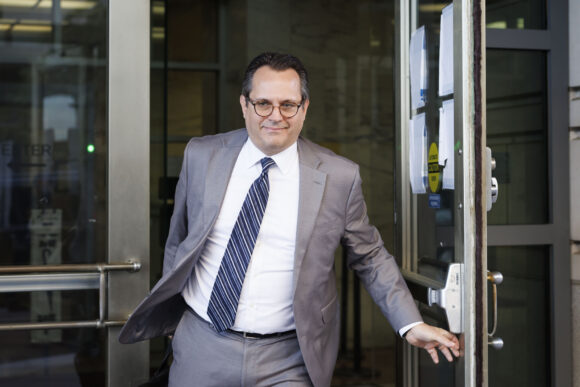
Dahlquist told the jury that Live Nation has the highest concert ticket fees in the world. He said that when venues switch their ticketing provider away from Ticketmaster fees drop by an average of $3.82. When venues switch to Ticketmaster, fees rise by an average of $4.33.
The trial is expected to last up to six weeks and promises to offer a snapshot of some of the biggest power players in the concert business. Live Nation boss Michael Rapino and finance chief Joe Berchtold are expected to testify alongside other key figures in the music industry such as mogul Irving Azoff and Louis Messina, chief executive officer of the touring company that handles Taylor Swift’s tours.
Related: Live Nation Loses Bid for Full Dismissal of Antitrust Suit
Artists including Kid Rock, a vocal Ticketmaster critic and major supporter of President Donald Trump, and Ben Lovett of folk rock band Mumford & Sons are also expected to appear.
David Marriott, a lawyer for Live Nation, will respond to the DOJ and states in his own opening statement.
Live Nation has denied it operates an illegal monopoly even as it has endured nearly two decades of antitrust scrutiny. The company merged with Ticketmaster in 2010 following a lengthy antitrust investigation. At the time, the Justice Department required the combined company to pledge that it wouldn’t tie its services together or retaliate against venues that switched promoters or ticketing operations.
In 2019, the Justice Department alleged that Live Nation had violated that promise and entered into a new settlement imposing an external monitor to ensure compliance and investigate any further disputes. The Biden administration then filed a lawsuit in 2024 seeking to break up the company.
Since the acquisition, “over the past 16 years Live Nation has continued to grow their market power and misuse their market power,” Dahlquist said.
The company also contends that a ruling by Subramanian last month significantly narrowed the case and eliminated the basis for the government to seek a break up. However, the DOJ and states maintain that is still on the table if they succeed in the current trial.
Barclays Center Fight
After opening statements, the initial testimony is expected to focus on a fight between Ticketmaster and SeatGeek Inc. over the contract to operate ticketing at New York’s Barclays Center. In 2021, Barclays switched to SeatGeek, only to return to Ticketmaster two years later. Barclays maintains it was pressured by Live Nation to use Ticketmaster if it wanted to host desireable concerts while Live Nation says other issues were at play. The DOJ and states also say that venues in Minnesota and Texas ultimately chose not to sign with SeatGeek because of Live Nation’s threats.
Executives from Barclays and SeatGeek are expected to testify in the first week, along with Live Nation’s Rapino.
Top photo: The Live Nation website arranged on a laptop in New York, US, on Wednesday, April 17, 2024. Photographer: Gabby Jones/Bloomberg.
Copyright 2026 Bloomberg.

Want to stay up to date?
Get the latest insurance news
sent straight to your inbox.

