
Agriculture traders rushed to adjust positions with the escalating conflict in Iran threatening to disrupt supply chains from corn and soybean meal to fertilizer and sugar.
President Donald Trump said the U.S. bombing campaign against Iran could last for weeks. The conflict is already reverberating across the Middle East and putting a squeeze on the Strait of Hormuz, a strategic waterway for the global oil trade and other commodities.
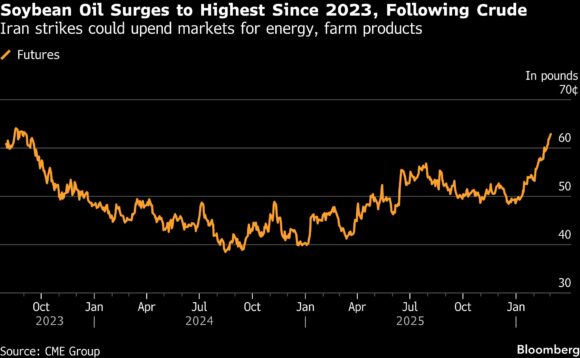
On Monday, soybean oil surged as much as 3.9% to hit a two-and-a-half year high, following steep gains in crude oil that are expected to make renewable fuels made from agricultural feedstocks such as soybeans and corn more attractive.
Related: Insurance Clubs to Halt Ship War-Risk Cover in Persian Gulf
“It’s a bit of a perfect storm for soybean oil, with rising crude oil prices increasing demand for biofuels,” Arlan Suderman, StoneX chief commodities economist, said in a note.
Suderman also pointed to recent moves by the Trump administration to finalize biofuel blending policies and increase the use of a higher-ethanol gasoline, known as E15. There may be more incentive to use the blend if gasoline prices are sustained at higher levels.
“Perhaps the current spike in crude oil will give a little support to legislative efforts to get year-around E15 ethanol blend sales approved as well,” Suderman said.
Soybeans
The attack on Iran also shakes U.S. relations with China, which has condemned the strikes. The conflict imperils an upcoming meeting in China between Trump and Chinese president Xi Jinping and throws into question whether the Asian nation — the world’s top consumer of soybeans — will continue securing supplies of the key US crop.
China avoided buying soybeans from the U.S. for much of the season amid trade tensions. Only recently has the Asian country resumed purchases to meet its pledge to buy 12 million tons this season. Trump in recent weeks has pushed for the country to up that commitment.
“If the Iranian war is ongoing in late March, it will be politically difficult for Xi to host Trump in Beijing,” AgResource Co. said in a note. “The political ties between the U.S./China are fraying, which at minimum will delay China’s purchase of U.S. soybeans, and could derail it.”
Soybean Meal
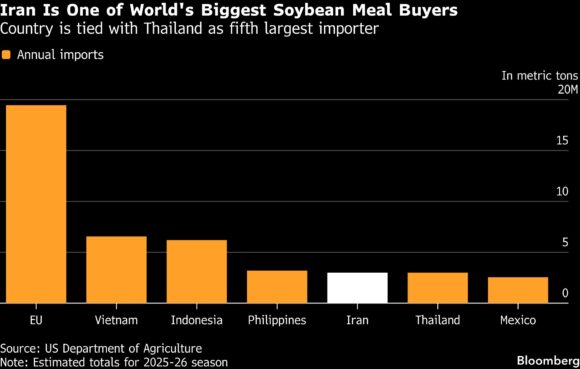
Soybean meal dropped as much as 2.7%, the most since November, with Iran a key importer of the protein-rich animal feed. Prices were also under pressure “due to expanding US production and rising freight rates that could dent future US soymeal export sales,” AgResource said.
Fertilizer
The conflict in Iran also threatens to disrupt a major fertilizer production and shipping hub. The Gulf region is home to some of the world’s largest fertilizer plants and the Strait of Hormuz handles about one-third of the global trade for crop nutrients — with high prices that have already been pressuring farmers.
Wheat
Wheat fell as much as 2.8%, giving back a portion of last week’s steep gains as traders waited to see if grain shipments would be affected by the conflict. Investors had rushed to cover short bets on potential upheaval from a US intervention in Iran.
“Wheat was the leader last week with aggressive short-covering taking place,” StoneX risk management consultant Matt Campbell said in a note. “While the impacts on wheat’s supply and demand in an Iranian conflict are not overly high, the managed money wanted to be on the sidelines while it was taking place.”
Corn
Corn markets are focusing on potential disruptions from the conflict for supplies out of Brazil, the world’s second largest exporter of the grain. Iran is the top buyer of Brazilian corn, accounting for roughly 22% of shipments last year. While Brazil has yet to finish planting the largest of its two annual corn crops, a persistent disruption in trade with Iran could create difficulties for Brazil to allocate all its output, even as the country’s domestic demand is expected to rise.
Corn futures fell by as much as 1.1% in Chicago on Monday.
Sugar
Volume in the sugar market rose as speculators covered short positions, reacting to higher energy prices, according to Mike McDougall, an analyst at McDougall Global View. Sugar is also used in biofuel production and demand can get a boost when crude moves higher.
The premium that refined sugar carries over the raw variety also jumped. That’s as raw supplies for the world’s largest standalone refinery refinery in Dubai come through the Strait of Hormuz, McDougall said.
“Energy futures and a host of commodity markets are adding a war premium to prices amid the war and the unknowns, including duration and infrastructure damage,” AgResource said. “The industry will have to get used to trading military news for a few weeks.”
Prices:
- Soybean oil rose 1.5% to 62.76 cents per pound as of 12:50 p.m. in Chicago
- Soybeans fell 0.6% to $11.6425 a bushel
- Sugar was little changed
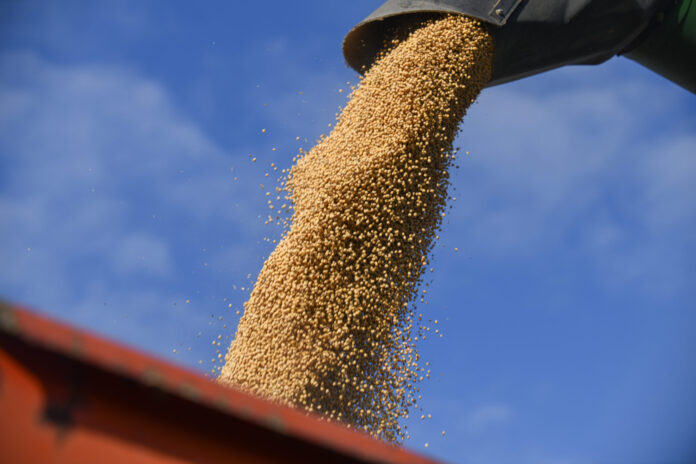
Top photo: Jim Strine works to harvest soybeans on his generational farm in Trenton, Missouri, on Thursday, Oct. 9, 2025. Photographer: Clayton Steward/Bloomberg.
Copyright 2026 Bloomberg.

Want to stay up to date?
Get the latest insurance news
sent straight to your inbox.

