
As insurers spread risk across more carriers, the structure behind a single claim has become more complex.
Capital is tighter, catastrophe losses are more frequent and specialized risks continue to grow across global insurance and reinsurance markets. Those forces have pushed insurers toward increasingly complex quota-share and layered capacity structures as a practical way to manage exposure and deploy capital efficiently.
In recent years, global insured losses from natural catastrophes have consistently exceeded $100 billion annually, reflecting sustained pressure on carriers and reinsurers to share risk across broader capital pools.
After major catastrophe events such as Hurricane Ian, it has become common for a single insured loss to be backed by capital spread across multiple carriers, syndicates, and jurisdictions, spanning both company balance sheets and the Lloyd’s market.

What appears to policyholders as one claim is, in reality, a set of financial obligations across many balance sheets. That shift has changed how insurance operates, even though the mechanics of moving money have largely stayed the same.
One policy, many balance sheets
Complex quota-share arrangements exist for good reason. They allow insurers to participate in larger risks, manage volatility and tailor exposure with far more precision than was possible in the past. Over time, the industry has become highly capable at structuring these arrangements, often with bespoke participation percentages, commissions, limits, and delegated authority.
The growth of delegated authority business also reflects this shift. Managing general agents and other delegated underwriting authority enterprises generated nearly $90 billion in premium in 2024, according to AM Best.
As these models expand, more capital sources may sit behind a single policy. The structure of a single risk increasingly spans multiple carriers, each participating on defined terms and responsible for its share of losses.
While risk is shared across participants, cash remains fragmented. Each carrier funds its portion of a claim independently, using its own systems, controls, and timelines. When losses occur, particularly following catastrophe events, this fragmentation becomes operationally meaningful.
Where Coordination Starts to Strain
In multi-carrier structures, no single party oversees the full cash flow.
When a claim is ready to be paid, funding must be coordinated across each participating carrier or reinsurer. Each entity funds its portion separately, according to its own internal processes and timing. Therefore, payment execution depends on multiple institutions acting in sequence rather than through a unified mechanism.
U.S. property/casualty insurers ceded more than $973 billion in premiums written in 2024, according to NAIC statutory filings. The loss obligations tied to that ceded business—reflected in reinsurance recoverables on each carrier’s balance sheet—represent capital expected to move between counterparties as claims are settled.
Even outside major catastrophe events, those recoverables represent an ongoing flow of funds tied to quota-share and other reinsurance structures. When participation spans multiple carriers, the timing of payment can depend on coordination across several balance sheets rather than a single source of liquidity.
While the claim itself may be straightforward, the funding behind it may involve multiple institutions operating on separate timelines.This means that what appears efficient from a risk distribution perspective can become more complex at the point where money needs to move.
Where The Pressure Has Moved
The industry has invested heavily in improving how risk is priced, structured and distributed across multiple parties. The growth of programs built around delegated authority and multi-carrier participation reflects that shift.
However, insurance operating models have evolved faster than the financial infrastructure that supports them. As quota-share arrangements have grown more complex, coordinating liquidity across multiple participants has become harder to manage at scale.
The structural design works from a capital-allocation perspective. The friction tends to surface later, when money needs to move.
The Issue Extends Beyond Headline Events
This pattern is not limited to major catastrophe losses.
Across the excess and surplus market and within delegated authority programs, quota share participation is increasingly common. As participation expands, even routine claims may depend on funding from several counterparties behind the scenes.
From a policyholder’s perspective, there is one insurer and one payment expectation. The complexity of the capital stack remains invisible—until payment timing becomes unpredictable.
Why This Matters Now
These challenges are becoming more visible when the system is tested.
Catastrophe events place immediate strain on claims operations. Multi-carrier programs introduce more dependencies into the funding process. Cross-border arrangements add complexity around timing and execution. At the same time, expectations around claims experience continue to rise.
As structural complexity increases, delays become harder to absorb. Claims teams are often evaluated on outcomes that depend on funding flows extending beyond their direct control. In an environment where responsiveness defines the claims experience, coordination gaps become more noticeable.
The system continues to function, but it is operating under growing pressure.
Risk Sharing Has Advanced, But Cash Movement Hasn’t Kept up
Insurance has adapted to a world where risk is shared across many parties. The financial infrastructure supporting that world has evolved more slowly.
As quota-share arrangements continue to grow in scale and complexity, the coordination of liquidity across participants becomes a more central operational consideration. Risk sharing is now routine. Ensuring that capital can move with similar consistency is an increasingly visible challenge for the industry.
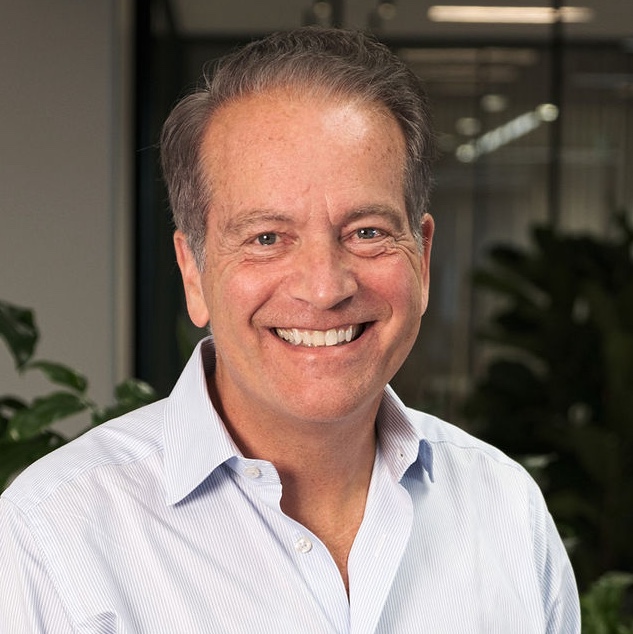
Hess is U.S. executive president of Vitesse. He has more than 25 years of experience in fintech and global banking, and oversees all aspects of the company’s U.S. operations, guiding strategy and growth initiatives.

