
Compartmentation is one of the most fundamental principles of fire safety, yet it is also one of the most frequently misunderstood, overlooked, or simply assumed to be ‘in place’.
At Total Fire Group, we often see examples of buildings where compartmentation is referenced confidently in fire risk assessments, despite little or no evidence that it actually exists as intended. Walls, floors, ceilings, risers, and service penetrations are often taken on trust, rather than verified. In today’s regulatory climate, that assumption represents a significant risk.
What is compartmentation – and why does it matter?
At its core, compartmentation is about containment. By subdividing a building into fire-resisting compartments, the spread of fire and smoke is limited, allowing occupants time to escape and enabling fire and rescue services to operate more safely.
When effective, compartmentation:
- Protects escape routes
- Limits fire spread between flats, different floors and areas of a building
- Reduces structural damage
- Supports stay-put strategies where applicable
When it fails, fire and smoke can spread rapidly and unpredictably, undermining even the most well-designed evacuation strategy.
The danger of assumption
Unlike fire alarms or extinguishers, compartmentation is largely hidden. Once a building is occupied, defects are concealed behind finishes, ceilings, and service installations. Over time, the integrity of compartments is compromised by:
- Unsealed service penetrations
- Poorly installed or altered fire-stopping
- Incomplete compartment walls above ceilings
- Unprotected risers and voids
- Uncontrolled refurbishment works
Too often, these issues go unnoticed because compartmentation has never been properly surveyed. Instead, it is assumed to be compliant based on drawings, building age, or historic approvals.
In our experience, assumption is one of the biggest weaknesses in fire safety management.
Why compartmentation surveys are essential
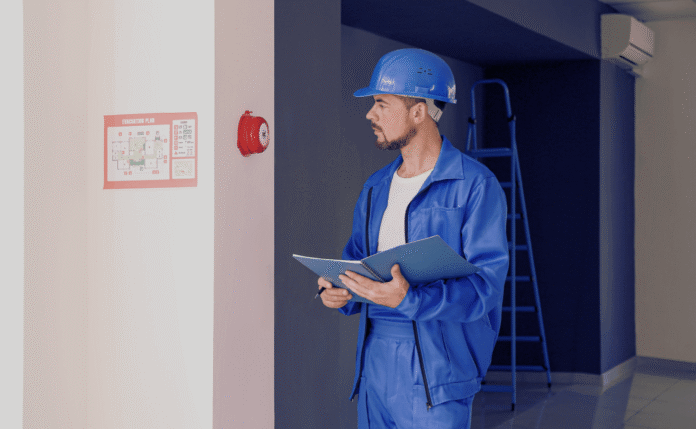
A compartmentation survey provides physical verification of what actually exists on site, rather than what is believed to exist on paper. It bridges the gap between design intent and real-world condition.
A robust survey should:
- Identify compartment lines and fire-resisting elements
- Inspect fire-stopping to walls, floors, and ceilings
- Assess risers, shafts, voids, and concealed spaces
- Record breaches, defects, and poor workmanship
- Prioritise risks based on life safety impact
This information is critical for responsible persons, duty holders, and fire risk assessors. Without it, decisions around evacuation strategies, remediation priorities, and compliance are made with incomplete data.
Competence and methodology matter
Compartmentation surveys are not general inspections. They require specialist knowledge of building construction, fire-resistance principles, and relevant standards and guidance.
Equally important is how findings are recorded. Clear photographic evidence, accurate location data, and structured reporting are essential to ensure defects can be understood, rectified, and audited. Poorly documented surveys create confusion and delay, often leading to repeated inspections and unnecessary cost.
Raising the profile of compartmentation
Across a range of sectors, there is a growing recognition that compartmentation can no longer sit in the background of fire safety management. Regulators and enforcing authorities increasingly expect duty holders to demonstrate understanding and control of this risk, not just reference it.
Yet compartmentation remains one of the least proactively managed disciplines, largely because it has historically been difficult to survey, disruptive to inspect, and poorly understood. That is beginning to change.
Total Fire Group: strengthening compartmentation assurance
In response to this industry gap, Total Fire Group will soon be launching a dedicated compartmentation survey service. This service is being developed to provide clear, evidence-based assurance around the integrity of fire compartments, supporting both fire risk assessments and wider building safety strategies.
By combining competent surveyors with structured inspection methodologies and clear reporting, the aim is to remove uncertainty and replace assumption with confidence.
For responsible persons, this means better information, clearer priorities, and a more defensible approach to compliance.
Moving from assumption to assurance
Compartmentation only works if it exists – and if it is maintained. Assuming it is ‘probably fine’ is no longer sufficient in a regulatory environment that demands evidence, accountability, and demonstrable control of fire risk.
At Total Fire Group, we believe compartmentation deserves the same level of attention as fire doors, alarms, and evacuation planning. It is not an optional extra; it is a cornerstone of life safety.
Raising awareness, improving survey quality, and investing in specialist services are all part of moving the industry forward. In doing so, we can ensure that compartmentation is no longer the discipline that is assumed – but one that is properly understood, inspected, and relied upon with confidence.
If you’re unsure whether your compartmentation holds up under scrutiny, or whether your team fully understands their shared responsibilities, contact Total Fire Group. We’ll help you make sure your building’s passive fire protection is robust, compliant and effective.

