
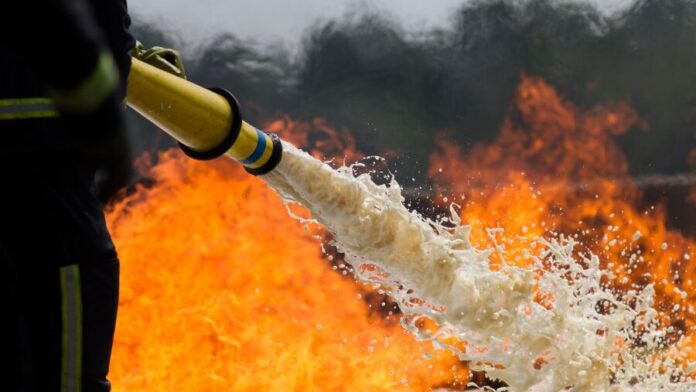
VIDEO: A firefighting foam containing harmful “forever chemicals,” which is widely used in military installations and airports, is now considered hazardous waste, once dispensed, under new rules in New Mexico.
The unanimous decision by the state Environmental Improvement Board this week gives the New Mexico Environment Department direct authority to require entities that use the foam to clean it up.
“Designating discarded PFAS-laden firefighting foams as a hazardous waste means the Environment Department can require cleanup,” New Mexico Environment Department Secretary James Kenney stated in a news release. “This week’s decision puts to rest any argument to the contrary and will help expedite cleanup efforts around military installations.”
Aqueous film-forming foam (AFFF), used to fight fires, contains per- and polyfluoroalkyl substances (PFAS), which are chemicals that are harmful to humans. When the foam is dispensed it can often leach into soil and drinking water sources, leading to health effects like cancer, NMED said.
In New Mexico, multiple PFAS contamination sites have been identified, primarily related to the historical use of firefighting foams: Cannon Air Force Base in Curry County, Holloman Lake (also known as Raptor Lake) in Otero County, and La Cieneguilla/La Cienega in Santa Fe County.
Under the new rules, NMED now has authority to regulate discarded AFFF as hazardous waste, limit its use, and require cleanup after emergency deployments to prevent contamination of soil and water. The new rule also requires facilities that store the foam to report that information to the department, so regulators can keep track of contamination risks that exist across the state.

