

Learn how to mentally prepare for your firefighter interview. Get practical fire interview prep tips to stay calm, confident, and ready to perform your best.
Landing a firefighter interview is an achievement in itself. Whether you’re applying for your first fire service position or competing for your first full-time career appointment, the interview is where departments decide who you are and what you have to offer their agency. Mental preparation for the interview process is often overlooked, yet is one of the strongest factors separating candidates who merely “answer questions” from those who leave a lasting, positive impression. Mental preparation can help you stay calm, focused, and confident under pressure, and allow your best qualities to come through naturally.
Fire Interview Prep Strategies for Success
Firefighter interviews are designed to assess much more than knowledge. Departments evaluate decision-making, integrity, composure, communication skills, and cultural fit. Mental preparation helps you organise your thoughts, manage stress, and respond deliberately rather than react emotionally. The goal is not to sound rehearsed or robotic, but to present yourself as thoughtful, dependable, and professional—someone a crew would trust at three in the morning on a difficult call.
Visualisation and Rehearsal Techniques
Visualisation is a powerful tool used by athletes, pilots, and military professionals—and it works just as well for firefighter interviews. In the days leading up to your interview, spend a few minutes each day mentally rehearsing the experience.
Picture yourself walking into the interview room confidently. Imagine greeting the panel warmly, being comfortable but presenting yourself professionally, and making eye contact. Visualise yourself listening carefully to each question, pausing briefly to carefully consider the question and gather your thoughts, and delivering clear, structured responses. Mentally walk through challenging questions—ethical dilemmas, teamwork conflicts, or failure scenarios—and see yourself handling them calmly and professionally.
This process trains your brain to treat the interview as a familiar event rather than a threat. When interview day arrives, your mind is less likely to panic because it has already “been there.” It is a lifelong exercise to become comfortable being uncomfortable.
Breathing Exercises and Grounding Methods
Stress is natural during an interview, but unmanaged stress can derail otherwise strong candidates. Simple breathing and grounding techniques can keep your nervous system under control.
One effective method is box breathing: inhale for four seconds, hold for four seconds, exhale for four seconds, and hold again for four seconds. Practice this regularly, especially before entering the interview room. It slows and steadies your heart rate and sharpens focus.
Grounding techniques are also helpful. Press your feet firmly into the floor and sit upright with your shoulders relaxed. If your mind starts racing, gently refocus on your breathing or the physical sensation of the chair beneath you. These techniques help keep you present, attentive, and composed.
Take Practice Questions and Mock Interviews Seriously
Mental readiness improves with repetition. Practice interview questions out loud—not silently in your head. Speaking your answers helps you refine clarity, pacing, and structure.
Mock interviews are especially valuable. Ask a trusted friend, instructor, or mentor to conduct a realistic panel interview. Dress professionally, sit at a table, and treat it as the real thing. Ask for honest feedback on your content, tone, eye contact, and body language. Those who have an interest in you and your success are likely very willing to help you with this. Don’t be afraid to ask.
Practice helps you identify weak spots early and reduces anxiety by increasing familiarity. Confidence grows when you know you’ve already faced similar questions successfully.
Common Firefighter Interview Questions to Be Prepared to Answer
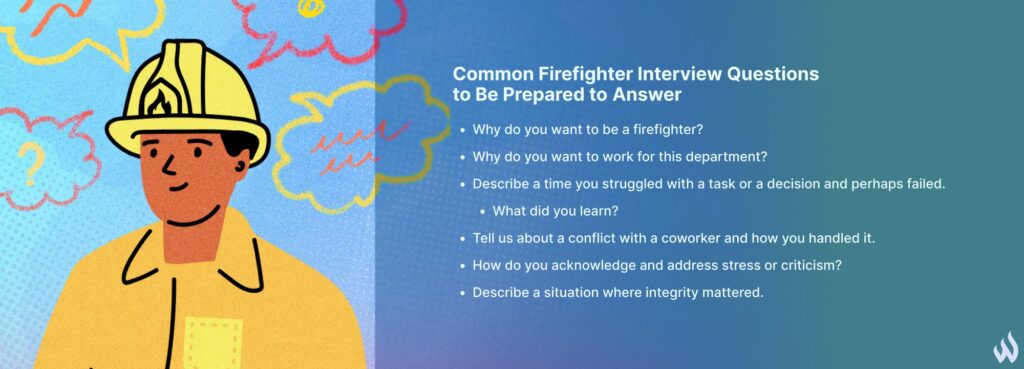
Most firefighter interviews cover similar themes. While wording varies, you should be prepared to address questions such as:
- Why do you want to be a firefighter?
- Why do you want to work for this department?
- Describe a time you struggled with a task or a decision and perhaps failed. What did you learn?
- Tell us about a conflict with a coworker and how you handled it.
- How do you acknowledge and address stress or criticism?
- Describe a situation where integrity mattered.
Equally important is knowing what not to do. Common mistakes include:
- Rambling without answering the question directly
- Speaking negatively about former employers or teammates
- Giving generic answers that lack personal experience. Think of a specific example and relate your personal experience.
- Overemphasising your own wants while ignoring service and teamwork
- Appearing overly rehearsed or insincere. Be yourself – they want to get to know you as you really are.
How to Manage Stress Before and on Interview Day
Stress management begins well before interview day. In the final week, avoid cramming new information. Instead, focus on reinforcing what you already know. Review your application, your resume, and your personal stories so nothing surprises you.
On interview day, arrive early. Rushing to arrive increases anxiety and puts you in a reactive mindset. Give yourself time to breathe, review key points, and mentally settle in. Remember that the interview panel wants you to succeed—they are looking for reasons to hire you, not reasons to eliminate you.
Sleep and Nutrition Matter More Than You Think
Sleep deprivation negatively affects memory, emotional regulation, and communication. Aim for consistent, quality sleep in the days leading up to your interview, not just the night before.
Eat a balanced meal that stabilises energy—lean protein, complex carbohydrates, and hydration. Avoid excessive caffeine or sugar, which can amplify anxiety and cause crashes mid-interview. Physical readiness supports mental clarity. Take water with you. Interviewers often provide water, but be prepared.
The Power of Positive Self-Talk
Your internal dialogue directly affects your performance. Replace thoughts like “I’m going to mess this up” with “I am prepared and capable.” Confidence does not mean arrogance—it means trusting your preparation and experiences.
Remind yourself why you earned the interview. You are there because you meet the department’s basic standards. Positive self-talk reinforces calmness and helps you present authentically rather than defensively.
Post-Interview Reflection and Continuous Improvement
Mental preparation doesn’t end when the interview does. Afterwards, take notes on what went well and what you would improve. Did certain questions catch you off guard? Were there moments where nerves crept in?
This reflection builds resilience and sharpens your skills for future interviews. Many successful firefighters were not hired on their first attempt. Each interview is an opportunity to grow stronger, more confident, and more self-aware.
Mental preparation is not a shortcut—it is a professional skill. Fire departments seek candidates who can think clearly under pressure, communicate effectively, and remain grounded in high-stress situations. By preparing your mind as deliberately as your body and résumé, you give yourself a significant advantage when it matters most.

