
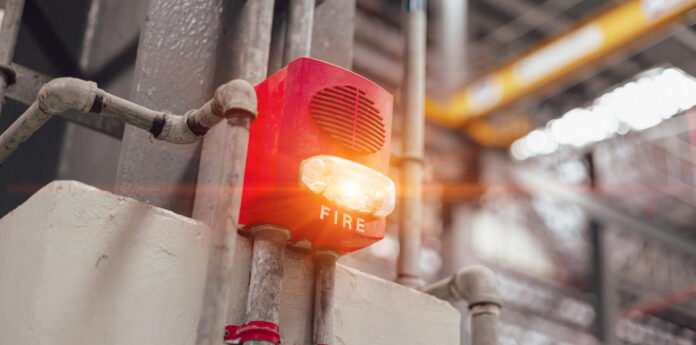
Your commercial fire alarm system goes off. You look around. No smoke. No fire. Employees are already heading for the exits, your kitchen staff is annoyed, and somewhere a tenant is calling to complain.
You silence it, make a note, and move on.
Then it happens again.
If this sounds familiar, you’re dealing with one of the most common (and most mishandled) problems in commercial fire alarm maintenance.
False alarms aren’t just disruptive. In Florida, they can trigger fines from local fire authorities, put your compliance record at risk, and critically, train your occupants to ignore alarms altogether. That last consequence is the one that keeps fire protection professionals up at night.
The causes are usually fixable. But first, you need to know what you’re actually dealing with.
In this guide, we walk through the most common reasons a commercial fire alarm system triggers false alarms, how to tell the difference between a nuisance activation and a genuine system failure, what Florida fire code requires when false alarms become a pattern, and when it’s time to stop troubleshooting and call a
NICET-certified fire alarm technician. Whether you manage a healthcare facility, a commercial property, or an assisted living community in the Tampa Bay area, understanding your fire alarm system is the first step to getting it under control.
Nuisance Alarm or System Failure? Know the Difference First
Before you do anything else, this is the most important distinction to make. Not every false-seeming commercial fire alarm activation is a nuisance. Some are early warnings of a system problem that will get worse.
| Signs It’s Likely a Nuisance Alarm | Signs It Could Be a System Problem |
|---|---|
| Alarm triggered near kitchen, restroom, or HVAC vent | Alarm activates with no environmental explanation |
| Occurred during or after construction or cleaning | Multiple zones trigger simultaneously |
| Single detector activating, not a full zone | Panel shows a fault or trouble code |
| Resolved after ventilating the area | Alarm won’t silence or reset |
| Recent weather change or humidity spike | Recurring activations from the same device |
| Low battery warning preceded the alarm | Wiring was recently disturbed by renovation work |
If you’re seeing anything in the right column, stop troubleshooting yourself and call a certified technician. Panel fault codes and multi-zone activations are not nuisance issues — they’re system communication problems that require professional fire alarm inspection.
The Most Common Causes of False Alarms in Commercial Buildings
1. Florida’s Climate Is Working Against Your Fire Alarm System
This is specific to Tampa Bay and routinely overlooked in national guides. Florida’s combination of high humidity, rapid temperature swings between air-conditioned interiors and outdoor heat, and intense storm seasons creates conditions that challenge commercial fire alarm systems year-round.
Photoelectric smoke detectors — the most common type in commercial buildings — work by detecting light scatter from particles in the air. High humidity introduces microscopic water vapor particles that scatter light just like smoke does. The result: a triggered commercial fire alarm with no fire.
This is especially prevalent in:
- Buildings with older HVAC systems that struggle to regulate humidity
- Coastal or waterfront properties in the Tampa Bay area
- Facilities that open large doors frequently — warehouses, loading docks, restaurants
- Any building in the weeks following a major storm system
What to do: Have a technician assess whether your fire alarm system’s detector sensitivity is calibrated for your specific environment. Sensitivity settings appropriate for a dry climate are frequently too high for coastal Florida conditions.
2. Dust, Debris, and Construction Work
Commercial fire alarm smoke detectors don’t distinguish between smoke particles and dust particles — they detect particulate matter in the air. Renovation work, ceiling repairs, or aggressive cleaning near a detector can send enough debris into the sensor chamber to trigger a false alarm.
This is one of the leading causes of false alarms in active commercial environments and one of the most preventable.
What to do: Before any construction or major cleaning, notify your fire protection company. Detectors in the work zone can be temporarily covered or placed in test mode by a licensed technician — never by maintenance staff alone — and restored immediately after work is complete. In Florida, doing this without proper authorization is a fire code violation.
3. Wrong Detector Type for the Location
A smoke detector installed near a commercial kitchen, a steam-producing restroom, or directly in an HVAC airflow path is going to cause recurring false alarms. It’s not a faulty detector — it’s the wrong detector in the wrong place.
Use this reference during your next self-audit:
| Location | Recommended Detector Type | Why |
|---|---|---|
| Commercial kitchen / cooking area | Heat detector | Cooking smoke and steam will constantly trigger smoke detectors |
| Server room / data center | Aspirating smoke detector or VESDA | Detects trace smoke before visible smoke develops |
| Lobby / open office | Photoelectric smoke detector | Best for slow, smoldering fires in low-particulate environments |
| Warehouse / storage | Heat detector or multi-sensor | Large air volume; smoke may not reach ceiling-mounted detectors quickly |
| Boiler room / mechanical space | Fixed-temperature heat detector | High ambient heat makes smoke detectors prone to false activation |
| Restroom or shower area | Heat detector only | Steam from showers routinely triggers smoke detectors |
| Parking garage | CO detector + heat detector | Vehicle exhaust makes smoke detectors inappropriate here |
If your commercial building was designed or retrofitted years ago, there’s a good chance detectors are in the wrong locations. A NFPA 72-compliant fire alarm inspection will identify any misplacements.
4. Aging Fire Alarm Equipment
The National Fire Protection Association recommends replacing smoke detectors every 10 years. In commercial environments with higher particulate exposure, that timeline can be shorter. An aging detector becomes progressively less stable — its sensitivity drifts, its chamber collects residue, and its internal components degrade.
An old detector doesn’t fail quietly. It fails with random, unpredictable activations that become more frequent over time.
What to do: Pull the manufacture date from each detector — it’s printed on the device or accessible through your fire alarm panel’s device log. If you have devices approaching or past the 10-year mark, replacement is more cost-effective than continued troubleshooting.
5. Wiring and Fire Alarm Panel Issues
Loose wiring connections, damaged conduit from renovation work, and aging control panels that can’t properly communicate with newer devices are common sources of false alarms in commercial fire alarm systems. The alarm isn’t reacting to smoke — it’s reacting to an interrupted signal that the panel interprets as a trigger.
This is particularly common in buildings where fire alarm work has been performed by multiple contractors over the years, or where panel software hasn’t been updated to match current devices on the network.
“In over 30 years of doing this work, I’ve seen facilities spend months troubleshooting a false alarm problem when the real issue was a single loose connection at the panel. The frustrating part is that it’s almost always fixable quickly once you know where to look. The key is working with a technician who will actually trace the problem rather than just reset the panel and move on.” — Charles Ragghianti, President, A Total Solution, Inc. NICET III Certified | 33+ Years in Commercial Fire Alarm Systems
What Florida Facility Managers Need to Know About Compliance
Most generic articles on false fire alarms skip this entirely. In Florida, excessive false alarms create a documented compliance record that follows your facility.
Local fire authorities track commercial fire alarm activations, and repeated false alarms can result in:
- Per-response fines — many Tampa Bay municipalities charge fees after a threshold of false alarms within a 12-month period
- Increased scrutiny during fire alarm inspections — a pattern of false alarms signals to inspectors that your system may not be properly maintained
- AHCA implications for healthcare facilities — if you operate a clinic, assisted living facility, or hospital in the Tampa Bay area, false alarm patterns are visible to the Agency for Health Care Administration and can factor into survey findings
- Insurance implications — carriers may take notice of a documented pattern of commercial fire alarm system malfunctions
The documentation requirement cuts both ways. Keeping a detailed log of every activation — date, time, zone, probable cause, action taken — demonstrates due diligence and protects you during fire alarm inspections and audits.
What a Professional Fire Alarm Inspection Actually Looks Like
When ATS responds to a recurring false alarm issue, the process is a thorough diagnostic — not a quick reset. A proper commercial fire alarm inspection includes:
- Panel interrogation — pulling the event log to identify patterns across zones, times, and device IDs
- Physical inspection of flagged devices — checking detector chambers, sensitivity calibration, and mounting conditions
- Environmental assessment — evaluating proximity to HVAC vents, kitchen equipment, humidity sources, and recent construction
- Wiring continuity check — testing connections from each device back to the fire alarm pane
- Code compliance review — confirming detector types and placement meet current NFPA 72 standards for your specific occupancy type
The goal isn’t just to stop the current false alarm. It’s to identify whether there’s an underlying pattern that indicates a larger system issue and to document the findings in a way that protects the facility manager during future inspections.
Frequently Asked Questions About Commercial Fire Alarm False Alarms
Q: Can I silence a false alarm myself, or do I need to call a technician?
You can silence a nuisance alarm using your panel’s acknowledge or reset function, and you should — leaving an alarm sounding without investigation is not appropriate. However, if the alarm returns within a short period, or if your panel is showing a fault code after reset, that requires a certified technician. Repeated silencing without investigation is also a compliance risk in Florida commercial buildings.
Q: How many false alarms before my facility gets fined in Tampa Bay?
It varies by municipality, but most local fire authorities in the Tampa Bay area begin assessing response fees after two to three false alarms within a 12-month period. The fee structure escalates with each additional activation. Your local fire marshal’s office can provide the specific threshold for your jurisdiction.
Q: Does a false fire alarm need to be reported or documented?
Yes. Florida commercial facilities should maintain a log of all fire alarm activations, including false alarms, as part of their NFPA 72 compliance records. For healthcare facilities regulated by AHCA, this documentation is particularly important during surveys. Your fire alarm monitoring company should also have a record of every activation.
Q: How often should a commercial fire alarm system be inspected to prevent false alarms?
NFPA 72 requires annual fire alarm inspection for most commercial systems, with quarterly testing for certain components. In practice, facilities experiencing recurring false alarms should schedule an inspection immediately rather than waiting for the annual cycle. Proactive semi-annual inspections are common in high-activity environments like restaurants, healthcare facilities, and warehouses.
Q: My fire alarm keeps going off in the same zone. What does that usually mean?
A recurring activation in the same zone almost always points to a specific device or environmental condition in that area — a detector near a steam source, a device with a loose wiring connection, or a single aging detector that needs replacement. Zone-specific patterns are actually helpful diagnostically: they give a technician a starting point rather than requiring a full-system search. Note the zone, the time of day, and any environmental conditions when it occurs, and share that log with your technician.
Why Your Commercial Fire Alarm System Keeps Going Off – The Bottom Line
A commercial fire alarm system that keeps triggering false alarms is not a minor inconvenience — it’s a signal that something needs attention. The cause is almost always identifiable and fixable. But the longer it goes unaddressed, the greater the compliance risk, the greater the liability exposure, and the greater the chance that when a real alarm sounds, nobody responds the way they should.
If your system is generating recurring false alarms, the right move is a professional fire alarm inspection by a NICET-certified technician who understands Florida fire code and your specific occupancy type.
A Total Solution has served commercial facilities across the Tampa Bay area since 1988. Our NICET III-certified team diagnoses and resolves commercial fire protection issues for healthcare facilities, commercial properties, assisted living communities, schools, and government buildings — from small adult care facilities to 20-story high-rises.
📞 Call us at (727) 942-1993 or schedule a consultation online.

