
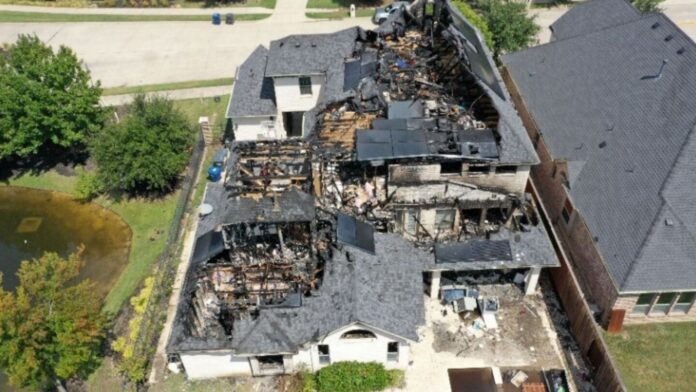
MCKINNEY, Texas — A McKinney, Texas, structure fire response on Aug. 30, 2025 resulted in nine career firefighters injured, including two with serious injuries, while conducting interior operations in a large residence, according to the NIOSH Fire Fighter Fatality Investigation and Prevention Program report.
Incident overview
At 9:10 p.m. Aug. 30, 2025, McKinney emergency dispatch received a 911 call reporting a fire in the master bedroom of a two-story, single-family residential home. The fire department dispatched multiple units including engines, trucks, medics, and a battalion chief. Crews arrived, conducted an aggressive interior push and coordinated search operations on the second floor in extremely smoky, zero-visibility conditions.
Despite efforts to locate and extinguish the fire, interior crews encountered difficult fire behavior and became low on breathing air. Two firefighters ran out of air and a Mayday was called; they and seven others were transported to local hospitals for smoke inhalation, overexertion, and dehydration. The incident highlights persistent risks associated with interior structural firefighting and the importance of air management, size-up, communications, and incident command practices.
Key investigation findings
The initial size-up and risk assessment were limited; the first arriving crew could not perform a full 360-degree evaluation of conditions before committing to interior operations. This likely affected tactical choices and risk assessment during the early fire attack phase.
Supervision and accountability of interior operations were challenged by the dynamic fire conditions and multiple crews advancing on different objectives. Clear supervisory assignment for divisions or groups was not fully established, which complicated coordination and tracking of crews.
Air management practices proved inadequate for the conditions encountered. Several firefighters became low on SCBA air and had difficulty withdrawing, resulting in an interior Mayday. Deployment of rapid intervention resources and air management protocols were stressed by the evolving fire environment.
Fire behavior and dynamics in the structure, including location of the seat of fire and challenging floor plan with high ceilings and stairs, contributed to crews operating in zero visibility and high-heat conditions without effectively locating the fire for prolonged periods.
Communication of assignments and critical information, both over radio and face-to-face, was strained by the pace of events. This affected the ability to share evolving interior conditions and coordinate timely withdrawal.
Training discussion questions
- What specific indicators should trigger a transition from offensive to defensive operations during initial interior firefighting?
- How can incident command ensure better accountability and supervision of crews operating in challenging interior conditions?
- What strategies can improve air management awareness and adherence among interior firefighting crews?
Hands-on training
Air Management and Rapid Withdrawal Drill
Objective: Practice air consumption monitoring, communication, and rapid withdrawal procedures under simulated zero-visibility conditions using SCBA. Props/apparatus: SCBA masks and bottles, obstacles to simulate interior conditions, radio comms. Safety considerations: Ensure adequate supervision, rotate crews to prevent fatigue and proper PPE use.
Success criteria: Crews maintain proper air management, communicate effectively, recognize low-air thresholds and execute coordinated withdrawal within safe time limits.
FireRescue1 is using generative AI to create some content that is edited and fact-checked by our editors.

Fresno firefighters faced a significant amount of fire upon arrival before they went in to rescue the trapped woman. See the fireground video 🎥

Three Nashua firefighters were hurt when a reported gas odor led to an explosion and fire at the Greater Nashua Mental Health facility

Charlotte Fire responded to reports of a pickup truck that lost control, and entered a retention pond, where the driver climbed into the truck bed as it began taking on water

Lake Forest’s Sam Hiller will take the ice in Milan during the Winter Olympics, bringing the split-second decision-making and composure of a first responder to Olympic hockey officiating

Program provides departments with the funding to address the risks of diesel exhaust and airborne contaminants

