
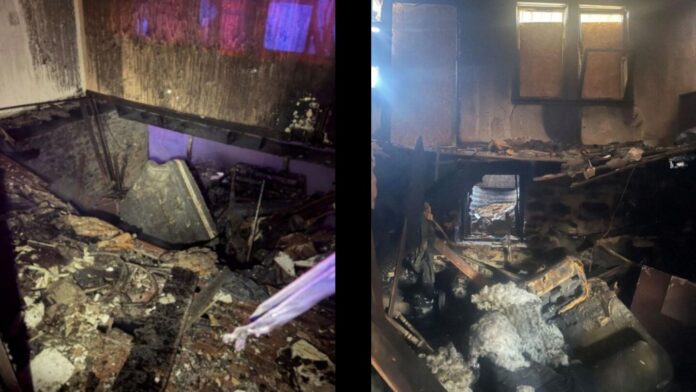
KANSAS CITY, Kan. — Four career firefighters were seriously injured when a floor collapsed during an early morning structure fire in a vacant, single-story residence in Kansas, according to a NIOSH report.
On Dec. 29, 2025, crews were dispatched just before 3:45 a.m. to a reported residential fire with visible flames. Initial companies advanced an interior attack line through the front door while additional crews worked to control fire conditions from other sides. Within minutes of entry, a section of the living room floor failed, dropping multiple firefighters into the basement.
The incident highlights a persistent hazard in the fire service: hidden structural instability in vacant or abandoned buildings, particularly under fire conditions. It also reinforces the importance of matching strategy and tactics to risk, especially when survivability is low.
Key investigation findings
The structure’s vacant and deteriorated condition significantly contributed to the collapse. Firefighters encountered heavy smoke with limited visibility, while fire had already compromised the floor system from below. Indicators such as fire showing from multiple sides and evidence of structural degradation were present but did not fully alter the initial interior strategy.
Size-up and risk assessment did not adequately account for the likelihood of structural instability. While a 360-degree assessment was initiated, critical information about fire involvement beneath the floor and building condition did not translate into a more defensive posture before crews made entry.
Strategic alignment lagged behind evolving fire conditions. Even as heavy fire was reported in the garage and flames were observed through the floor, interior operations continued. The report emphasizes that tactics were not fully matched to a risk-versus-benefit profile appropriate for a vacant structure with no known occupants.
Pre-incident planning and intelligence on vacant structures were limited. The absence of detailed knowledge about the building’s condition, layout and hazards reduced the incident commander’s ability to make informed strategic decisions early in the incident.
The incident also reflected gaps in standard operating procedures and their application on scene. While resources were deployed quickly, the coordination of strategy, risk assessment and tactical execution did not consistently reflect established safety principles for operating in high-risk, low-survivability environments.
Recommended department actions
Fire departments should develop and maintain comprehensive pre-incident plans for structures in their response areas, especially vacant or abandoned buildings. This ensures that responding companies and command staff have critical information about hazards, construction features and structural integrity before committing crews to interior operations, consistent with NFPA 1620: Standard for Pre-Incident Planning.
Departments should establish and enforce clear standard operating procedures that address operations in vacant or dangerous buildings. These SOPs should define when defensive strategies are appropriate and reinforce decision-making frameworks aligned with NFPA 1500: Standard on Fire Department Occupational Safety, Health, and Wellness Program.
Incident commanders must ensure that strategy and tactics are continuously evaluated and adjusted based on real-time conditions. Applying risk management principles — particularly limiting interior operations where survivability is low — is critical to firefighter safety and aligns with NFPA 1561: Standard on Emergency Services Incident Management System and Command Safety.
Departments should train all personnel to apply risk-versus-benefit analysis at every incident. This includes recognizing warning signs of structural compromise, such as fire beneath floors, and transitioning to defensive operations when conditions deteriorate.
Municipalities and fire departments should collaborate on identifying, marking and tracking vacant or unsafe structures. Regular inspections and interagency communication can provide essential intelligence to responders and reduce uncertainty during emergency operations.
Training discussion questions
- At what point should crews have transitioned from an offensive to a defensive strategy in this incident?
- What indicators of structural instability were present, and how could they have been better communicated to command?
- How does your department track and communicate hazards associated with vacant or abandoned buildings?

A government shutdown has delayed official reporting, but the fire service cannot afford to overlook those who died in the line of duty

Baltimore County’s $3M investment would more than double battalion chief staffing

The Secretary of Health and Human Services restores hiring for the World Trade Center Health Program, easing shortages that have delayed care and claims for thousands of responders and survivors

Here are seven strategies to pay down debt and live within your means

Bipartisan legislation would fund National Fallen Firefighters Foundation programs supporting Fire Hero Families through proceeds from commemorative coin sales

